Saturday, October 22, 2016

Some more Olympus Trip 35 images

I am usually pretty good about finishing a roll of film in any particular camera.  However, sometimes one gets used and then gets out of my lineup for a while.  Maybe it's a sign that I have too many cameras? Nah!  Anyhow, I recently developed some accumulating rolls of b&w white, and this one roll of Kentmere 100 from my Olympus Trip 35 had July - September images all over it.  The first half of the roll was from the mid-July Ann Arbor Art Fair, then a few shots from our trip to the Upper Peninsula, and finished off with a few images from my visit to the FPP headquarters in New Jersey.  The Trip 35 is rarely my main camera, but when it is, I can easily run through a roll of film.  As a secondary camera, it really shines, and I rarely find a shot from it that doesn't come out as expected.  In those rare instances, it's probably because I have exceeded the capability of the camera.

Ann Arbor Art Fair.  If there is ever a time to use a camera like the Trip 35, that is it. We get about half a million people in the city over the course of 4 days, and you can't escape the Art Fair.  This year is the first time I have gone to work without seeing any of it, as my workplace is now 5 miles from campus.  So, I went on a Saturday morning hoping to shoot some really slow film (discussed here), but also brought the Trip 35 for street shooting.


Then in August, a few shots from the beach at Pictured Rocks National Lakeshore. The storms a few days prior had sent waves far up on the beach, and the wave forms were still there in the sand, which I found to be really cool abstracts.


While the Trip 35 can't do everything, what it does do under good conditions really points out how good a little camera it is. No batteries. Just pop in a roll of film and you are good to go.  One last shot, of Mike Raso pondering his TLR at a Film Photography Project podcast taping session.  We have a good time doing these.  This was the first time I had used a flash with the Trip 35, and am pleased that it worked quite well.
As I went through these images, it is clear that the Trip 35 really lived up to its name -- it went on a lot of trips, with just one roll of film.  


Monday, October 17, 2016

The Amazing Mr. Brown

Back in the summer, my Film Photography Project pals were involved in testing out some  odd films from the Svema factory (detailed on episode 152 of the FPP Podcast).   One of the films was uniquely brown, whereas the rest were yellow, lavender, blue, etc.  This unknown film became known as "Mr. Brown."  It has an ISO of 6, and while a bit punchy, is a film for "normal" photography. As if anything can be normal when using a camera with such slow film in it!  Those who have been following my blog know that I have been shooting slow films for quite a few years.  I bought a few rolls of Mr. Brown from the FPP store, and finally loaded up my Nikon N90s, set the ISO to 6, and went off to Fleming Creek yesterday.  I hoped to do some nice long exposures of the water while it was overcast.
 Using a 50 mm 1.8 AF-D Nikkor, and an 80-200 mm AF-D Nikkor on the N90s, I shot a roll of  Mr. Brown along Fleming Creek near Parker Mill. Exposures were at f/16 and f/11 in Aperture Priority mode, with the longest time at around 16 seconds, and many were in the 8-11 sec range.  The mushrooms were shot at f/8.

After I got home, I developed Mr. Brown in XTOL at 1:1 for 9 minutes at 20°C.  I just finished scanning in the negatives on my Epson V700 photo scanner.  To say I am impressed with the results would be an understatement!  The film is on a very strong and thin mylar base, and lies beautifully flat in the scanner. No curling, cupping, or other problems.  It scans beautifully.  Based upon my results, I may be tempted to try a roll at ISO 12 under similar situations.

Long exposures of water without using a ND filter is a plus, and this film warrants more experimentation.


Sunday, October 02, 2016

Finally - A Lomo LC-A!

For all of the years that I have been a photographer, one would think that I would have owned a Lomo LC-A before now. Truth is, I have wanted one, but did not want to pay the crazy $ for what they were selling for in the US.  The newer models from Lomography did not excite me, especially at their price.  I wanted an original model. I have had many other "Soviet-made" cameras from Lubitels to Zenits, to Kievs to Smenas.  Lomo LC-As just didn't come my way, but that changed a few weeks ago, when Mike Raso handed me one.  "It might work, it might not."    I took it home, and put in 3 LR-44 cells, and realized that I had to adjust the battery terminal so that it pushed against the cells.  Voila! It worked.  I merely had to put some tape over the battery door to keep it shut.  I put in a short roll of Eastman 5222, adjusted the Gost dial to approximate ISO 200, and shot with it.    I developed the film last night, and here are a few of the shots from that test roll.  Overall, not bad for an automatic camera.  I took a few photos at night in the light of a Kroger parking lot, and am pleased how those came out, and overall, the camera performed quite well.
The size and compactness of the camera surprised me, as I had never owned one before.  I know that whole Lomo "shoot from the hip" thing is hyperbole, but one can take this camera anywhere and get something.   My overall impression is that I can see why the camera has been popular.   I'll do more shooting with it and see how it goes.

Here are a few images from the test roll.

street sitter 
Make the State Great Again?

Kroger, at night

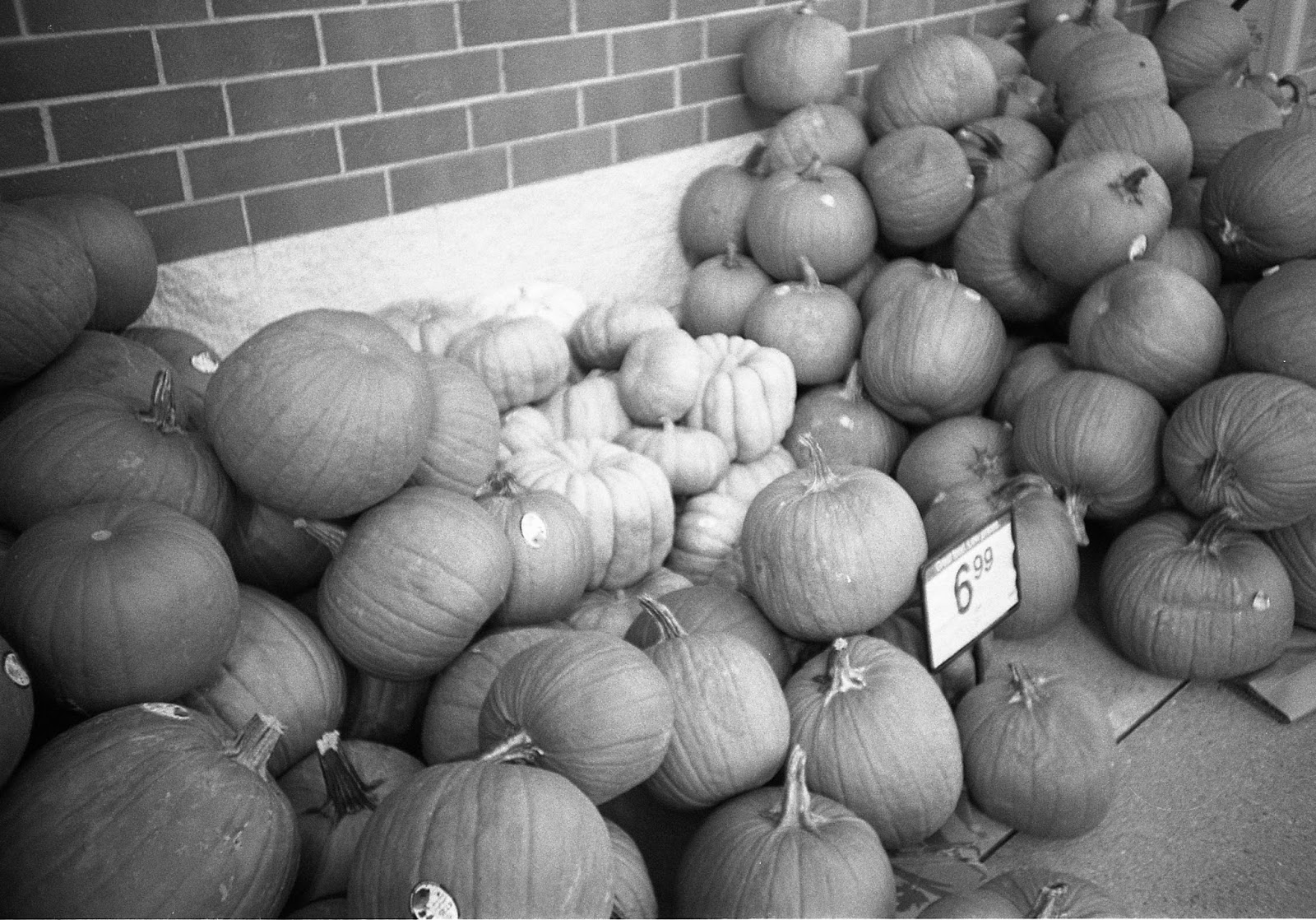
pumpkins at Kroger

Pop-X on Liberty

me, taken by my buddy, Marc

late afternoon sun


Thursday, September 29, 2016

Testing the Phochron XA Shutter Tester!

Back in July, I met Eric Bergstrom at a photo meetup in Kalamazoo.  He's an interesting guy that lives on the W side of Michigan, and not only is he a film photography enthusiast, he's also a tinkerer, and an electrical engineer.  That means he knows a heck of a lot more about making electronic doodads than I do, and more than that, he's an entrepreneur.  He brought along a version of a compact device that tests shutter speeds, which he showed us in operation.  I was immediately hooked.   I liked the way the device did the thinking and just gave me a nice meaningful readout, and it was EASY to use.  Eric promised to send me a pre-production version to test out for the Film Photography Podcast, and yes, we did do a test, but it's audio only, so you can't really see it in action.  However, we were all impressed with the ease of use, compact size, and nice display with a menu system that's easy to navigate.

The  Phochron XA shutter tester is easy to use, and has a built-in illustrated manual available on the LCD display!
It's easy to just use the included LED and single sensor for any shutter type.  If you want to have more critical testing of a vertical or horizontal focal plane shutter, an additional plug-in sensor unit will be available. I didn't try it, as I just wanted the quick and easy shutter speed measurements from various cameras.

Why would you possibly want one?  
That's easy for me to answer. If I sell a camera on ebay, I would like to be able to state how accurate the shutter is.  Second, what about those box cameras?  What's the shutter speed.  Third, I am always surprised at how much off a shutter may be on old cameras.  If you are wondering why negatives may not be quite what you expected with a certain camera, it could very well be that the shutter you thought was firing at 1/500 sec is actually 1/125.  That's two stops off.   Of course, it's a useful testing item.

If I have any suggestions, it would be that some sort of cradle with a tripod socket could be an add-on.  It's useful to be able to have the Phochron XA solidly mounted for camera testing.  I found the shutter tester easy to use, and a lot of fun, since I could fire a shutter repeatedly, and the display would show me all of the tests for a certain setting, as well as a summary with the average time.

Eric plans to put together a Kickstarter to fund production of the shutter tester, which is called the Phochron XA.  You can see more about it at his website, phochronxa.com

Testing the shutter.


Sunday, September 04, 2016

Walker Evans, Wright Morris and Lee Friedlander share a cabin

Well, not really.  However, while we were staying at the tiny cabin along the AuTrain River in late August, I spent about 40 minutes doing some shooting inside the cabin. It was morning, Adrienne was still asleep, and I was feeling a bit  creative.  I got out my Nikon F3HP with a 50mm lens, tripod,  and did some shots of the interior.  I finished scanning in the Kentmere 100 negatives, and as I edited them, it occurred to me that there were elements I had seen before, made by other, earlier photographers that for whatever motivations, did the same thing at some point.  So, here are some images that I made, and you can decide who would have shot what, had they been there.