Showing posts with label b&w photography. Show all posts

Thursday, May 29, 2025

Using Filters on the Pentax 17

The Pentax 17 with an 85b filter


About a month ago, I purchased a new Pentax 17 half-frame camera. While it does have its peculiarities, I enjoy shooting with it, and hope to do a full review of it soon.  One of the peculiar things about it is the 40.5mm diameter for a threaded filter.  While not a common thread size in most cameras, it is shared by Leica and some other 35mm rangefinder lenses.  There are a couple of ways to go with using filters on the Pentax 17, and since the light sensor is next to the lens, it will include the filter in its exposure calculation.  You can attach filters on the Pentax 17 a few different ways as follows:

  • Purchase a set of 40.5mm filters - which can be pricey
  • Buy a 40.5 to 49mm step up filter adapter, allowing use of readily obtainable 49mm filters
  • Buy a 40.5mm to Series VI filter adapter.  
  • Tape a bigger filter over the lens - works, but looks like shit.
Series 6 filter unit

Options 2 and 3 are the best, in my opinion.  If you already have some Series 6 filters, all the better. It just so happens that I already had the 40.5mm to Series 6 adapter, and me, being the old guy with all the old stuff, I have a shoebox full of Series 6 filters and assorted adapters.  So, I put together a kit with Series 6 filters, which include:

  • Red 25A filter
  • Yellow K-2 filter
  • 85B warming filter
  • Polarizing filter


Series 6 filters, with the adapter retaining ring on the left, and the adapter base on the right


The beauty of Series filters is that you can also use gels or other circular materials to create filters - or a piece of window screen, plastic wrap, or other material to provide a special filter effect.  Series filters consist of a screw-in adapter (or a push-on adapter for some older lenses without screw threads), and a screw-in retaining ring that holds the screw-less filter in place.  No one is making Series filters today, but they are easily found on eBay as well as your traditional old camera store - in the junk boxes.  

The light sensor is above the lens, but within the filter ring.


Why would I want to use a filter?

If one is using black and white panchromatic (full-spectrum sensitivity) film, using a colored filter can open up your creativity.  With some films that are more sensitive to the red end of the spectrum - as in near infrared, a deep red filter will give you the "Wood effect" which is when leaves and other surfaces reflecting infrared look a ghostly white with deep black skies.  I've not tested the Pentax 17 with near-infrared films, but it might be able to use something like the Ilford SFX 200 with a red 25A filter.  Since the camera is auto-exposure, using an R72 deep IR filter is out of the question.

In more typical panchromatic films, a red filter really darkens the skies and gives clouds more contrast. An orange filter also does that without as extreme a result, and a yellow filter is that sweet spot of enhancing tonality in landscapes as well as every-day photography.  

Okay, I listed the 85b warming filter, so why would I use it with b&w film?  My fellow photographer, Russell Young, got this tip from the great Laura Gilpin.  Using an 85b filter with panchromatic b&w film subtly renders better contrast in many subjects, and also gives wonderful skin tones to most subjects.  It's especially valuable using it in the skies of the West.  I've been using such a filter a lot in the past few months, and I do think it enhances the images.  So, give it a try.

Using a polarizer without seeing its effect in the viewfinder may seem like a bad idea, but in reality, it's great to use to reduce reflection from shiny surfaces and also as a kind of neutral-density filter.  

Neutral-density (ND) filters are helpful if you want to use higher ISO films to create slow-moving effects, such as waterfalls.  The slowest shutter speed on the Pentax 17 is 4 seconds, as well as B.  So, using an ISO 50 or 80 film with an ND filter should give you good results if you want that silky waterfall look.

As far as filters for color film, you could use the 85b with any Tungsten film (such as Kodak Vision 200T) in daylight, providing more natural color.  In addition, the polarizer and ND filters could also be used.  Hey, you have a lot more exposures per roll with the Pentax 17, so feel free to experiment!


K&F Concept 40.5 to 49mm filter adapter


the 49mm filter will obscure part of the viewfinder

Tuesday, August 03, 2021

Secreted Away

 It's always gratifying to have an image accepted for a publication.  These days, there are so many people submitting work to magazines and judged exhibits that it must be overwhelming for those people that have to review the work.  I suppose that's the rationale for so many zines out there - self-publish to get your work in the hands of others.  Online galleries are nice, but having an image in print is the real thing in your hands.  While I view Monochrome Mania as my personal outlet for my work, you'll never see it on a newsstand.  So, getting an image in a magazine with a larger audience is pretty exciting.  It's not my first published image, for sure, but nevertheless, it's very gratifying.


After I returned from my trip to NY and NJ, I was going through may mail, and opened up the envelope from SHOTS Magazine - a quarterly journal of black and white photography.  The theme for the summer issue (#152) is Secret Worlds, and of the 6 images I entered, one was selected, which appears on page 43 - shown below.  The title is "Secreted Away", and the subject is an old wood card file with one drawer open. The story behind the subject isn't given, but I will explain it here


Secreted Away

The photo was taken in 2014 in the Bird Division in the old Museum of Zoology that was housed in the Ruthven Museums Building (University of Michigan), as we were preparing for a major move. One of the things about that building was the pervasive sense of history one would get after working there for a while. That wood card file contained thousands of 3x5 cards with observation data of various bird species from over a century ago.  I suppose some of that has been digitized by now, because the data is valuable. However, secreted away in those old file drawers meant that one would have to know that the cards were there.  I worked as a collection manager at the Museum of Zoology from 1981 - 2016, and wish that I had photographed it when I first started working there.  

In 2016, the University started moving all of the collections, artifacts, files, books, and people from the main campus natural history museums to an off-campus state-of-the-art facility in a renovated warehouse on Varsity Drive.  I retired from the University at the end of 2017, having overseen the move of our insect collections and related materials.  The new facility is a sterile building that does not have the character or comforting feel of the old Ruthven Museums.  I no longer live in Ann Arbor, and my museum days are past, but sometime, I will have to compile some images of the "old museum" into a publication just so no one forgets what a great, if dated, place that it was. 

By the way, SHOTS Magazine is an awesome photography journal.  


Thursday, July 15, 2021

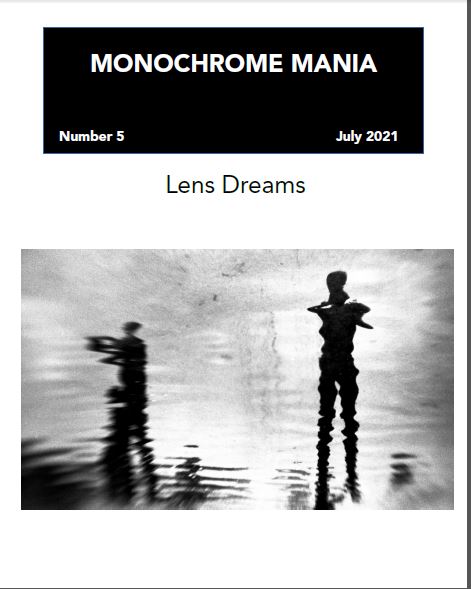
Monochrome Mania #5 - Lens Dreams


What is it about memories and photography? I know that when I see a photograph that I have taken, I’ll usually remember the situation or place or when I made it, just by seeing the image. If you asked me where I was at a particular time, I probably could not tell you. However, an image can immediately wake those neurons and give me pretty good recall of the event or place. We are used to photographs that are pretty much “perfect” in that the exposure is good, the detail sharp, and the subject recognizable. Our memories, however, are not as good as the photographs. Memories fade, events become blurred, and timelines are not exact. As I have grown older, I realize that there are events that I just cannot remember – possibly because they were trivial at the time, and as people sometimes say “Photos, or it didn’t happen.” 

 My thoughts on doing Lens Dreams are to show that photography can mimic memory. Images can be fuzzy, dreamlike, out-of-focus – much like memory, and that is my aim here. I know that the term “Lens of Nostalgia” could also be used, here, but that imparts a different feeling, one that has been attributed to toy camera photographs, and those using older techniques and processes. Is nostalgia bad? I don’t think so – in today’s world of instant gratification and an endless parade of digital perfection, many people, including myself, see reality differently.


My latest Monochrome Mania was all done with Lensbaby and other imperfect optics that give me the dreamy look that I wanted. Images date from 2007 to the present year, collected in a 36 page zine with covers. I am really pleased with my latest effort, and I hope that you'll enjoy it, too.  You can purchase it directly from my Etsy store for $12 with free shipping in the USA, and $6 additional for outside the US for International First Class.  I won't be shipping any orders until after July 26, as I'll be away.


Tuesday, June 22, 2021

Out and About with the Argus CR-1 SLR

Welcome to a review of yet another Chinon M42-mount SLR, albeit badged as the Argus CR-1.  Chinon produced the CR-1 in 1975, and in fact, produced a series under the CR line, the CR-1, CR-2, and CR-3E.  While bearing the Argus logo, it appears that Argus did not distribute the cameras, but were distributed by the IMC Division of Interphoto Corporation.  The first thing one notices about this SLR is the strange flattened curvy prism housing.   I actually like it, as it's a big change from what everyone else was doing. However, it also bears noting that the Voigtlander/Rollei SL35 of 1976 has a similarly shaped prism housing.  The second obvious thing about this camera is only apparent when you hold it - it's a beast, and built like a tank.  Much of my information about this camera comes from Henry Gambino's excellent book, "Argomania."  However, Mr. Gambino made an error when he said the camera has a cloth focal plane shutter.  It's not - it's a metal-bladed, vertically travelling Copal Square shutter that was commonly seen in Cosina and Chinon cameras.  The shutter has the typical B, 1-1/1000 speeds, and the ASA markings go from 10 to 1600. The metering is stop-down, and the meter is actuated by pressing halfway down on the shutter release, with the typical +/- metering needle indicator on the right of the viewfinder.   

Simple control layout, nothing you don't need.

My example of the the CR-1 came with the 55mm f/2 Argus Auto-Cintar lens, which has the matching indentations on the focus ring that you see on the shutter speed and rewind dials. I purchased the camera on eBay  in November 2020, and paid $30 + shipping. When I was actively engaged in Argus collecting (2002-2011), the CR series SLRS would often show up at camera swaps, and because they were not actually made by Argus, I was not that interested in them. I remember someone selling new in box CR-1s that were probably bought when stores were dumping excess inventory, when somewhat generic M42-mount cameras could no longer compete with the K-mounts, Canons, Nikons, and Minoltas of 1980.  


Once I was sure that the camera worked as advertised, it became my "keep in the car" SLR.  I also paired it with with the lovely Zenit Helios 44-M 58mm f/2 lens. With black and white film in it, it's always there should I need it.  

Paired with the Helios M-44 58mm f/2 Soviet lens and
a vintage Argus-branded flash unit.

Two features on the camera that I really like - the locking collar around the shutter button to prevent accidental exposures, and the large shutter button.  That Copal Square shutter sure makes a loud kerchunk when it fires, so there's no question that I have taken a photo.  The body has a typical hotshoe on the prism as well as PC connectors from X and M next to the lens mount.  The flash sync is 1/125 sec.  While I have read that the CR-1s have a decal with the model name, mine is definitey engraved on the front. The camera with a lens weighs 2.5 pounds, which is pretty hefty.  The tank-like build reminds me of the Ricoh Singlex TLS from the late 1960s.  

Overall, the CR-1's design is its standout feature, as it has pretty much the same features as most M-42 mount SLRs of its time. The beauty of the M42 mount, or Praktica Screw mount is that you can find lenses for it for almost nothing.  As I have written before on RCB, there are a lot of wonderful M42 SLRs out there, with the Pentax Spotmatic F at the top of my list.  The Argus CR-1 is no Spotmatic F, but it sure isn't a  Zenit, either.  Chinon made a lot of SLRs, but the CR-1 stands out from the crowd. Note, if you live in Europe, you re more likely to find a Photo Quelle Revueflex 1001, which is the same camera, but with a different name.

Here are a few images from my CR-1, loaded with Ultrafine Extreme 100 film, developed in D76 1:1.

Dogwood buds in March

Big Creek

Big Creek falls

Riverside Arts District

Giant Allium going to seed.

Tired doggy

Sunny Daisies


Thursday, March 11, 2021

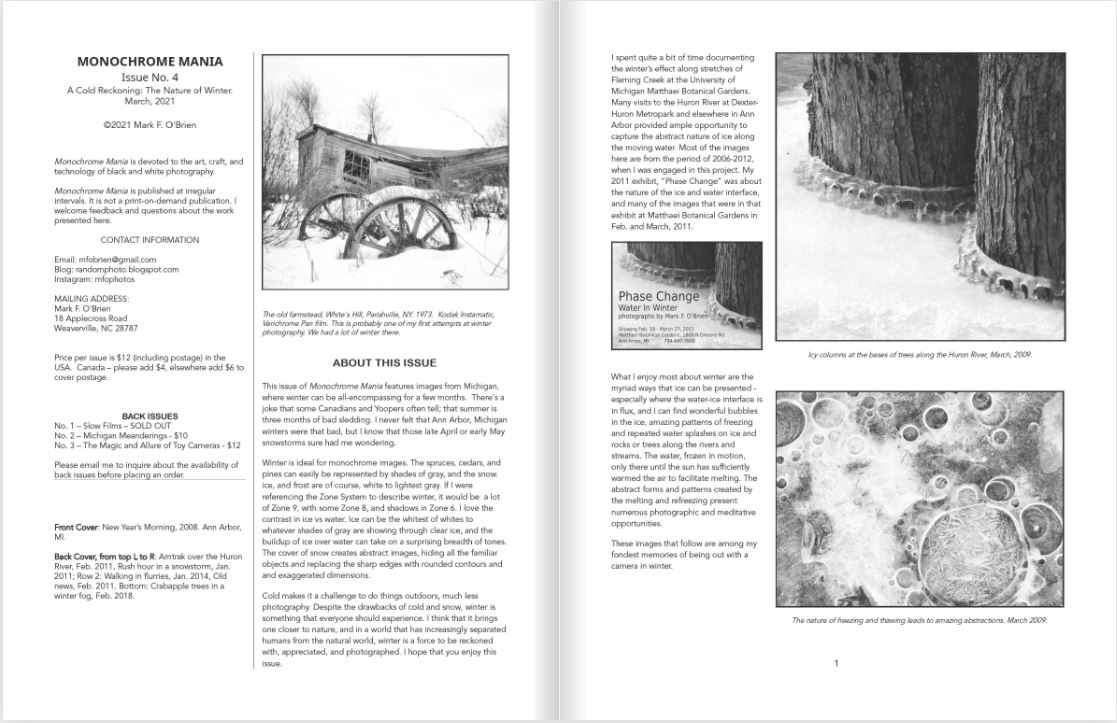
Monochrome Mania #4 Available!


While Spring is making itself quite apparent here in North Carolina, the latest issue of Monochrome Mania is fresh from the printers, and it's about...Winter.  Yes, you read that right. The title is A Cold Reckoning - The Nature of Winter.  This issue explores the abstract images found in ice, winter weather, and the forms that result from repeated freezing and thawing, along with some tips about cold weather photography.  The origins for this issue go back a decade, when I had a photo exhibit at Matthaei Botanical gardens in Ann Arbor, MI. It was titled "Phase Change" and the images were of various facets of the phases of water from liquid to solid and back again along Fleming Creek and the Huron River.  Many of those images appear in the zine, along with others taken after that show.  This issue departs from what I had previously done in the sense that I don't tell you about the cameras and films that I used, because I want the reader to enjoy the images for what they are.  Included are some quotes and poetry as well as information at the end about photographing in cold weather.  My friend Susan Patrice suggested some better fonts, and they have made a difference in the presentation.  Everyone that's seen the pre-press copy has really liked this issue, and I hope that you'll be tempted to purchase it and enjoy it, too.

Monochrome Mania # 4 is once again  36 pages plus covers, and priced at $12 within the USA.  For readers in Canada, It's $15, and overseas, $18. All prices include shipping. 

You can purchase it at this link: https://bityl.co/5uis


You can also link to the store via this QR code:


Monday, January 25, 2021

Revisiting Themes

 Right now, I am in the midst of doing more scanning and editing of images that I made over a decade ago.  As I have said before, it's an ongoing project.  However, I have been working specifically to find appropriate images for my next issue of Monochrome Mania No. 4, which will deal with winter photography.  In 2011, I had a pretty good show at Matthaei Botanical gardens with my "Phase Change" exhibit.  


I had a pretty good selection of prints in 16x20 frames.  I didn't sell a single one.  That's not unusual for such shows that are in an atypical gallery space.  I still have a couple of them adorning my walls here in NC, as they are evidence of a winter that we don't typically see here.  Finding the old negatives was easy once I realized that I had put them in a binder devoted just to winter ice and snow images.  Scanning them in now and making adjustments brings back some memories, and also some observations:

  • Kodak's Technical Pan film is perfect for this subject
  • Photography on overcast days was the best, as the highlights didn't get blown out.
  • I used manual cameras, such as the Nikon FM2A, F2S, and Canon FTb QL, and A1.  In doing so, I compensated the exposure by watching where the needle or LED was in overexposing.  

Water and ice are fascinating subjects, and I think this next issue of Monochrome Mania will be worthy of the effort that I put in a decade ago.  I hope to have it ready by March.


Saturday, December 19, 2020

Twenty Years of Photography

Twenty years ago, I went from being a typical family snapshooter to learning all I could about photography, and to become a better photographer.  That quest has never ended -,and I am always learning new things, and how to be a better photographer.  Over the past week or so, I began looking through my binders of early negatives, where shooting with b&w film really began having an effect on the way I saw scenes, and of course, recorded them on film.  Prior to that, I was shooting mostly color print film and color slides - and while I continued to do color work, it was the b&w world where I was learning the most.  Learning how to compose and think in b&w, as well as all the developing of negatives and subsequent printing onto sliver-gelatin paper.  My subject matter changed, compared to what I was shooting in color.  For me, color was where I was shooting macro and close-ups, and I suppose that I was trying to emulate the work of nature photographer John Shaw. While I learned a lot from his books and videos (which are very good), it also coincided with my vocation as an entomologist, and aided my research and work on insects.  

Bill Brudon, Nov. 2001. Praktica
Super TL, Tri-X film.

However, it was my mentor, William L. Brudon, that changed my world with his immense knowledge of black and white films and how to achieve the desired results with so many different kinds of b&w film. Bill was always testing different films with various developers, and he kept notebooks filled with his results. He was also a medical illustrator, natural science artist, and a good photographer. Bill and his wife Margaret (also a medical illustrator) lived a mile from my house, and every time I met with him, his critical eye and old-school demeanor whetted my appetite for more. He introduced me to the works of Ansel Adams, Edward Weston, Walker Evans, Imogen Cunningham, Stieglitz, and Sudek, among others. His generous gifts of books and cameras and film are something that I shall never forget, and I swore to myself that I would repay him by sharing my knowledge and pass on film, books, and equipment to others when the opportunities arose. As my photography evolved, I did less macrophotography except in relation to work, and I explored b&w and different cameras in much of my free time. 

In late 2000, I developed my first roll of b&w film since I was in high school.  That whiff of stop bath and fixer immediately transported me to 1974. It was magic then, and it is still magic.  To see a roll of film yield images is forever a wonderful thing. I have developed thousands of rolls of film myself, and it never gets old.  My view, my images, my work, to make them something tangible. It's imagination, science, art, technology, and some craft makes those images possible.

Fleming Creek, 12-25-2000. Nikon FE, Ilford Delta 100

Bill Brudon was the person that changed me from being happy to get a picture from my camera, to someone wanting to show the world what I saw, and to always want to do better than the last roll I shot. To experience different film formats and see how they affected my composition and subject matter, to find that elusive moment when I know that BAM! I got the image that I envisioned, and to know that serendipity favors the prepared.  I have also learned that the quality of the gear means nothing without vision.  Some of my best images have been taken with my “worst” cameras.  

Cobblestone Farm, June 2001.  Ricoh KR-5, 28mm lens
and Kodak's High Speed Infrared film with a Red 25A filter. 
Bill introduced me to the world of IR film.

Over the past 20 years, I have certainly handled more cameras (thousands) than I ever thought possible, due to an interest in collecting certain cameras (with an intense excursion into Argus, because I lived in Ann Arbor), and also because I became the person that could sell off a photographer’s estate.  That allowed me to learn an awful lot of photographic history and operate a lot of vintage cameras, some of which are rarely encountered. It put me in contact with many fine people in the Michigan Photographic Historical Society, of which I was a board member for a few years. 

Senescence. Nov. 2001, Nikkormat FT2, Kodak Tri-X.

So, it's hard to believe that in 2000, I was 44 years old, and absorbing so much new information and embarking on this journey into photography.  I certainly did not anticipate that my wife and I would sell our house and buy Bill and Margaret's home when they decided to move to a retirement village in 2002, and that Bill would leave behind a complete darkroom setup for me in that house.  A lot of what I learned proved useful in my real job at the University of Michigan, especially macro-photography.  But macrophotography isn't what I kept doing with my photography, it was learning about this huge universe of photographic technology, the history of photography, the arcane things that you can only pick up by delving into the minutiae of photography.  On top of all of that, it was shoot, shoot, shoot.  As I look over my negatives from 2000-2002, I can see that I often bracketed a lot of shots, as I was unsure of how things were best exposed. Bill also made sure that I did bracket so that I could judge a series of negatives for the best overall exposure. I really enjoyed delving into trying various films and developers, and as I look over those early negatives, I can see now where I should have done something differently had I known at the time. It's not hindsight - it's learning.  

Some proof sheets and negatives from 2001

I started this blog in late 2004, and it's been an ongoing way for me to share my photography, thoughts, and reviews of cameras and film.  That I have been doing it for 16 years astonishes me.  

Huron River, Sept. 2000, Retinette 1a, Agfa APX 100

Bill died in hospice care in July, 2009, at the age of 87. He was a beloved friend and mentor, and he called me "Number 3 Son" (he had two actual sons). I still own many of the cameras, lenses, books, and equipment that he gave me. While we lived in Ann Arbor, I always felt that the darkroom was my little sanctuary, just like it had been for Bill. Moving to NC meant that I would have to finally give it up, and hopefully build a new one here.  I think that is the only thing that I miss from our Ann Arbor house - the darkroom that Bill had built.  I still have yet to build mine, but the downstairs bathroom is where I develop my film so I can scan it. I have plans to convert a large closet next to the bathroom into a small darkroom, and after our kitchen renovations are done in the spring of 2021, I will start working on the darkroom.  

Another important date in my timeline is when I found out about the Film Photography Project. I think it was at Photostock in 2011 when I met a young Mat Marrash, who interviewed me. Within a few years I was a regular on the podcasts, and Michael Raso has become a great friend and collaborator. It’s allowed me to pass on my knowledge to hundreds of people via the podcasts, which I think Bill Brudon would have greatly enjoyed. 


Mike Raso and I at Benny's, Ann Arbor. 2016

So, anyway, back to scanning.  As I go through these binders, I am building up a library of images that I can use for other projects, future issues of Monochrome Mania, and to gather together material that will tell a story when I need it. I had a series of projects in mind when I lived in Michigan, and never felt that I had the quality of images to complete the projects. Going back through those files, with so much time removed from the time I shot them has given me a new viewpoint as to their value.  I sure as hell am glad that I shot on film, because it's really a lot easier to view a sheet of negatives than to scroll endlessly through computer files.  

Argus C-4, December 2000. Nikon FE, T-Max 400 in Microdol-X

This year has been a tough one in regards to the COVID pandemic, but it's also made me take time and go through work that I haven't looked at in a long while.  I do hope 2021 will be much improved, and I can go on some long-overdue road trips to make new images of things that interest me. Oh, and I expect that I'll be using at least one of the Nikons that Bill gave me.

Wednesday, July 22, 2020

One Year


It's been a year since we moved to Weaverville, NC from Ann Arbor, MI.  We feel very comfortable here, and are very happy in our new home. If you had  asked me three years ago, where I might be living in 2020, I don't think that NC would have been on my radar at the time.  Life is funny, in how things can quickly change in ways that one does not foresee.  But, at the age of 62, one does not often make big changes, and moving here was certainly a big change.  To be honest, I was getting in a rut in Ann Arbor, and while I did like our old home, the neighborhood, and my friends, nothing much had changed, except that I was retired.  The ugly politics at work hastened my retirement, and I had no reason for emotional ties to the place I worked for almost 37 years.    It was time to reinvent myself, and in a way, I did.  I'm no longer a retired entomologist. I'm a retired man that is passionate about photography, loves living in the mountains, and having a relatively stress-free life. 

Vance Birthplace, State Historic Site. Nikon F2S, FPP Infrapan.


I have fallen in love with Western North Carolina - the mountains, the rivers and creeks, nature's abundance, and  the people here are genuinely welcoming and friendly.  I grew up at the NW edge of the Adirondacks in New York State, and love being in the mountains once again.  We are very close to the Blue Ridge Parkway, and getting into the higher elevations is a really quick trip.  There are so many streams and waterfalls that are within 30 miles, it seems almost too good to be true to be living here.   We had plans for some trips to the coast, but then COVID-19 happened, and of course, those were put aside for the time being.  Despite that, I have been doing a lot of day trips in the area, and it's helped familiarize me with the best routes and natural features. 

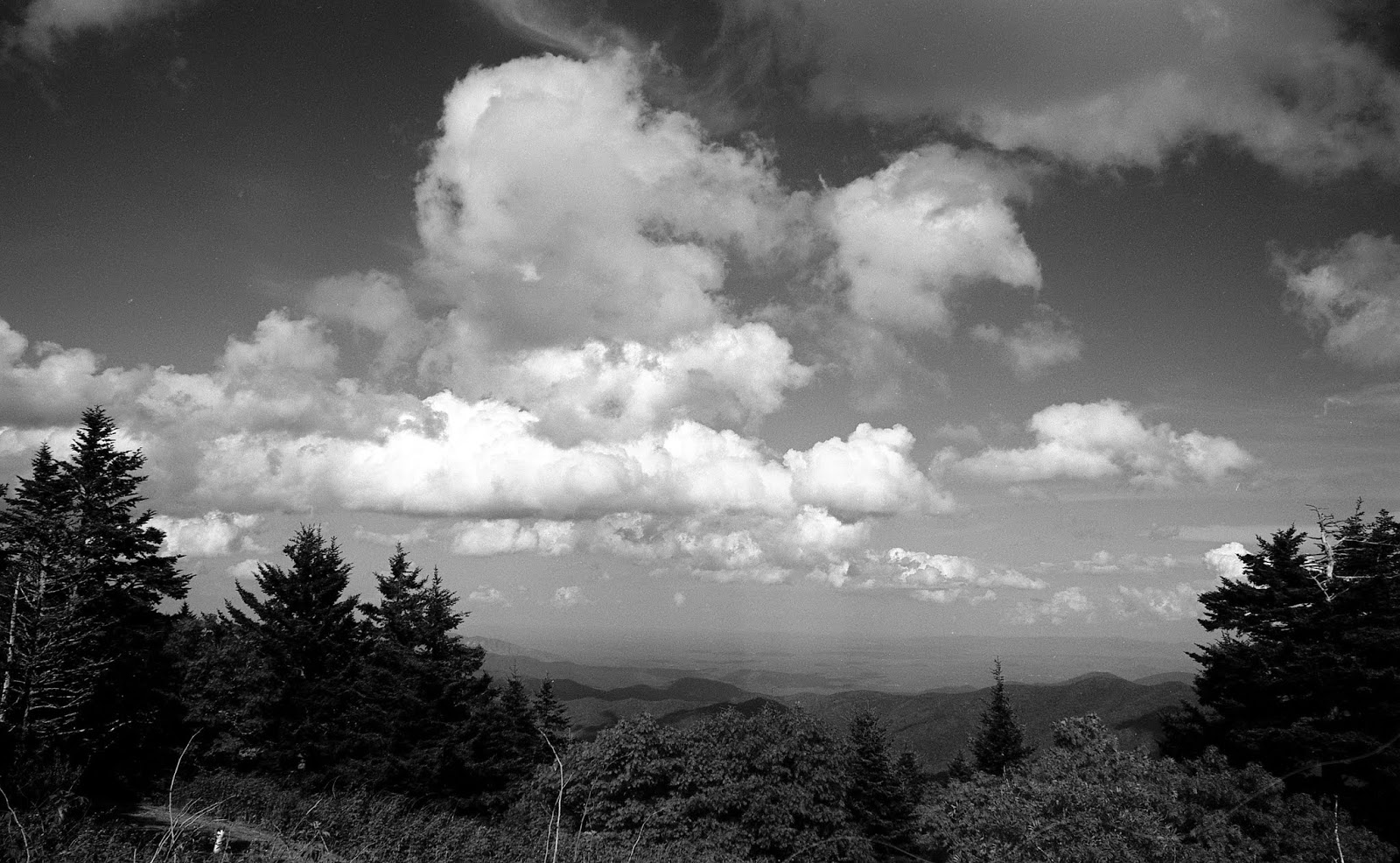
View from Mt. Mitchell.  Nikon FM3a, Rollei Retro 80s

I still have not gotten my darkroom put in, and the new space will be smaller than my old one, but will be adequate for what I do.  For now, the downstairs bathroom is where I develop film, and it's worked out pretty well.  Unfortunately, with the current situation, there have been no photography meetups or gatherings.  I'd really like to do a Western NC film-shooters' meetup, but that will have to wait.
Biltmore Estate, Tasma Mikrat 200, Nikon FM2N

One other thing that is new for me is that I am trying to learn to paint with Acrylics.  The landscapes here are inspiring, and maybe I will find my style and see where I go with it.  It's definitely a challenge.

Walker falls, Nikon FM3a, Ilford Pan-F

Of course, if you have been following this blog, then you already know the things that I  have been doing over the past 12 months.  I am currently testing a bunch of other films, and hope to have some reviews ready  in August.

Stay healthy, my friends.