Showing posts with label Lomography. Show all posts

Thursday, December 28, 2023

2023 - Another great year for film users

Millbrook Diner, Kodak Aerocolor.


Here it is, almost the end of December, and it’s a good time to review some events of 2023, both good and bad, that involve film-based photography.  In the digital world, it’s all about mirrorless wonders from Nikon, Canon, Leica, Fuji, etc., but over here in film land, we rarely get new film cameras, so we get excited by new film stocks, right?  Of course, there was the announcement by Ricoh/Pentax about a new film camera project, and we will have to wait to see where that goes. The release of the Polaroid I-2 advanced instant camera was met with enthusiasm by many, and jeers by a few. I’m never going back to any instant cameras, but if I was looking for  one, the I-2 certainly has all the bells and whistles that makes it stand out apart from any others currently on the market.  


I can’t really get excited by any of the simple-use cameras that arrived in 2023.  I get that they are designed to attract a different segment of the market, and anything new and shiny that takes 35mm film is at least better than nothing at all.  The Kodak Ektar H35N doesn’t do it for me, as I’ve had my fling with GOOD half-frame cameras, and I’m not about to use another one.  But if you are looking to maximize your picture-taking on a single roll of film, the H-35N could be a good choice for you.  Take a look at Dave Mihaly’s YouTube videos and make your decision from them.  Yes, I have done a lot of photography with cheap plastic cameras, and I have my favorites.  But, I don’t need to buy any of these “new” plastic cameras currently being sold.  


That brings me to Lomography, which as long been the home of the plastic fantastic (and not necessarily cheap).  Some models that were out of stock are now back in production, such as the Lomo Kino (at $60, a bargain), and the Spinner 360 (less than $50).  Say what you want, but Lomo has been innovative, interesting, and has been a big booster for analog photography.  


I’m sure there have been some interesting introductions of other film cameras this year, and I apologize for not covering some of the boutique offerings in the pinhole and large-format world.  As the saying goes, “if you know, you know.”


FILMS


The year started out with the stock of color films being low, and price hikes had a lot of folks bitching about that. I get it, and for some people, finding that they’d spent over $15 for a roll of film, $30 for processing and prints or scans, it was a bridge too far.  It wasn’t the best for anyone wanting to get started, especially with their $50 simple-use camera, and getting back a bunch of underexposed shots.  For us old-timers (since I’m not a 30-something YouTuber - I’m twice their age, so I’m probably a film dinosaur) film prices haven’t been the limiting factor in the avocation.  But  yes, color film was definitely more expensive in the beginning of the year than at the end, when Kodak and Lomography were discounting their 120 film stocks.  
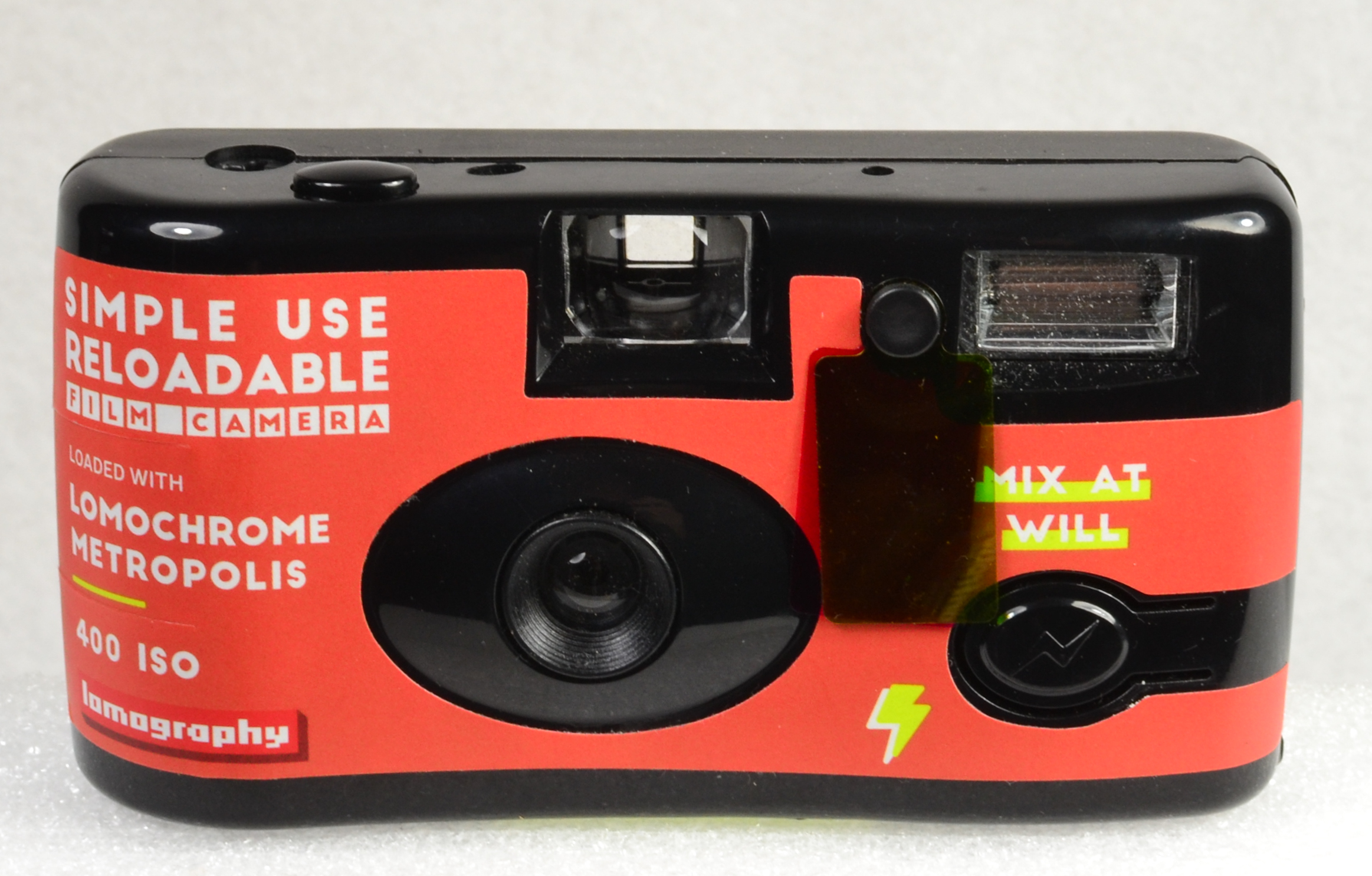


The rising prices and scarcity of C-41 films definitely drove up the interest in using ECN-2 films, especially from sellers that were removing the remjet so that the films could be developed by any C-41 lab.  That lead us to the Cinestill 800T shit show, and enough has already been said about that on social media, YouTube, and blogs.  My opinion, for what it’s worth, is that Cinestill was improperly granted a license to trademark 800T.  Second, they don’t want competition from sellers like Reflx Labs in China.  Third, we all want a bargain, so vote with your wallet.  Rem-jet removed films such as Amber (from RETO), Reflx Labs, and others are definitely cheaper than the Cinestill versions — and they are the same emulsions. 


Lomography’s introduction of Lomochrome Color ’92 added another unique film stock to an already interesting array of films.  I reviewed that film (https://randomphoto.blogspot.com/2023/08/one-roll-review-lomochrome-color-92.html) in August.  With Metropolis, Turquoise, and Purple, you can do some fun stuff.  Lomochrome Purple in particular, gives results somewhat akin to a color IR film.  


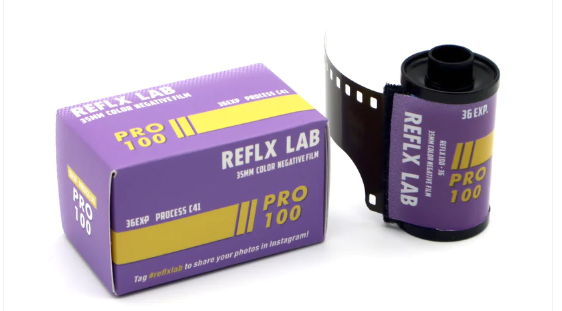
The winner for the least-hyped color film is Kodak Aerocolor, which is being repackaged under various names, such as Elektra 100, Santa Color 100, Reflx Lab Pro 100, and Karmir 160.  Aerocolor is a fine-grained aerial photography film with great latitude, and a lot of people are just discovering it.  If Kodak/Alaris could get their shit together, they’d be offering Aerocolor  as a Kodak product in 35mm and 120.  Instead, they have siloed the different divisions and that’s to their detriment.  


The winner for the most-hyped color film is obviously Harman Phoenix.  I’ve never seen a film rollout like this one, and love it or hate it, Phoenix is a unique emulsion. Lens caps off to Harman for their foray into the world of color.  I’ve shot one roll so far, and I’ll wait for a day with light clouds and no bright sun for the next one.   


I believe that the Kentmere Pan 100 and 400 are two of the least-expensive b&w films out there, and in my experience, give outstanding results.  I’ve used them for years, when they were only sold as Ultrafine Extreme by Photo Warehouse, in California. Now, in their own branding, the Kentmere films are an excellent value in 35mm and 120.


Reflx Lab in China has been doing a great job with their branding and selling of various film stocks, and their recent introductions of several ECN-2 films with the remjet removed so that they can be developed as C-41 is a great thing.  In my local camera store - Ball Photo, in Asheville, I’m seeing more variety of films than ever before.  Sure, some of them are just rebranded stocks, but if that gets someone to try one out, all the better.


The Film Photography Project just keeps rolling along with their films for still and cine cameras.  Their catalogue of FPP-branded film stocks is impressive, and while it’s the place to go for the unusual, they also sell the major brands at the best prices.  


Another very positive development (the photo puns write themselves) is the production of Kodak-branded photochemistry coming back to the USA.  Photo Systems, Inc. in Dexter, MI which used to be known as Unicolor, will be producing Kodak-branded photo chemistry.  I toured that facility a number of years ago, and it looks like Dexter, MI will be seeing ever more semi-trucks coming and going from that factory.  In case anyone forgets, Kingsport, TN is the home of Eastman Chemical, which used to make photo chemistry there.  That’s about an hour from my home.


Deaths (certainly not comprehensive)


The permanence of great photography is exemplified by Elliot Erwitt, who died at the age of 95. His images have appeared in various books and monographs.  He left us with many indelible images of the every-day that were never ordinary.  https://www.elliotterwitt.com/

John Fielder, a well-known photographer of the natural scenes in Colorado, died at 73. 

https://www.cpr.org/2023/08/13/john-fielder-photographer-colorado-outdoors-died-at-73-years-old/

Frank Borman, astronaut, died in November, at the age of  95 - took the first photograph on the Apollo 8 mission of the earth from the moon - that image is lesser known than the one taken by William Anders - Earth Rise- which inspired a consciousness  of Earth being our home, alone in the cosmos.  Those Hasselblad cameras were instrumental in the Apollo program, and the quality of the images from them are unsurpassed, especially when you consider the environment in which they were used.

Frank Borman's photo


Larry Fink, well-known for his photography in Greenwich Village, and chronicling the Beat generation, died at 72.  https://www.youtube.com/watch?v=Qt9M2aQAFT0

Lawrence McFarland, photographer and educator, died at 81.  Known for his landscapes, he was a respected professor of photography at the University of Texas, Austin. https://www.lawrencemcfarlandphoto.com/home

John Benton-Harris, photographer/visual sociologist, died at 83.  An American in the UK, he was renowned for his photo essays of the British people. https://www.theguardian.com/artanddesign/2023/oct/23/john-benton-harris-obituary

Helen Marcus, a noted photographer of the famous in New York, died at 97. Her career started late - at age 50.  Her black and white portraits of famous writers such as Tom Wolfe and Toni Morrison are iconic.  https://www.shelf-awareness.com/issue.html?issue=4601#m61893

Georgia M. Coxe, died at 92.  She was known both for her poetry and her photography, which in my mind, is an ideal combination. https://provincetownindependent.org/obituaries/2023/09/20/poet-and-photographer-georgia-coxe-dies-at-92/

North Carolinian photographer, Bruce Roberts, died at 93.  He pioneered the use of 35mm in newspaper reportage, and photographed a LOT of North Carolina for Southern Living and Our State magazines.  https://en.wikipedia.org/wiki/Bruce_Roberts_(photographer)

Cary Wolinsky, who often photographed for National Geographic magazine, died at 75. He was an astute photographer whose creativity with the camera is well-known. https://thephotosociety.org/cary-wolinsky-1948-2023/

Lisl Steiner, a photojournalist, documentarian, and film-maker, died t 95.  https://www.nytimes.com/2023/06/18/arts/lisl-steiner-dead.html


There are a lot of photographers that have lived into their 90s, so I guess there’s hope for me yet.


What else to say about 2023?  I published 4 zines, which was pretty good. All of them were well-received.  I shot well over 100 rolls of film, developed most of it myself.  The nascent Asheville Camera Club published a zine, and is now meeting monthly. For once, I am just a participant, not an organizer.   I didn’t go on any lengthy road trips, which I hope to make up for in 2024.  However, I did pretty well with trips to Michigan, Ohio, New York, and South Carolina.


I hope 2024 goes well for everyone (well, almost everyone - democracy has to survive). 

How did 2023 work out for you?


Monday, August 28, 2023

One Roll Review - Lomochrome Color '92


I have to hand it to the minds at Lomography. Whatever sources they have, or partnerships with film manufacturers, they have been able to come up with some films that simply defy convention and encourage experimentation by photographers.  I'm not sure where this latest release stands in the world of C-41 films that Lomography has come up with, but when I saw it available, I purchased three rolls from the Lomography store.  


First of all, I knew that I wanted to test this film in a camera that has shown reliable results with color films, my Yashica Electro 35CC. With its 35mm f/1.8 lens, this camera is considerably more compact than the big Yashica Electro 35s most people are familiar with.  That's one reason that I use it, and the other is that I like the aperture-priority operation of this camera (even if I don't know what the exact shutter speed will be), and the 35mm lens is perfect for much of the photography that I do.


I already had a roll of Kodak Pro Image 100 in this camera, which was fortuitous, since I could compare the color rendition of the Color '92 with the Pro Image 100.  I shot the roll of Color '92 in Murphy and Asheville, NC.  I shot it at the box speed of ISO 400, and it was developed by Ball Photo in Asheville, and I scanned the negatives on my Epson V700 scanner. Minor corrections were applied post-scan in Corel Paintshop Pro.

The Henn theatre, shot on Pro Image 100

Henn Theatre, shot on Color '92


As you can see, the Color'92 has a bit of a slightly different palette, but nothing like the Lomo Metropolis film.  If anything, it reminds me of some older slide film scans, but with better shadow detail.    In the two photos of the Henn theater in Murphy, NC, the red looks slightly muted compared to the Pro Image 100, but blues are more intense.

Some more images:


The rest are from Asheville, NC


Based on this sample, I'd say that the reds have some cyan that mutes them a bit, and that the film really shines in full sun.   Overall, it's certainly a choice on whether to use it or any other 400 ISO color film.  It's not going to be as obvious a result as say, Lomo Metropolis or Lomochrome Purple. However, I do like the look of this film

Is it worth the extra price over some expired 400 ISO film?  It all depends on what you are looking for. I think the more muted appearance in shade is quite nice.  


Sunday, September 12, 2021

LOMO SLOOOOW B&W Films


Lomography continues to surprise us with its array of films, and the two b&w cine films in its latest offering - Babylon 13 and Fantôme 8 certainly will appeal to a smaller group of photographers.  Before I discuss these two "new" films, I should add that they fall within Lomography's Kino subset of films - purported to give cinematic effects to your images.  These four b&w films - Berlin, Potsdam, Fantôme, and Babylon are rebranded Orwo cine film stocks.  I previously reviewed Berlin and Potsdam in 2020.  

The Lomo Kino family (from Lomography)

I give credit to whoever writes the ad copy for Lomography:

From the Babylon Kino page -- "Delicately capture the details of life’s most emotive moments with this moony-eyed monochrome." and the Fantôme Kino -- "Effortlessly evoke the theatre in your everyday life with this show-stopping black and white beauty."

So if that doesn't pull you in, there's more:

Fantôme Kino-

"This panchromatic is perfect for seasoned professionals and creative first time photographers alike. Particularly appropriate for those who like to take full manual control and experiment with flash photography, the Fantôme Kino B&W Film packs drama into the frame with crushed shadows and super high contrast renderings, reminiscent of our favourite Film Noir classics."

The key takeaway here should be that these are low-ISO films and at ISO 8 (Fantôme) and 13 (Babylon), they are not going to be used in your crappy plastic Lomo cameras. You'll need an SLR or a decent rangefinder camera that can meter to and ISO of at least 12, preferably 6.  Or, use a handheld meter or phone app that can meter at low ISOs.   Since they are so slow, a tripod will greatly assist in making the longer exposures.  

The other factor to consider, is that both of these stocks were created for cinematic uses, not for conventional still photography.  Just as I wrote about Kodak's cine films on the Film Photography Project Blog, some b&w  cine films are used for effects, titling, and making direct copies from the negatives.  The specialized films have narrower exposure latitude, may be orthochromatic, and will almost certainly have a low speed.  

The great thing is that Lomography decided to offer them as something that may get your creative juices flowing, and allow you to experiment with some film stocks that you might never see otherwise.  After all, ORWO isn't the most expressive film company, and they cater to professional cinematographers, not a bunch of amateur shutterbugs. So having Lomography do the hype and selling of these films is a sure way to have people try them.

I purchased these films from B&H  and of course, they arrived very quickly.  I bought two rolls of each, and shot a roll of each a few months ago.  

Lomo Kino Fantôme 8

If you can set your camera  ISO to 8, that's great. If it only goes to 12, you can dial in +2/3 of a stop for the extra exposure that is needed.  I loaded my Nikon F100 with the Fantôme, and shot the entire roll along the French Broad River at Ledges Whitewater Park.  It was getting close to sunset, and my exposures were between 8 and 12 seconds. I was using a 28mm Nikkor at f/16.  I felt that the long exposures would be interesting with the moving water and shadows on the water. Tripod, of course.

I developed the film in FPP's D-96 for 6.5 minutes at 20°C.  The film base is clear, and curls like crazy when dry.  It wasn't much of a problem to scan though, as the curl is lengthwise, and not cupping the negatives.  The scans did not need much tweaking, and I really loved the results - moody, sharp as a tack, and I think it's one of those films that have a special use - and it works perfectly for what I was shooting.


Lomo Babylon 13

I loaded my Nikon F4 with the roll of Babylon, and set the ISO to 12.  I also used the 28mm Nikkor with a yellow K12 filter and polarizer to get dramatic skies that I knew were coming in that day.  The clouds were coming towards the Blue Ridge Parkway, and it didn't take me too long to shoot  the 36 exposure roll.  I also used a tripod.    I developed the film in HC-110B for 8.5 minutes at 20°C.  The film base isn't absolutely clear like the Fantôme. I had some odd vertical stripes show up on some frames, and I don't know the exact cause, though they look like a light leak .    The skies were appropriately dramatic, though the film's shadow detail could be better. I may have to shoot the next roll on a cloudy day and a different subject and see what I get.


Of the two films, I liked the results from the Fantôme better, but both could use more testing, as a single roll doesn't tell me much, except what I got under quite different circumstances.   One thing that I am not a fan of is the plastic film cassette that Lomo has been using for these films.  I usually pop open the metal cassettes, but with the plastic two-piece cassettes, I end up having to use a leader retriever and then pull the film out of the cassette.  So long as you know this ahead of time, it's not so bad.  

Are these films for you?  If you like experimenting with low-ISO films, I recommend them.   They are not snapshot films in any sense.  Home-developing is almost a must.   The only other way to try these films would be to buy a 200 ft reel from Orwo, which for most of us, is not going to happen.  At about $9 for a 36-exposure roll, they are not that expensive, and many places are selling the films.   If it's your first foray into slow films, be patient and use a tripod!  


Thursday, February 18, 2021

Widening Your Horizon

Vance Birthplace, Reems Creek, NC 2019. Sprocket Rocket, Fuji Superia 400

One of the important aspects of photography is determining how much of a scene will appear in your image. Not only that, but the aspect ratio in which the scene was recorded (whether film or digital), is also an important decision.  We often see different aspect ratios available on digital cameras - 1:1 (square) 3:2, 4:3, 16:9, etc.  With film, the original aspect ratio of the medium is square 1:1 (24x24 mm for 35 mm, or 6x6 cm in 120), 2x3 (24 x 36mm for 35mm) 3x4 (18 x 24 mm in 35mm half-frame), and in medium format, 6x4.5, 6x7, 6x8, 6x9, and 6 x 17. Large format of course, is 4x5, 5x7, 8x10, etc., but not a part of this discussion.  I only mention digital here because you can choose a wider aspect ratio in-camera, but at the cost of pixels. Panoramic format is generally considered to be about twice as wide as high, so an aspect ratio of 16:9 is pretty close in the digital world. 

I'm going to discuss 35mm film formats, since that's the most-often used film, and the panoramic options are more affordable.  To get more of a landscape in your image, one can go the wide-angle route, using lenses with short focal lengths such as 28mm down to 16mm.  My favorite wide focal length is 24mm, because it's not so wide that there is going to be major distortion in perspective, compared to 19mm or 20mm.  However, the problem with just using a wide-angle lens is that all of the scene, from sky to foreground is there, unless you crop it out.  The better solution to a wide-scape is to use a wider frame of film for the scene.

While a standard 35mm still negative image area is 24 x 36 mm, there are other formats that will affect the area of the scene captured.  You may often hear about panoramic format images from 35mm and the typical, easy way to do that is simply to mask a 35mm frame so that it ends up with the negative area that is about 15mm high x 36mm wide.  There are many 35mm point and shoots and a few SLRs that do this trick by using a horizontal mask at the top and bottom of the frame. It works quite well, but the downside is that you have also lost some resolution, as you are cropping the 35mm frame to a much smaller area.  Making enlargements will often be grainier and less sharp. However, with a wide-angle lens and a good exposure on fine-grained film, the result can be quite acceptable.   

Lake Michigan Dunes, 2007. Ansco Pix Panorama, Delta 400 film

The better way to present a wider-aspect ratio image is to increase the frame size. To do this, the camera needs to have a wider film gate, and a lens that will work with the wider image circle. There are several options for this, and most of them are expensive. The one camera that's probably most coveted for wide shots is the Hasselblad X-Pan (made by Fujifilm, and also known as the Fujifilm TX-1). The negative area for that camera is 24 x 65mm, almost double the frame width of a typical 35mm.  The price of such a camera now is beyond the means for most of us. So, what other choices are there?  Well, fear not.  My list that follows are low-cost solutions to the panoramic problem.

Ansco Pix Panorama 

The low-fi way to do it.

The removeable panoramic mask in the camera

This is the low-fi, low-cost way to shoot a cropped frame panoramic. Amazingly enough, the images are better than one might expect. They have the toy camera aesthetic, and with the 27mm lens, one gets a true wide-angle for the best result with the cropped 13x36mm negative.  The shutter speed is about 1/125 sec, with an F/11 aperture.  The panorama mask is removeable so that you can also get standard 24x36mm negatives.   Ebay prices are quite low, ranging from $5 to $20.  Ansco Pix Panorama  cameras are quite common (not made by Ansco, but by Haking in China), so don't overpay for one.  Due their easily pocketable size, they provide a fun and easy way to get a panoramic look.  On sunny days, ISO 100 films should be just fine, otherwise ISO 200 or 400 films.  Kodak's Tmax 100 for b&w would be a good choice for sunny conditions. There are many other 35mm cameras with a panorama mask and wide-angle lens, such as the Ricoh R1, Minolta Freedom Vista, Olympus Trip Panorama, Yashica Microtek Zoom 70,  Nikon Lite Touch AF 600, Vivitar IC101, Vivitar T200, Vivitar PN 2011, Pentax UC-1, etc. 

Lower harbor, Marquette, MI. 2014. Yashica Microtek Zoom 70.
Konica VX 400 film.


Curvilinear, 2013. Nikon F-50D with the pano mask, Tmax 100 film


Lomography Sprocket Rocket


Lomography's Sprocket Rocket is a great plastic fantastic panoramic camera, which I discussed in 2017.   The Sprocket Rocket's real frame size is actually wider than the X-Pan, at 24 x 72mm, or two full 35mm frames.   With its 30mm f/11 and f/16 lens and only Instant (1/100) and B shutter speeds, it's limited in the ways that an X-Pan is not.  However, it does have a tripod socket, so lengthy exposures are possible.  Best of all, it's an easy to carry-around camera that takes pretty darn good images. There's some vignetting, some blurred edges, and a bit of distortion, but I love the images that I get from this camera.  I do not care about showing the sprockets, and they are cropped in my scanner frame, anyway.  With a 36 exposure roll of film, you will get about 16 shots.   I have found that using 200-400 ISO film works great in most conditions.  My favorite film to use with this camera is Eastman 5222 (Double-X).  

Cloudgate, Chicago, 2017. Sprocket Rocket, Eastman 5222


Holga 135 Pan


The Holga 135 Pan looks much like an elongated  Holga 120N.  It has a removable 55mm f/8 lens plus an f/236 pinhole lens.  The frame size is 24 x 72 mm - again, a tad wider than the X-Pan. It's zone focus, and has two shutter speeds - ca. 1/100 sec and Bulb.  It also has a tripod socket and a hot shoe for flash.  I have used mine as a pinhole camera and also with the regular lens, and I prefer the 55mm lens. I reviewed the camera back in 2012.  I don't think the images are as sharp as the Sprocket Rocket, which is due to the Holga lens. However, if you want to shoot wide with a toy camera, it's one to consider, and it's definitely given me some memorable images.

Great Lakes Freighter, 2012. Holga 135 Pan, Superia 200

Angell Hall, 2012. Holga 135 pan, Vista 100 film


Holga 120N 35mm Adapter

I reviewed this solution in 2010, and the resulting frame size is 24 x 55 mm, because you are using the 35mm film in a 120 film body.  The biggest drawback in my opinion is the frame counting is tedious, and you can't rewind the film without taking the camera into a dark bag and unloading it.  You can also put 35mm in film other medium format cameras, and only a 6x9 format makes this desirable.  There are many hacks for doing this, but in most of the instances, you can't rewind the film in camera, which does make this method cumbersome.  In addition, the medium-format lenses are typicall "normal" and not wide, so the effect won't be quite the same as a panoramic camera.


Result from the Holga 35mm adapter, 2010.


Other Medium Format Camera Adapters -

Using a 35mm adapter in a Pentax 6x7 ought to give nice results if you use it with a wide-angle lens such as the 45 or 55 mm lens. There are 3D printed adapters available online.  One photographer has blogged about his impressive results.  A Mamiya RB67  can also be modified to work with 35mm, and as with the Pentax 67, there are some online sources for a DIY or finished product.  Again, all of these adapters require you to rewind the film back into the cassette by using a dark bag or darkroom. If you already have a Pentax 6x7, then the adapter is a low-cost entry into 35mm panoramas. I plan on trying one out this year.

Horizon Panoramic Camera

Horizont (Horizon) 35mm swing-lens panoramic camera

The other option is to use a swing-lens panoramic camera that does not distort the images the way toy cameras are prone to do. The Horizont cameras, manufactured by Krasnogorsky Mechanicheskiy Zavod (KMZ) in the Former Soviet Union (FSU), debuted in 1966, and use 35mm film with a 24 x 58 mm framze size.  KMZ is also known for its line of Zenit 35mm cameras.  The Horizont features an 28mm f/2.8 Industar lens and four shutter speeds, ranging from 1/30 to 1/250 sec. It was replaced by the Horizon 202 in 1989, and then by the Horizon S3Pro in 2003.  Lomography now sells the Horizon Perfekt, which has an ABS plastic body, easier controls, more streamlined shape, and is made in the Zenit factory.  Another model from Lomography is the Horizon Kompakt which has only 1 shutter speed and an f/8 aperture. A new Horizon Perfekt will set you back about $350, with the older models going for less.  The Horizont will give you sharp images, and is a heck of a lot cheaper than the Widelux or Noblex swing-lens panoramic cameras.    My Horizont arrived the other day from an eBay seller, and I am just testing it out now.

To sum it all up, shooting a scene on a wider negative provides a much different view than a standard 35mm frame, even if a wide-angle lens is used.  You can of course, crop any image to get a wider aspect ratio, but cropping is at the loss of image area, whether film or pixels. A wider negative in panoramic format presents the viewer with a more dynamic depiction of a scene.

Of course, you do not have to shoot panoramas horizontally.  Vertical shots are really fun, and provide a definite vertically dominant image.

A triptych from 3 vertical Ansco Pix Panorama shots, 2007.

About Medium Format Panoramas

If you want to really go with film real estate, you can choose among medium-format cameras, with 6x12 and 6x18 cm being very amazing, and also very expensive.  However, there are a number of people that have produced 6x12 cameras using 3D printing.  The Kraken 6x12 from Graham Young is a good example. This makes shooting wide in medium format much more accessible. Lomography's Belair also does 6x12 at a reasonable price, but my sample of the camera never seemed to focus accurately, and I really never warmed to to it.  Of course, there are Widelux and Noblex cameras that use 120, and are pricey.  The cheapest 6x12 would be the Holga 120 Pan that has a 90mm lens and the typical Holga construction.  However, it's probably no longer in production. On the higher end of the scale, Linhoff and Fujifilm have the extreme wide panoramic cameras with prices and image quality to match. 


  More Images!


The wide-angle image from the Ansco Pix without the
panorama mask in place. 2008. 


April 2017 Festifools. Sprocket Rocket, Kodak Gold 200.


Smithfield Cemetery, 2020. Sprocket Rocket, expired
Ektachrome Elite 200


Parker Mill, 2010. Holga 35mm adapter.


Pergola, Biltmore, 2021.  Sprocket Rocket on Ultrafine 400

Landscape, Biltmore, 2021.  Sprocket Rocket on Ultrafine 400


Skeleton, 2015. Holga 135 Pan, Tmax 100


Perspective, 2006. Ansco Pix Panorama. Ilford HP-5


Black Rocks, Marquette 2006. Ansco Pix Panorama, Delta 400