Showing posts with label 620 film. Show all posts

Wednesday, July 08, 2026

Last Roll From my Kodak Vigilant Six-20


A few years ago, I acquired a Kodak Vigilant Six-20.  I respooled 120 onto 620 spools, and over the course of 3 years shot 3 rolls with it.  The results were always quite good. The Vigilant Six-20 is a 6x9 format camera that came in many versions.  The one I used had the best features with the Kodak No. 1 Supermatic Shutter, with speeds from B, T, and 1-1/400 sec, and apertures from f/4.5- f/32.   The Kodak Anastigmat Special is a very good lens, too. An excellent lens/shutter combination that allowed 400 ISO film and reasonable shutter speeds.   

Another version of the camera, and priced lower, features a Kodak No. 1 Diomatic shutter, with B, T, 1/25, 1/50, and 1/100 sec shutter speeds and a Kodak Anastigmat f/6.3 lens.  Definitely not as fast as my camera, and certainly usable with 100-400 ISO film. It’s probably the more common version of the camera, since it was more affordable.


Unfortunately, I’d left the roll of Fomapan 100 in my camera for at least 2 years, with a couple of exposures still to be had.  The film had somehow become stuck and would not advance.  I ended up having to use pliers to wind the film.  I ended up with a “fat roll” which I promptly put into a black container.  I think moisture had caused the film to stick and that’s why I could not roll it along by hand.  

Now that I have a 4x5 camera, I decided to see if the lens and shutter assembly could be used on my Intrepid 4x5.  Now that I know that it covers 4x5, the 101mm lens has become my wide-angle, leaving the shell of the Vigilant lensless.  

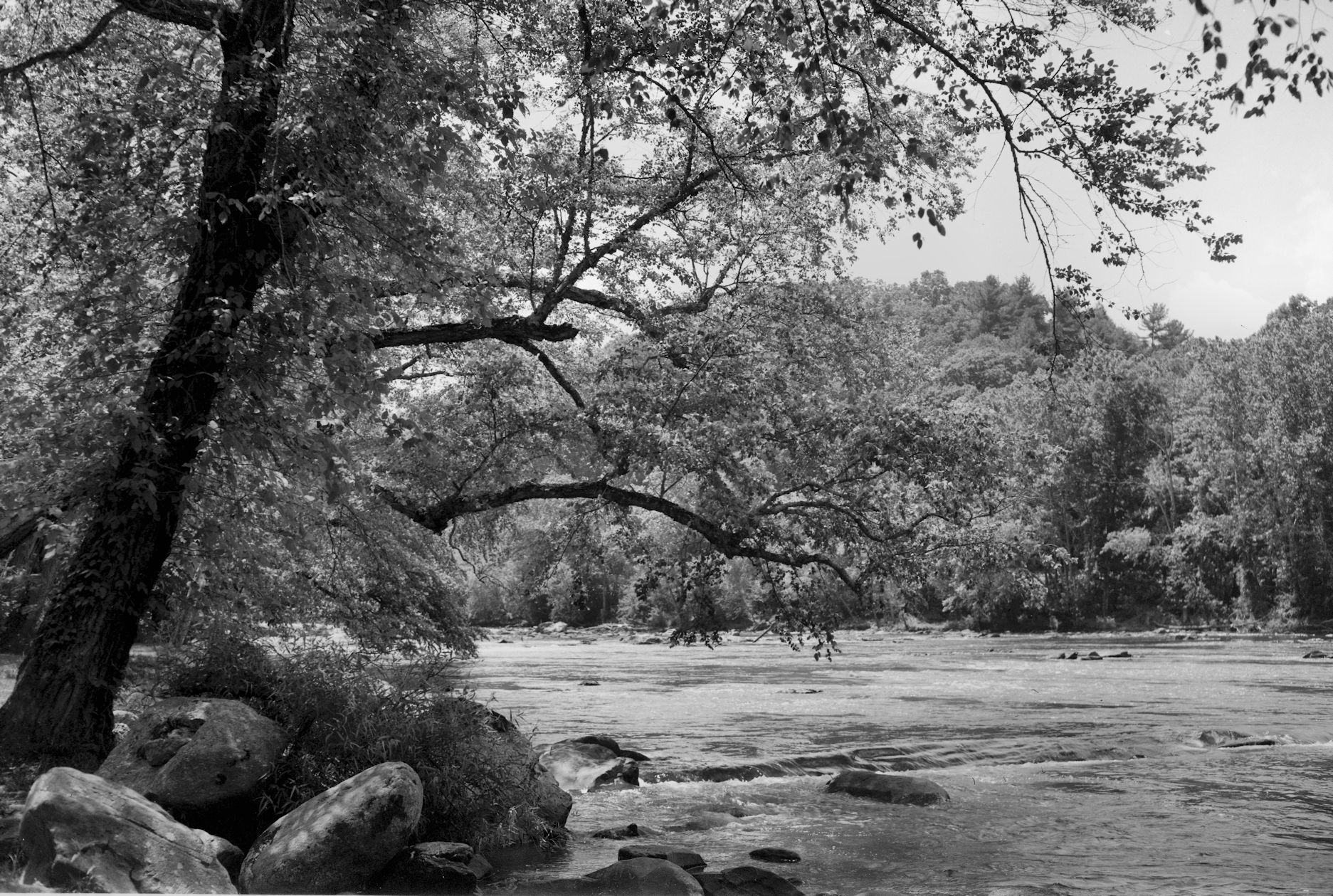
Here are some shots from that last roll.  You can see where the film stuck and acquired some rust in one of the images.  I started that roll in the summer 0f 2024, on a photo meetup with the AVL Camera Club.  We visited several small breweries next to the Swannanoa River, all of which were destroyed a month later by Hurricane Helene and the flood.  The very last photo was taken early this year in the River Arts District, which I guess is fitting. 


The light leaks at the top are from the "fat roll"


You can see the spots on the right side where the film was sticking

These 6x9 cameras from Kodak are capable of some very good results, and if you don’t mind respooling the 120 film to 620 spools, they represent an inexpensive option for 2 1/4 x 3 1/4 inch negatives.  You’ll get 8 shots on a roll.  The cameras easily fit into a large pocket and do not weigh much.  However, you’ll have to make sure the bellows is free from pinholes - and the black fabric used for the bellows is going to need some liquid rubber or black fabric paint to fix. If the lens is free of haze, and the shutter works, you are good to go.  

These cameras were manufactured from 1939-1949, with 10 variants in lens and shutter combinations. The prices at the time ranged from $15 to $49. Today, you should be able to pick up a fully operational example for less than $25, and I certainly would not pay much more.


Another version that I owned in 2011

Friday, October 25, 2024

Kodak’s Duaflex III and FPP Color 620 film

Duaflex III duo - Kodet lens model L, and Kodar lens model, R

I’ve long been a proponent of using some of Kodak’s 620 pseudo-TLR cameras, such as the Duaflex series and the Brownie Reflex 20.  Of course, while these cameras are all over 60 years old, they still have better optics than a new Holga 120N.  Their Bakelite and metal bodies are sturdy, and if you want a fun experience, I highly recommend the the Duaflex III.  Note that not every Duaflex III is the same, which can be said for the original Duaflex as well as the  Duaflex II, III, and IV models.  There are two versions of each. The most basic models have a Kodet Lens, with no focus or aperture adjustment.  The Kodet lens models have an aperture of about f/15 and fixed focus. The better models have a Kodar f/8 lens, with adjustable zone focus and apertures of f/8, f/11, and f/16.  The shutter speed is generally about 1/30 sec, and may be as fast as 1/60 sec, depending on the camera. My shutter tester indicated that my Duaflex III Kodar has a shutter speed of 1/48 sec. 

The Brownie Reflex 20, 10 years newer than the Duaflex III

All Duaflex cameras are pseudo-TLRs, meaning that the brilliant viewfinder is not connected to the focus mechanism.  These are in reality, just box cameras with a nice, bright viewfinder above the lens.  While the basic cameras with the Kodet lenses are simple (and do have double-exposure prevention), you are limited by the non-adjustable aperture and focus.  The Kodar-lensed models have a 72mm lens and can focus from 3.5 feet to infinity.  So, my suggestion is to make the best of the 620 film that you use by shooting with the better versions of any Duaflex model - i.e., Kodar lensed versions with an f/8 lens.  

Ready to go out and do some shootin! Note the expensive strap.


I have a bunch of Duaflexes that I have obtained over the years, and though I rarely use them, every once in a while I get an urge to take one out.  Typically, I respool the film from a roll of 120 to a 620 spool, but I had a couple of rolls of the FPP Color 620, with factory-fresh film.  I loaded up the Duaflex III back in August, and shot the roll over a couple of weeks.    The exposed film sat around for a while, and I sent it out to The Darkroom Lab for processing.  I was really pleased with the results from this 70 year old camera.  In fact, in might now be my favorite 620 camera.


Pseudo-TLR cameras are pretty numerous for 620 film - The Argus 75, The Argus Super 75,  and Argus 40 are fairly common.  There are also others - the Bolseyflex, the Anscoflex I and II, the Duaflex series, the Brownie Reflex 20 as well as the Brownie Reflex for 127 film.  The Herbert George Instaflash might be the crappiest of them all.  The Imperial Reflex and the USC Reflex III, and the little Ansco Panda are all 620 pseudo-TLRs.  Of all of these, the very adjustable Argus 40 might be the best, as you can control shutter speeds, aperture, and focus!  


However, the results that I get with my Duaflex III seem particular to that camera, so it is a keeper for me.  

Here are a few images from that roll of FPP Color 620 (basic scan from The Darkroom):


Where can you get 620 film?

First of all, if you don’t want to respool from 120 to 620 yourself, you can purchase film on 620 spools from the Film Photography Project Store.  (Note - the next time someone says 120mm film smack them aside the head with a Duaflex!).   The FPP 620 color and Basic B&W 620 films are perfect for these cameras.  Other retailers such as B&H and Unique Photo also carry the FPP films.  I also see Shanghai GP3 620 film available on eBay.  I’ve used that film in 127 format, and it isn’t the greatest.  I saw many emulsion defects.  

If you already have a supply of 120 film and some 620 spools, you can do the respooling yourself if you have a darkbag or darkroom available.  There are many tutorials online on how to do it. In any case, try one of these 620 cameras and see how much fun they are to use.


Wednesday, November 29, 2023

Coming soon... FPP's 620 Color!

Back in October, I received some rolls of film to test for the Film Photography Project.  Two were from  a batch of color film rolled onto 620 spools by a vendor for the FPP.  What's not to like?  How many of us have cameras that use 620 film?  Back when I was testing various models for my guide to medium format toy cameras, (Monochrome Mania No. 3 - now out of print), I respooled a bunch of b&w film.  My fingers got cramps doing it.  Aside from a few cameras that really deserve my respooling efforts, I haven't used 620 all that much lately.  However, COLOR on 620 is pretty hard to resist.  My favorite low-fi 620 cameras have been the Kodak Brownie Reflex 20 (pictured below) and the Kodak Brownie Twin 20.  Both cameras are quite similar feature-wise, and a lot of fun to use.  I loaded the FPP 620 Color Beta Test 2023 into the Reflex 20, and shot the roll locally and while on my trip to Dutchess County, NY at the end of October.


When I went to unload the finished roll from the camera, it slipped from my hand and I had to re-roll the backing paper a bit to tighten it, so I probably introduced some edge light leaks, which showed up when I got the developed film back from Ball Photo in Asheville.


Anyhow, I love the results overall, and the Film Photography Project's new 620 film is for now, a "beta" film, yet to be officially released.  Keep your eye on their announcements for this film.  It's certainly going to be a welcome addition for anyone wanting to use a 620 camera!

Friday, June 16, 2023

Unfolding a wonder - The Kodak Vigilant SIX-20


Over the years, I have had opportunities to photograph with many different folding cameras, ranging from the simple and inexpensive Ansco Speedex, to various flavors of Zeiss Ikon Ikontas, and many in between.  The Kodak Tourist was a widely used 6x9 folder, and are relatively inexpensive on today’s market.  However, the one thing hampering many of the Kodak models is the creation of 620 film - really, just 120 film on a smaller diameter spool.  That one quirk has a lot of people not wanting to shoot with some of the nicer 620 cameras bearing the Kodak label.  Instead, they look to European Agfas, Voigtlanders, Baldas, and Zeiss Ikontas to load with 120 film, and I can’t blame them.  However, the Kodak Vigilant SIX-20 - the best one with the Kodak Anastigmat Special 101mm f/4.5 lens, is a wonderful folding camera, produced from 1939-1948.  It features the Kodak Supermatic shutter with B, T, 1-1/400 sec shutter speeds, and an aperture range of f/4.5-32, and scale focus from 3 feet to infinity.  One of these camera recently came my way - and upon inspection, I realized that it had a roll of film inside, at frame 1.  I inadvertently fired the shutter after I extended the bellows, so then I had 6 exposures left, as you get 8 on a roll of 6x9 cm negs.  


I decided to shoot the rest of the roll on some good subjects, so I took the camera down to the Ledges Whitewater Park on the French Broad River, just outside of Asheville.  I decided to rate the film as ISO 50, as I had no idea how old the film was, but I assumed it was at least 50 years old.  I have had a lot of experience with old Verichrome Pan, and knew that I ought to get SOMETHING out of it.  So, in the conditions that I had, I ended up shooting at either 1/50  or 1/100 sec, at an appropriate aperture for the conditions - often at F/8.

After I got home, I loaded the film into a Paterson tank, and developed it with  the FPP D-96 for 8 min at 20°C, followed by a water rinse and fixing, and then final rinses.  When I hung up the film to dry, I was really impressed that this film and camera came through with excellent results.  I did not see any problems with pinholes in the bellows, either, but I will do a check on that later.

perfectly developed with D-96

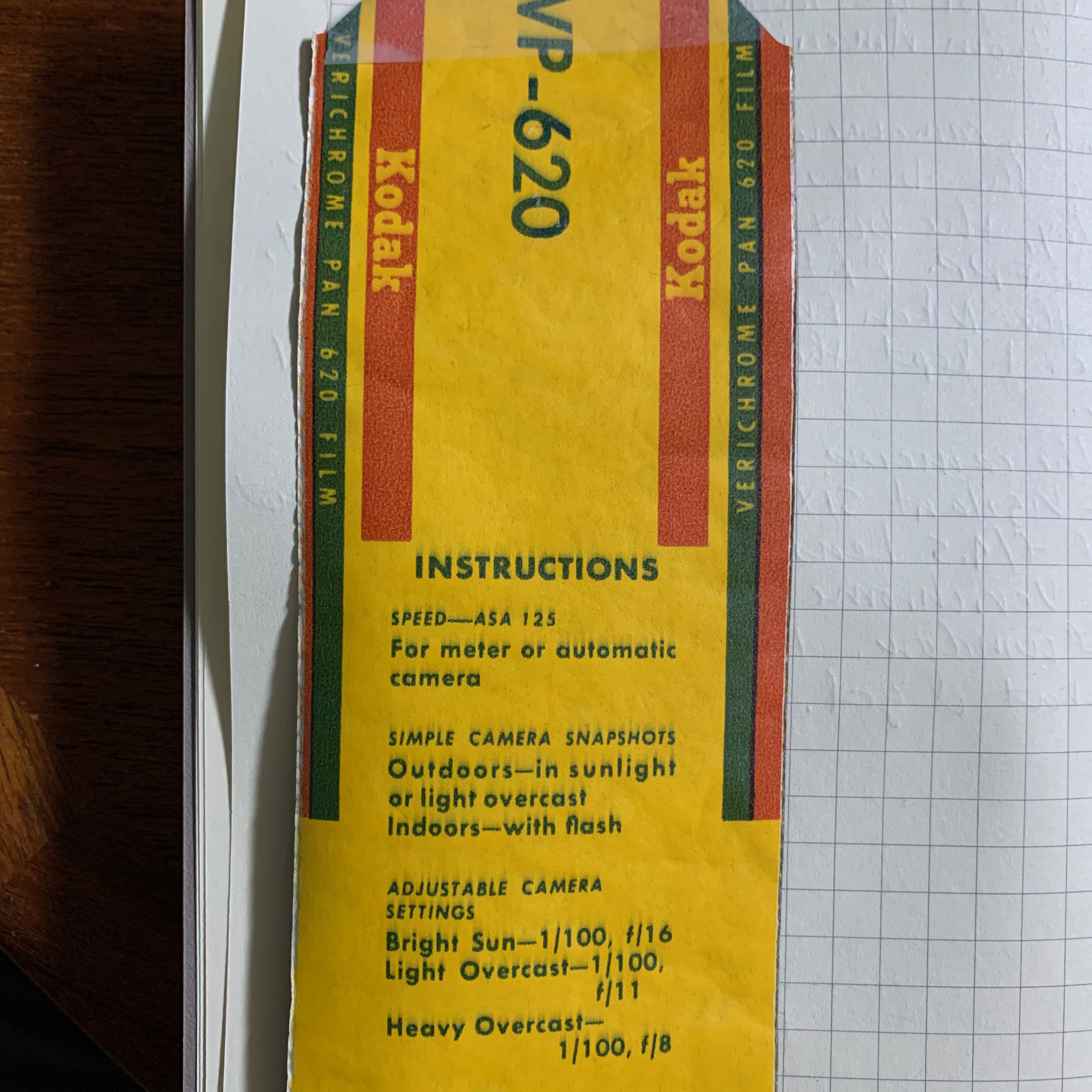
I love seeing the film info on the leader


Aside from wanting to test simple cameras like I did for the medium-format toy camera issue no. 3 for Monochrome Mania (out of print now), I didn’t really want to have to re-spool 120 to 620 spools.  For most of the Kodaks, it’s just not worth it, but with a few exceptions, and this Vigilant SIX-20 is definitely an exception.  I’ll have to re-spool some Kentmere 400 onto 620 so that I can test this camera further.  

That nice lens and shutter combo

the viewfinder with parallax adjustment


The design of this camera is quite nice — and a feature that I have not mentioned is the reverse Galilean viewfinder on the top deck. It has a small adjustment for parallax correction, and there is also one of those small reflex viewers at the front of  the bellows, which I hate.  Anyhow, I want to shoot with this camera some more. For one, it’s probably the lightest 6x9 camera that anyone can carry in their bag, and it also easily fits into a coat pocket. Unfolded, it’s still fairly compact, and also easy to use. The only thing that might be a problem is figuring out the distance to the subject, as there is no rangefinder, so one of those old accessory rangefinders might be a good idea to carry with me.  


There are other versions of this camera, but none of the others have all the bells and whistles of this one.  That f/4.5 maximum aperture is far better than the others with a maximum aperture of f/6.3 or f/8.8.  The Vigilant isn’t the only camera in this class that can take excellent 6x9 cm images, though.  You could look for a Kodak Monitor SIX-20, and all 4 variants of that camera have a lens with a maximum aperture of f/4.5.  There’s also the Kodak Special SIX-20 and the Kodak Senior SIX-20 - all take 6x9 cm negatives on 620 film, if you haven’t already figured out the SIX-20.   

However, if you are looking for a camera that takes 120 film and makes 6x9 cm negatives, I’d look for a Zeiss Ikonta or a Voigtlander Bessa. A folding camera makes a lot of sense for travel, and these folders will give you nice big negatives.  I found that a 3200 dpi scan of one 6x9 negative can produce a 2x3 ft print at 300 DPI.  Not too shabby.  So, be prepared to re-spool the 120 film onto 620 spools if you want to go the Kodak route. If your camera has a sound bellows, clean lens, and accurate shutter, it will be worth the effort for these big negatives.   


Saturday, October 31, 2020

Kodak Brownie Reflex 20

I have been fairly quiet on the blogging front, as I have been preoccupied with getting another 'zine ready. Monochrome Mania #3 is ready to go to print, and it just happens that I left out one camera from my selection of lo-fi cameras in the issue. I ended up buying a bunch of 620 cameras while preparing the material for the next issue of Monochrome Mania. Some of them were models that that I had owned at one time, over a decade ago. I wanted to be be able to photograph them all, as well as run a roll or two of film to see the results with a more nuanced eye than I would have had back then.  One thing I noticed right away, is that while some manufacturers kept putting the same camera out for years with nothing more than cosmetic changes (i.e., the Spartus Full-Vue), others, such as Kodak took a basic design and changed it up a bit, and gave it a different name with each iteration.  Such is the case with the Brownie Reflex 20.  I previously wrote a post about the Kodak Brownie Twin 20, which I found to be easy to use, and produced satisfactory results. The Brownie Reflex 20 is pretty much the same camera, but with only a nice bright waist-level reflex viewfinder. This faux-TLR features the same EV aperture selection, one shutter speed, and body shape and controls as the Twin 20.  The brilliant viewfinder is easy to use, and I think makes it a better "user" than the Twin 20.  


If you are out and about in the eBay Universe, or maybe your local thrift store, you should also take a look at the Kodak Brownie Flash 20 or the Brownie Flashmite 20. Again, these models have identical controls as the Twin 20 and reflex 20 cameras, but incorporate an eye-level viewfinder and a built-in flash, with the Flashmite 20 using a small AG-1 flashbulb, and the Flash 20 using an M8 bulb. The keyword in looking for these cameras is the "20" designation, which means they use 620 film.  Of course, you can respool 120 to 620 spools giving you a broader selection of film. The EV markings are equivalent to f/11, f/16, and f/22, all at about 1/100 sec.  I found that I could use the same 33mm Series VI filter adapter that I used on the Twin 20, so I presume that holds true for the other two models mentioned here.  These cameras are not to be confused with the smaller Kodak 127 cameras that look similar, such as the Starflex, Starmite, Starflash, or Startech.  

Using the Reflex 20 was the same as the Twin 20, except for the fact that the brilliant reflex viewfinder made composition easier and goes well with the placement of the shutter button.  

I loaded some respooled Tmax 100 that was about 20 years expired, and developed in in HC110B for 6 minutes. Results were excellent!  The Tmax 100 had been refrigerated for most of its life, and is a perfect film for these cameras.  I basically shot most of the 12 exposures walking around the Vance monument in Asheville, NC. 

Overall, I'd say this this is my favorite Brownie-labeled camera, a notch up from the Brownie Hawkeye, with better ergonomics and some means of exposure control and zone-focus.  The Brownie - 20 series cameras were made from 1959 to mid-1960s,and I feel that the Reflex 20 is the best of the bunch. All four models take 6x6 cm negatives on 620, have the same zone-focus and EV aperture settings, but the Reflex 20 has the best viewfinder and a separate flash unit that most people will never use, anyway.  Drop in some 100 ISO film and you are ready to go.

Here are a few images.  Those lenses are actually quite good, in comparison with a Holga or Diana.


Thursday, September 10, 2020

The Kodak Brownie Twin 20


This attractive 620 film camera features both waist-level and eye-level viewfinders, hence the Twin part of the name.  The camera was produced from 1959-1964,  and you will often see it for sale in the box with flash, a space for batteries, and the space for a roll of film. The lens has an aperture of f/11, and there is zone focusing.  While there is no B setting, there are three apertures - EV13 - f/11, EV14- f/16, and EV15- F/22.  The shutter speed is approximately 1/100 sec.    The reflex viewfinder is very easy to use, and I find myself preferring it over the eye-level finder.  The camera came with a screw-on flash that uses AG-1 bulbs.  It's quite attractive and modern-looking, in that mid-century style.

I feel the zone focus and ergonomics are the principal attraction to this camera, and if it had B exposure along with a tripod socket, it would certainly rank among the top of my list.  I found that a press-on 33mm Series VI adapter fits over the front of the lens barrel, and allows me to use a yellow filter, which I feel is a great addition for skies.    

Remember to move the switch to Exp. 1-12 after loading the film 
and advancing to frame 1.

The only really oddball thing about this camera is that Kodak expects one to switch a lever on the bottom of the camera to "Load" when rolling on a new roll of film, until exposure 1 pops up in the red window.  Then press  the lever to Exposures 1-12 so that the wind-on stops exactly at the next frame number.  If you forget and start the wind-on in the 1-12 position, you'll never get it where you want it to be.  You then have to switch back to "Load" to get to the next frame number in the red window.  Might as well leave it on Load all the time.  Its sister camera is the Brownie Reflex 20, which has the same features, but lacks the eye-level viewfinder.   That one is definitely worth a try if you should see it in a shop somewhere.

Yellow filter attached with Series VI 33mm adapter

I took the Twin 20 out on an excursion last week to Spruce Pine, NC, and shot a roll of 1997 expired Tmax 400.  I have had good luck with this expired film, and used a yellow filter while shooting in the sun.  I developed it in HC110-B.  I am pretty happy with the results.  Zone focusing worked well, and I kept the aperture at f/11 on all of the shots.