Showing posts with label Kodak. Show all posts

Wednesday, July 08, 2026

Last Roll From my Kodak Vigilant Six-20


A few years ago, I acquired a Kodak Vigilant Six-20.  I respooled 120 onto 620 spools, and over the course of 3 years shot 3 rolls with it.  The results were always quite good. The Vigilant Six-20 is a 6x9 format camera that came in many versions.  The one I used had the best features with the Kodak No. 1 Supermatic Shutter, with speeds from B, T, and 1-1/400 sec, and apertures from f/4.5- f/32.   The Kodak Anastigmat Special is a very good lens, too. An excellent lens/shutter combination that allowed 400 ISO film and reasonable shutter speeds.   

Another version of the camera, and priced lower, features a Kodak No. 1 Diomatic shutter, with B, T, 1/25, 1/50, and 1/100 sec shutter speeds and a Kodak Anastigmat f/6.3 lens.  Definitely not as fast as my camera, and certainly usable with 100-400 ISO film. It’s probably the more common version of the camera, since it was more affordable.


Unfortunately, I’d left the roll of Fomapan 100 in my camera for at least 2 years, with a couple of exposures still to be had.  The film had somehow become stuck and would not advance.  I ended up having to use pliers to wind the film.  I ended up with a “fat roll” which I promptly put into a black container.  I think moisture had caused the film to stick and that’s why I could not roll it along by hand.  

Now that I have a 4x5 camera, I decided to see if the lens and shutter assembly could be used on my Intrepid 4x5.  Now that I know that it covers 4x5, the 101mm lens has become my wide-angle, leaving the shell of the Vigilant lensless.  

Here are some shots from that last roll.  You can see where the film stuck and acquired some rust in one of the images.  I started that roll in the summer 0f 2024, on a photo meetup with the AVL Camera Club.  We visited several small breweries next to the Swannanoa River, all of which were destroyed a month later by Hurricane Helene and the flood.  The very last photo was taken early this year in the River Arts District, which I guess is fitting. 


The light leaks at the top are from the "fat roll"


You can see the spots on the right side where the film was sticking

These 6x9 cameras from Kodak are capable of some very good results, and if you don’t mind respooling the 120 film to 620 spools, they represent an inexpensive option for 2 1/4 x 3 1/4 inch negatives.  You’ll get 8 shots on a roll.  The cameras easily fit into a large pocket and do not weigh much.  However, you’ll have to make sure the bellows is free from pinholes - and the black fabric used for the bellows is going to need some liquid rubber or black fabric paint to fix. If the lens is free of haze, and the shutter works, you are good to go.  

These cameras were manufactured from 1939-1949, with 10 variants in lens and shutter combinations. The prices at the time ranged from $15 to $49. Today, you should be able to pick up a fully operational example for less than $25, and I certainly would not pay much more.


Another version that I owned in 2011

Friday, October 25, 2024

Kodak’s Duaflex III and FPP Color 620 film

Duaflex III duo - Kodet lens model L, and Kodar lens model, R

I’ve long been a proponent of using some of Kodak’s 620 pseudo-TLR cameras, such as the Duaflex series and the Brownie Reflex 20.  Of course, while these cameras are all over 60 years old, they still have better optics than a new Holga 120N.  Their Bakelite and metal bodies are sturdy, and if you want a fun experience, I highly recommend the the Duaflex III.  Note that not every Duaflex III is the same, which can be said for the original Duaflex as well as the  Duaflex II, III, and IV models.  There are two versions of each. The most basic models have a Kodet Lens, with no focus or aperture adjustment.  The Kodet lens models have an aperture of about f/15 and fixed focus. The better models have a Kodar f/8 lens, with adjustable zone focus and apertures of f/8, f/11, and f/16.  The shutter speed is generally about 1/30 sec, and may be as fast as 1/60 sec, depending on the camera. My shutter tester indicated that my Duaflex III Kodar has a shutter speed of 1/48 sec. 

The Brownie Reflex 20, 10 years newer than the Duaflex III

All Duaflex cameras are pseudo-TLRs, meaning that the brilliant viewfinder is not connected to the focus mechanism.  These are in reality, just box cameras with a nice, bright viewfinder above the lens.  While the basic cameras with the Kodet lenses are simple (and do have double-exposure prevention), you are limited by the non-adjustable aperture and focus.  The Kodar-lensed models have a 72mm lens and can focus from 3.5 feet to infinity.  So, my suggestion is to make the best of the 620 film that you use by shooting with the better versions of any Duaflex model - i.e., Kodar lensed versions with an f/8 lens.  

Ready to go out and do some shootin! Note the expensive strap.


I have a bunch of Duaflexes that I have obtained over the years, and though I rarely use them, every once in a while I get an urge to take one out.  Typically, I respool the film from a roll of 120 to a 620 spool, but I had a couple of rolls of the FPP Color 620, with factory-fresh film.  I loaded up the Duaflex III back in August, and shot the roll over a couple of weeks.    The exposed film sat around for a while, and I sent it out to The Darkroom Lab for processing.  I was really pleased with the results from this 70 year old camera.  In fact, in might now be my favorite 620 camera.


Pseudo-TLR cameras are pretty numerous for 620 film - The Argus 75, The Argus Super 75,  and Argus 40 are fairly common.  There are also others - the Bolseyflex, the Anscoflex I and II, the Duaflex series, the Brownie Reflex 20 as well as the Brownie Reflex for 127 film.  The Herbert George Instaflash might be the crappiest of them all.  The Imperial Reflex and the USC Reflex III, and the little Ansco Panda are all 620 pseudo-TLRs.  Of all of these, the very adjustable Argus 40 might be the best, as you can control shutter speeds, aperture, and focus!  


However, the results that I get with my Duaflex III seem particular to that camera, so it is a keeper for me.  

Here are a few images from that roll of FPP Color 620 (basic scan from The Darkroom):


Where can you get 620 film?

First of all, if you don’t want to respool from 120 to 620 yourself, you can purchase film on 620 spools from the Film Photography Project Store.  (Note - the next time someone says 120mm film smack them aside the head with a Duaflex!).   The FPP 620 color and Basic B&W 620 films are perfect for these cameras.  Other retailers such as B&H and Unique Photo also carry the FPP films.  I also see Shanghai GP3 620 film available on eBay.  I’ve used that film in 127 format, and it isn’t the greatest.  I saw many emulsion defects.  

If you already have a supply of 120 film and some 620 spools, you can do the respooling yourself if you have a darkbag or darkroom available.  There are many tutorials online on how to do it. In any case, try one of these 620 cameras and see how much fun they are to use.


Thursday, December 28, 2023

2023 - Another great year for film users

Millbrook Diner, Kodak Aerocolor.


Here it is, almost the end of December, and it’s a good time to review some events of 2023, both good and bad, that involve film-based photography.  In the digital world, it’s all about mirrorless wonders from Nikon, Canon, Leica, Fuji, etc., but over here in film land, we rarely get new film cameras, so we get excited by new film stocks, right?  Of course, there was the announcement by Ricoh/Pentax about a new film camera project, and we will have to wait to see where that goes. The release of the Polaroid I-2 advanced instant camera was met with enthusiasm by many, and jeers by a few. I’m never going back to any instant cameras, but if I was looking for  one, the I-2 certainly has all the bells and whistles that makes it stand out apart from any others currently on the market.  


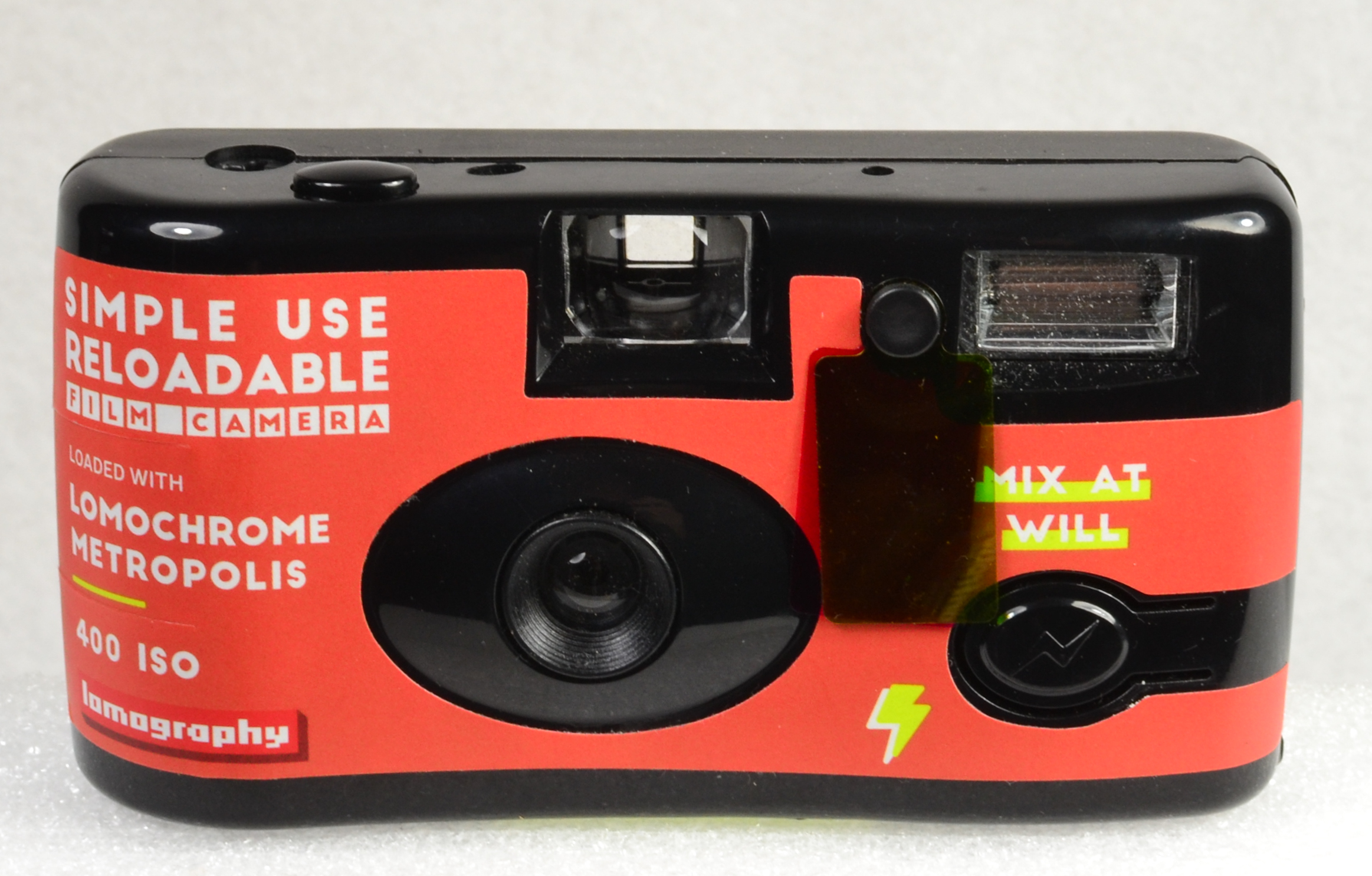
I can’t really get excited by any of the simple-use cameras that arrived in 2023.  I get that they are designed to attract a different segment of the market, and anything new and shiny that takes 35mm film is at least better than nothing at all.  The Kodak Ektar H35N doesn’t do it for me, as I’ve had my fling with GOOD half-frame cameras, and I’m not about to use another one.  But if you are looking to maximize your picture-taking on a single roll of film, the H-35N could be a good choice for you.  Take a look at Dave Mihaly’s YouTube videos and make your decision from them.  Yes, I have done a lot of photography with cheap plastic cameras, and I have my favorites.  But, I don’t need to buy any of these “new” plastic cameras currently being sold.  


That brings me to Lomography, which as long been the home of the plastic fantastic (and not necessarily cheap).  Some models that were out of stock are now back in production, such as the Lomo Kino (at $60, a bargain), and the Spinner 360 (less than $50).  Say what you want, but Lomo has been innovative, interesting, and has been a big booster for analog photography.  


I’m sure there have been some interesting introductions of other film cameras this year, and I apologize for not covering some of the boutique offerings in the pinhole and large-format world.  As the saying goes, “if you know, you know.”


FILMS


The year started out with the stock of color films being low, and price hikes had a lot of folks bitching about that. I get it, and for some people, finding that they’d spent over $15 for a roll of film, $30 for processing and prints or scans, it was a bridge too far.  It wasn’t the best for anyone wanting to get started, especially with their $50 simple-use camera, and getting back a bunch of underexposed shots.  For us old-timers (since I’m not a 30-something YouTuber - I’m twice their age, so I’m probably a film dinosaur) film prices haven’t been the limiting factor in the avocation.  But  yes, color film was definitely more expensive in the beginning of the year than at the end, when Kodak and Lomography were discounting their 120 film stocks.  


The rising prices and scarcity of C-41 films definitely drove up the interest in using ECN-2 films, especially from sellers that were removing the remjet so that the films could be developed by any C-41 lab.  That lead us to the Cinestill 800T shit show, and enough has already been said about that on social media, YouTube, and blogs.  My opinion, for what it’s worth, is that Cinestill was improperly granted a license to trademark 800T.  Second, they don’t want competition from sellers like Reflx Labs in China.  Third, we all want a bargain, so vote with your wallet.  Rem-jet removed films such as Amber (from RETO), Reflx Labs, and others are definitely cheaper than the Cinestill versions — and they are the same emulsions. 


Lomography’s introduction of Lomochrome Color ’92 added another unique film stock to an already interesting array of films.  I reviewed that film (https://randomphoto.blogspot.com/2023/08/one-roll-review-lomochrome-color-92.html) in August.  With Metropolis, Turquoise, and Purple, you can do some fun stuff.  Lomochrome Purple in particular, gives results somewhat akin to a color IR film.  


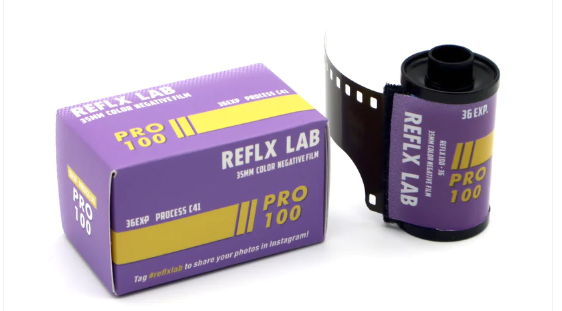
The winner for the least-hyped color film is Kodak Aerocolor, which is being repackaged under various names, such as Elektra 100, Santa Color 100, Reflx Lab Pro 100, and Karmir 160.  Aerocolor is a fine-grained aerial photography film with great latitude, and a lot of people are just discovering it.  If Kodak/Alaris could get their shit together, they’d be offering Aerocolor  as a Kodak product in 35mm and 120.  Instead, they have siloed the different divisions and that’s to their detriment.  


The winner for the most-hyped color film is obviously Harman Phoenix.  I’ve never seen a film rollout like this one, and love it or hate it, Phoenix is a unique emulsion. Lens caps off to Harman for their foray into the world of color.  I’ve shot one roll so far, and I’ll wait for a day with light clouds and no bright sun for the next one.   


I believe that the Kentmere Pan 100 and 400 are two of the least-expensive b&w films out there, and in my experience, give outstanding results.  I’ve used them for years, when they were only sold as Ultrafine Extreme by Photo Warehouse, in California. Now, in their own branding, the Kentmere films are an excellent value in 35mm and 120.


Reflx Lab in China has been doing a great job with their branding and selling of various film stocks, and their recent introductions of several ECN-2 films with the remjet removed so that they can be developed as C-41 is a great thing.  In my local camera store - Ball Photo, in Asheville, I’m seeing more variety of films than ever before.  Sure, some of them are just rebranded stocks, but if that gets someone to try one out, all the better.


The Film Photography Project just keeps rolling along with their films for still and cine cameras.  Their catalogue of FPP-branded film stocks is impressive, and while it’s the place to go for the unusual, they also sell the major brands at the best prices.  


Another very positive development (the photo puns write themselves) is the production of Kodak-branded photochemistry coming back to the USA.  Photo Systems, Inc. in Dexter, MI which used to be known as Unicolor, will be producing Kodak-branded photo chemistry.  I toured that facility a number of years ago, and it looks like Dexter, MI will be seeing ever more semi-trucks coming and going from that factory.  In case anyone forgets, Kingsport, TN is the home of Eastman Chemical, which used to make photo chemistry there.  That’s about an hour from my home.


Deaths (certainly not comprehensive)


The permanence of great photography is exemplified by Elliot Erwitt, who died at the age of 95. His images have appeared in various books and monographs.  He left us with many indelible images of the every-day that were never ordinary.  https://www.elliotterwitt.com/

John Fielder, a well-known photographer of the natural scenes in Colorado, died at 73. 

https://www.cpr.org/2023/08/13/john-fielder-photographer-colorado-outdoors-died-at-73-years-old/

Frank Borman, astronaut, died in November, at the age of  95 - took the first photograph on the Apollo 8 mission of the earth from the moon - that image is lesser known than the one taken by William Anders - Earth Rise- which inspired a consciousness  of Earth being our home, alone in the cosmos.  Those Hasselblad cameras were instrumental in the Apollo program, and the quality of the images from them are unsurpassed, especially when you consider the environment in which they were used.

Frank Borman's photo


Larry Fink, well-known for his photography in Greenwich Village, and chronicling the Beat generation, died at 72.  https://www.youtube.com/watch?v=Qt9M2aQAFT0

Lawrence McFarland, photographer and educator, died at 81.  Known for his landscapes, he was a respected professor of photography at the University of Texas, Austin. https://www.lawrencemcfarlandphoto.com/home

John Benton-Harris, photographer/visual sociologist, died at 83.  An American in the UK, he was renowned for his photo essays of the British people. https://www.theguardian.com/artanddesign/2023/oct/23/john-benton-harris-obituary

Helen Marcus, a noted photographer of the famous in New York, died at 97. Her career started late - at age 50.  Her black and white portraits of famous writers such as Tom Wolfe and Toni Morrison are iconic.  https://www.shelf-awareness.com/issue.html?issue=4601#m61893

Georgia M. Coxe, died at 92.  She was known both for her poetry and her photography, which in my mind, is an ideal combination. https://provincetownindependent.org/obituaries/2023/09/20/poet-and-photographer-georgia-coxe-dies-at-92/

North Carolinian photographer, Bruce Roberts, died at 93.  He pioneered the use of 35mm in newspaper reportage, and photographed a LOT of North Carolina for Southern Living and Our State magazines.  https://en.wikipedia.org/wiki/Bruce_Roberts_(photographer)

Cary Wolinsky, who often photographed for National Geographic magazine, died at 75. He was an astute photographer whose creativity with the camera is well-known. https://thephotosociety.org/cary-wolinsky-1948-2023/

Lisl Steiner, a photojournalist, documentarian, and film-maker, died t 95.  https://www.nytimes.com/2023/06/18/arts/lisl-steiner-dead.html


There are a lot of photographers that have lived into their 90s, so I guess there’s hope for me yet.


What else to say about 2023?  I published 4 zines, which was pretty good. All of them were well-received.  I shot well over 100 rolls of film, developed most of it myself.  The nascent Asheville Camera Club published a zine, and is now meeting monthly. For once, I am just a participant, not an organizer.   I didn’t go on any lengthy road trips, which I hope to make up for in 2024.  However, I did pretty well with trips to Michigan, Ohio, New York, and South Carolina.


I hope 2024 goes well for everyone (well, almost everyone - democracy has to survive). 

How did 2023 work out for you?

Monday, July 10, 2023

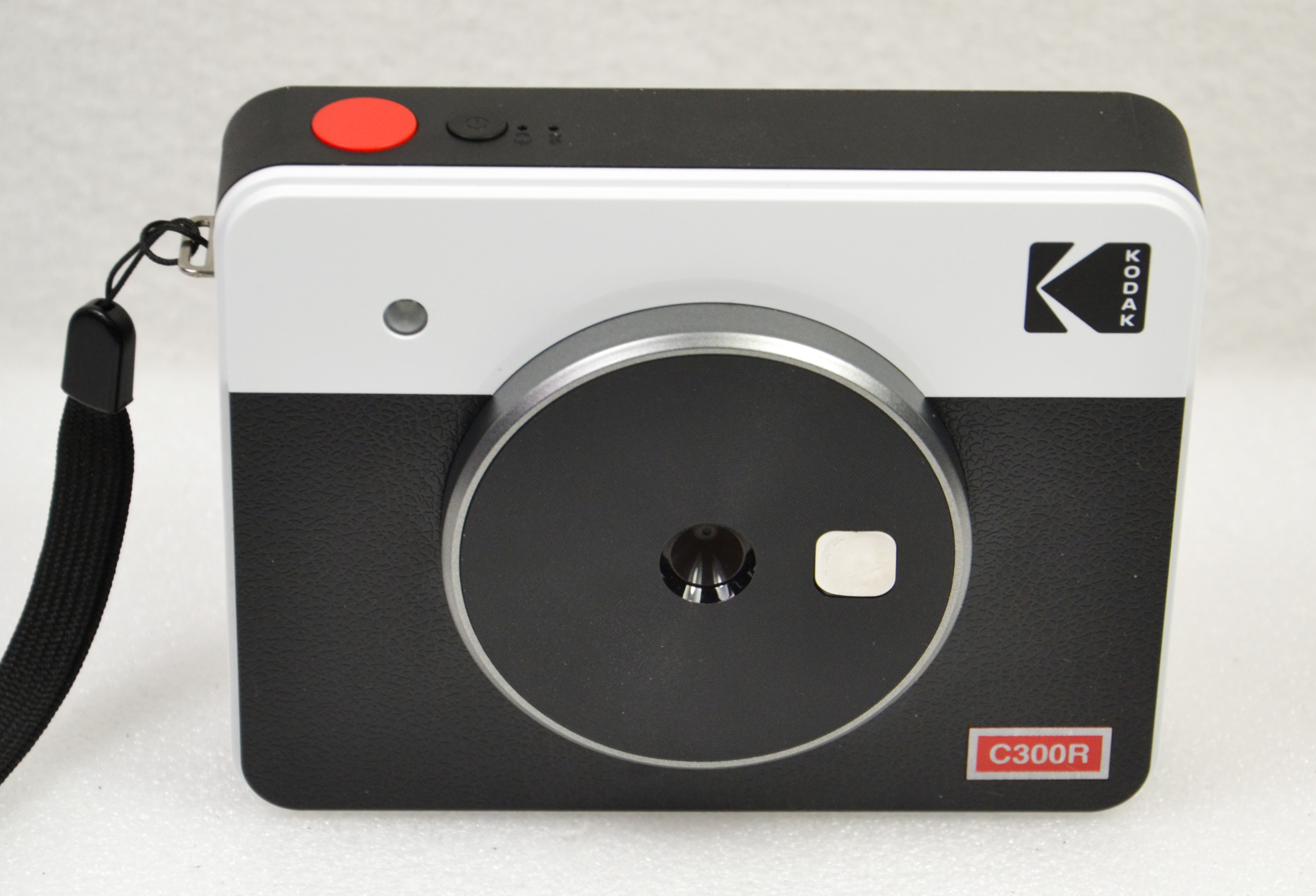
The Kodak C300R - camera and mini-printer


About a month ago, I finally purchased a Kodak Minishot 3, 2 in 1 Retro Instant Digital Camera and Photo Printer - hereafter known as the C300R.  I bought it on Amazon with 6 cartridges of “film” for $130.  The main reason for the purchase is that the C300R is not only a camera with an instant printer, but it also functions as a Bluetooth-connected printer for my iPhone.  What better way to share photos with friends and family?  Also, I find using it to add images to my journal is very helpful.  


Anyhow. now that I have had the C300R for a few weeks, I am impressed with the quality of the 3”x3” prints.  One could compare this to either a Polaroid mini or one of those zink (zero-ink) cameras/printers, but in terms of use - it’s certainly more like a little Polaroid camera. If you use it as a camera, it does not save an image to memory to be looked at later. The image stays in the buffer until you either print it, or take another shot. The print process is actually rather fun to watch as it’s a 4-pass process using a small dye-sublimation printer that does 3 passes for the CMY colors, and a final lamination layer that protects the surface of the print.  As you see in the short video, it takes about 60 seconds for that to happen, and you end up with a print that’s supposedly good for at least 100 years. 


The C300R isn’t exactly tiny, but it’s also not large. It’s 4” x 5” x 1.125” and can easily fit into a large pocket or your camera bag. It weighs about 14 ounces.  The tiny lens on the front has a selfie mirror nearby.  It’s use as an instant camera is pretty straightforward - just point and shoot, and press the print button on the back.  I didn’t expect the camera to produce jaw-dropping prints - but it really does a very good job with the prints - better than a Polaroid mini, for sure. Plus, you can add borders or effects to the image before you print it. A fun toy, for sure.

The "used" YMC panels 

As a portable printer for your phone, you just need to download the Kodak Photo Printer app, connect to the C300R via Bluetooth, and then you select the images that you want to print.  Sharing could not be easier.  Since the prints are square, the best option is to take images on your phone in square format - which is what I normally do, anyway. You can do some cropping, etc in the app if necessary. It’s really a lot of fun to watch this printer work, and as each layer - Yellow, Magenta, Cyan, and Lamination takes place, it shows on your phone and the small LCD screen on the camera what’s taking place.


A box has three cartridges of 10 shots each

Each pack of “film” is self-contained with the 10 sheets of paper and the roll of thin film with the sequence of dyes for each image. As they get used up, they get rolled onto a small cylinder in the cartridge. So in essence, you have a long series of yellow, magenta, cyan, and clear rectangles.  Each one has a component of the image that you printed.  I a bit of curiosity, I tool a used cartridge and unrolled the film from the take-up spool, and then tried to scan each of those layers separately to remake the image.  The thin film is really difficult to handle, and I also tried manually stacking the 3 color layers together and then photographed that, reversed the image in my image editor, and voila - a rather unsaturated and slightly misaligned image. Such a process could be something that has applications for people that are more creative than I am.  I did make a black and white image just from the Magenta layer, and it reminds me of the “negatives” from the peel-apart Land Camera film, FP3000B.

manually layering the 3 colors on a light table,
photographing it, then inverting to a positive.


Just scanning the Magenta layer and converting to monochrome!

The C300R has a built-in battery that’s charged by attaching a USB cable (Type B?) to any USB power source.  Each cassette holds materials for 10 shots/prints, and the cost per photo is about 60 cents - which is pretty cheap compared to a Polaroid or Instax camera.


Overall, I think it’s a great device for anyone that would like to have an “instant” camera or a tiny portable printer. I don’t know how durable the C300R is over time, but like any digital device, it shouldn’t be abused. For the price, it’s pretty good value, and the supplies are not expensive.  If you don’t need the camera function, Kodak sells just a mini-printer (P300R) for about $100.  Another option might be the Canon SELPHY QX-10 printer, which also uses dye-sub technology and prints 2.7” square, but it costs as much as the C300R.  I can't really compare these to the "zink" cameras and printers, as I have not used them, but dye-sub prints are supposed to last a lot longer than the zink images.

Any of these tiny printers are useful tools for journaling, sharing photos at gatherings, or just having a small, tangible object to give someone.  When I took a photo of two women with their dog at a local brewery and gave them the print (which the images above are based upon), they were thrilled with the gesture, and wanted to know more about the C300R. The color rendition with the C300R is very good, and the glossy print that results is so much like a small Polaroid, but better.  As I stated in my recent Monochrome Mania issue 10 - it's a good idea to print  and share those smart phone images, and a mini-printer such as the C300R is a great way to do it.


Thursday, June 22, 2023

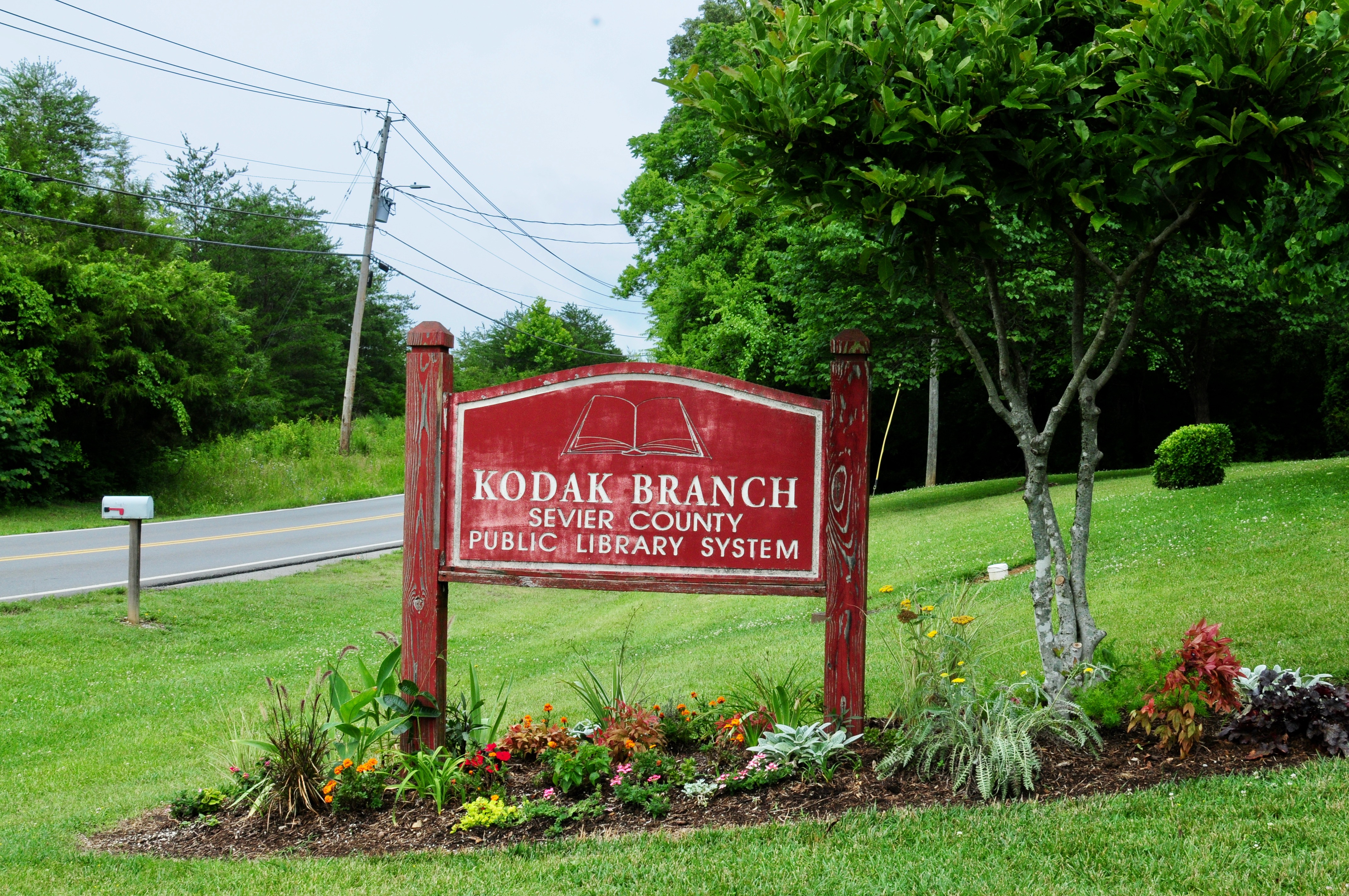
Kodak, Tennessee


Ever since we moved to western North Carolina, I have been interested in exploring and photographing many of the small towns that are in the surrounding counties.  However, once I found out there was a town in Tennessee named Kodak, I knew that I had to visit it to satisfy my curiosity, sort of like when I went to Mongo, Indiana in 2018.  So, after yesterday, I can delete Kodak, TN from my bucket list.

First, you may wonder how the town came to be called Kodak, since Kodak is an invented word by George Eastman.  In 1892, the postmaster Harvey N. Underwood, learned of the new "Kodak" brand of camera. Underwood decided that this was a name that was easy to remember and spell, hence he sought permission from George Eastman, to use this name for his village and its post office. Eastman granted this permission. I am pretty certain that the original PO building is now a real estate office.  So, here we are with Kodak Road, which alone is a pretty good name. 

Possibly the original site of the Kodak PO.


So, for the summer solstice of 2023, I decided that I would do a day trip to Kodak, photograph places with the name Kodak on them, and do my usual meandering road trip.  When I started out a little after 8:30,  the weather was overcast with light rain, and taking US-25 from Weaverville, made for a scenic ride.  US 25 passes through Hot Springs, as does the Appalachian Trail.  I’ve visited Hot Springs several times, and it sits along the French Broad River, which US-25 crosses several times in Tennessee.  At the TN/NC state line, I stopped to photograph an old sign for the State Line Cafe, which has been replacaed with an antiques store.  US 25 25 took me through Newport, TN, where I found this lovely old store along Lincoln Avenue.  I was supposed to meet up with Donna Moore to receive a bunch of cine film and odd lenses, so we met in the parking lot of the BassPro/Cabela’s store off of I-40W.  The entire region is geared towards tourists, as the Great Smokey Mountains are not far off, and neither is Pigeon Forge,  Dollywood and Gatlinburg. Sevierville is adjacent to Kodak, and parts of Kodak have been incorporated into Sevierville.  The main roads are definitely lined with places that cater to the tourists, except in Kodak proper.  


Kodak Road turns into Dumplin Valley Road, which feeds into TN State Route 66, which is also called the Winfield Dunn Parkway.  That’s where the preponderance of business have the word Kodak, including the Kodak Post Office, which dates from the 1989.


Driving around the many back roads in the area reveals the rural character and agricultural nature of the businesses.  However, as is typical, there are housing developments being carved out if the farmland.  The original center of Kodak is a four-corners without a traffic light.  The brightly colored Kodak Trade Center is probably the most notable of buildings.  I wonder how much has changed since Kodak was founded in 1892.

I had originally planned to shoot a Kodak camera with Kodak film while in Kodak, but the weather was more suited to pulling out a Nikon D300, while dodging the rain drops.  I think I managed to hit most of the highlights.  I also finished up a roll of Derevpan 100 in my Nikon F3HP.   

On my return trip, I went S on TN 66 to US-411, which eventually took me to I-40, and back to Asheville.  US-411 is also an interesting drive, as it’s named the Dolly Parton Parkway in Sevierville.   There is a Bush’s Beans plant on that route, and it has a visitor center that was closed by the time that I arrived.  

I wonder if real hillbillies get tired of their portrayal?

That's a LOT of beans

Bush's factory.  


It was a lot of driving for the day -- the twisty mountain roads eat up a lot of time and not as much distance as those road trips that I used to take in Michigan, Ohio, and Indiana.  But, it's NEVER boring!

I suppose my next trip that's Kodak-related should be in Kingsport, TN, where Eastman Chemical was located.  That's a little over an hour from my house.