Showing posts with label street. Show all posts
Wednesday, April 15, 2020
Argus C-3 Follow-up.
My recent post about the Argus C-3 generated a lot of interest, and comments both on the blog and on social media. There's no doubt that the C-3 was a popular camera into the 1960s, and for some young photographers, it may have been a hand-me-down from a parent that had probably moved to a better camera. Nonetheless, an Argus C-3 can be used to take pretty good photographs, and to show that I can still use one, a shot a roll of Eastman 5222 a few weeks ago. I developed the film in D-96 and the results are excellent. One thing that I quickly found out is that one has to be careful about holding the camera. A finger in the wrong spot gets hit by the cocking lever when the shutter button is pressed. Definitely not an ergonomic camera, but yet, it does work pretty well. Also, when rewinding the film, hold the film catch button down while rewinding - which takes forever, because there is no crank, just a thin knurled knob.
You can watch my Photo Notes Episode 2 on D-96. https://www.youtube.com/watch?v=hDrzi6-qfVU
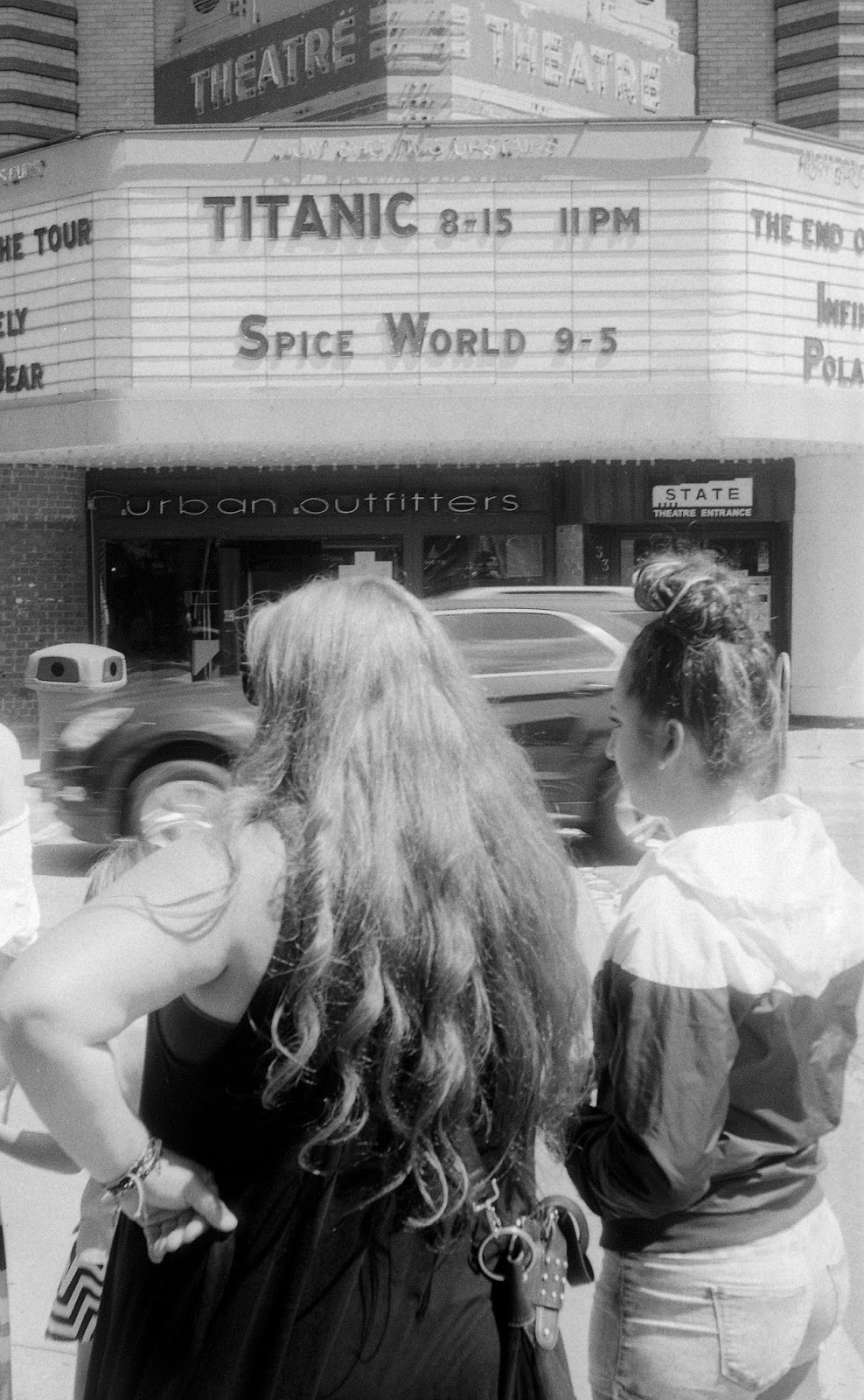
Here are some photos of Asheville, NC, during our COVID-19 shutdown.
Saturday, February 23, 2019
Boxing Things Up.
As some of you know, my wife and I are planning on moving to Asheville, NC later this year. Right now, we are beginning a series of home renovations, and doing a lot of moving things around, some preliminary boxing up, and I won't have the opportunity to do any extensive blogging like I have. Camera tests and film testing will be off for awhile, as well. I am not sure when I will have some really free time to pursue these things, but I am guessing after April. We'll see. I am currently decluttering and packing some things away for a few months. Things I am not necessarily needing to access until we are settled.
While boxing some items, I found a bunch of CD's with photos on them, and yes, they are all labelled with the pertinent information. I pulled one out, and it was from The Darkroom, and it contains scans from a September 2014 road trip that Marc Akemann and I took to Monroe, MI and places around it, including Luna Pier. All of the following were taken with a Konica FS-1 that I had, and I have no idea when I sold it or gave it away, but I think I divested myself of all Konica stuff in 2015. All these images were on Hawkeye Surveillance Film, a nice C-41 color film from Kodak. I wish that I had bought about 4 100 ft. rolls when I had the chance! Some of these have been cropped from the 35mm frame to square format.
As I recall, I liked the FS-1. It was the first 35mm SLR to have a built-in motor drive in 1979. It had a weakness with the battery holder, though, and that was a sore point with an otherwise nice camera. It's fun finding some things that I have not looked at for a while, but I better keep packing, as the contractors are coming Monday to refinish all the wood floors! I'll see you again in a month or so!
Mark
While boxing some items, I found a bunch of CD's with photos on them, and yes, they are all labelled with the pertinent information. I pulled one out, and it was from The Darkroom, and it contains scans from a September 2014 road trip that Marc Akemann and I took to Monroe, MI and places around it, including Luna Pier. All of the following were taken with a Konica FS-1 that I had, and I have no idea when I sold it or gave it away, but I think I divested myself of all Konica stuff in 2015. All these images were on Hawkeye Surveillance Film, a nice C-41 color film from Kodak. I wish that I had bought about 4 100 ft. rolls when I had the chance! Some of these have been cropped from the 35mm frame to square format.
As I recall, I liked the FS-1. It was the first 35mm SLR to have a built-in motor drive in 1979. It had a weakness with the battery holder, though, and that was a sore point with an otherwise nice camera. It's fun finding some things that I have not looked at for a while, but I better keep packing, as the contractors are coming Monday to refinish all the wood floors! I'll see you again in a month or so!
Mark
Wednesday, September 26, 2018
Getting Comfortable with the Leica M2
Colorado Trip, Part 2 of 3
I acquired my Leica M2 in 2014, and over the span of 4 years, I never took it along as my only 35 mm film camera. That changed on my trip to Colorado earlier this month. Yes, I packed the Nikon D300 as my main camera, but as it turned out, the M2 was often my walk-around camera as the trip went on. Mostly, I shot b&w film with it, and the more I used it, the more I felt at ease with it. One could say that we "bonded" on the trip. After finally going through 1000 images in Lightroom from the D300, and then developing and scanning the 7 rolls of film from the M2, the film was a more relaxing and I think, more rewarding process. First of all, nearly all of my M2 shots were what I would call "dead on" in terms of exposure. Yeah, b&w film has enough latitude to cover minor exposure errors, but the thing is, being in an all-manual, no built-in meter situation made me think more about the image and proper settings before I pressed the shutter button. In outdoor situations in the SW, it's almost always sunny-16 during the day, and my years of experience, intuition, and sometimes my pocket light meter, got me through the rest.
I wanted to test myself this time -- what could I expect if I went somewhere and ONLY shot with a rangefinder? As I grew more relaxed with the Leica, it became all the easier to shoot anything with it. At heart, I have always been an SLR user, and of course, there are many situations when an SLR's capabilities will favor its use. Long lenses and rangefinder cameras just are not a good combo. My M2 has the Canadian-made 35mm f/1.4 Summilux, and is that lens sharp. In the process, I found that the 35mm point of view was a really great choice for the landscape and skies of the West. The more I shot, the better I felt about my choice. As I am going through the negatives now, I am very pleased with my results.
Somewhere, I saw a line that basically said that B&W is an interpretation of the scene, not as how it really looks. And of course, that is true. There are many instances when I see something colorful and knowing that it's the colors that make the image, I don't take a b&w photo. In the West, however, the landscape and skies are contrasty, the landscape structured, and oooh the shadows! The Saguaro cacti in Tuscon were tremendous, and even more so when I shot them with the M2. My films were Ilford HP-5+, Kodak Tmax 400, Ultrafine Xtreme 400, and Agfa APX 100. All look great. I didn't use any filters over the 35mm lens, as I don't have an adapter for filters. Still, the shots look fine.
With a camera such as the M2, I wasn't fiddling with the camera. I was more connected to my final images than I was with the D300, for sure. The M2 is simple, easy to use, and has a great lens. The viewfinder is wonderful, and of course, the camera is lighter around the neck than the D300 or any other film SLR.
I think now, that I could be fully confident of coming back with great photos from a long trip with nothing but the M2, a bunch of film, and a simple light meter. Thanks to this latest trip, I also opened my eyes to what I can do when I am not thinking about the equipment.
I acquired my Leica M2 in 2014, and over the span of 4 years, I never took it along as my only 35 mm film camera. That changed on my trip to Colorado earlier this month. Yes, I packed the Nikon D300 as my main camera, but as it turned out, the M2 was often my walk-around camera as the trip went on. Mostly, I shot b&w film with it, and the more I used it, the more I felt at ease with it. One could say that we "bonded" on the trip. After finally going through 1000 images in Lightroom from the D300, and then developing and scanning the 7 rolls of film from the M2, the film was a more relaxing and I think, more rewarding process. First of all, nearly all of my M2 shots were what I would call "dead on" in terms of exposure. Yeah, b&w film has enough latitude to cover minor exposure errors, but the thing is, being in an all-manual, no built-in meter situation made me think more about the image and proper settings before I pressed the shutter button. In outdoor situations in the SW, it's almost always sunny-16 during the day, and my years of experience, intuition, and sometimes my pocket light meter, got me through the rest.
![]() |
| Our condo, Avon, CO. Ilford HP-5+ |
![]() |
| Avon, CO. Ilford HP-5+ |
![]() |
| Bev and Adrienne, Bob's Place tavern. Ilford HP-5+ |
I wanted to test myself this time -- what could I expect if I went somewhere and ONLY shot with a rangefinder? As I grew more relaxed with the Leica, it became all the easier to shoot anything with it. At heart, I have always been an SLR user, and of course, there are many situations when an SLR's capabilities will favor its use. Long lenses and rangefinder cameras just are not a good combo. My M2 has the Canadian-made 35mm f/1.4 Summilux, and is that lens sharp. In the process, I found that the 35mm point of view was a really great choice for the landscape and skies of the West. The more I shot, the better I felt about my choice. As I am going through the negatives now, I am very pleased with my results.
![]() |
| Vail, CO Ilford HP-5+ |
![]() |
| Pioneer Cemetery, Glenwood Springs CO Ilford HP-5+ |
![]() |
| Pioneer Cemetery, Glenwood Springs CO Ilford HP-5+ |
![]() |
| Pioneer Cemetery, Glenwood Springs CO Ilford HP-5+ |
Somewhere, I saw a line that basically said that B&W is an interpretation of the scene, not as how it really looks. And of course, that is true. There are many instances when I see something colorful and knowing that it's the colors that make the image, I don't take a b&w photo. In the West, however, the landscape and skies are contrasty, the landscape structured, and oooh the shadows! The Saguaro cacti in Tuscon were tremendous, and even more so when I shot them with the M2. My films were Ilford HP-5+, Kodak Tmax 400, Ultrafine Xtreme 400, and Agfa APX 100. All look great. I didn't use any filters over the 35mm lens, as I don't have an adapter for filters. Still, the shots look fine.
With a camera such as the M2, I wasn't fiddling with the camera. I was more connected to my final images than I was with the D300, for sure. The M2 is simple, easy to use, and has a great lens. The viewfinder is wonderful, and of course, the camera is lighter around the neck than the D300 or any other film SLR.
I think now, that I could be fully confident of coming back with great photos from a long trip with nothing but the M2, a bunch of film, and a simple light meter. Thanks to this latest trip, I also opened my eyes to what I can do when I am not thinking about the equipment.
![]() |
| Gore Creek, Vail, CO Ilford HP-5+ |
![]() |
| Saguaro National Park, Agfa APX100 |
![]() |
| outside Mission San Xavier. Tmax 400 |
![]() |
| Mission San Xavier, Tmax 400 |
![]() |
| Mission San Xavier, Tmax 400 |
![]() |
| 4th Avenue, Tucson, AZ. Ultrafine Xtreme 400 |
![]() |
| Mission San Xavier, Tmax 400 |
![]() |
| 4th Ave., Tucson, AZ. Ultrafine Xtreme 400 |
![]() |
| Mission San Xavier, Tmax 400 |
![]() |
| Tucson, AZ. Tmax 400 |
![]() |
| Mission San Xavier, Tmax 400 |
![]() |
| 4th Ave., Tucson, AZ. Ultrafine Xtreme 400 |
Sunday, May 01, 2016
More From Berkeley
I am still developing some film that I shot in Berkeley, CA almost a month ago. This latest roll of Ilford HP-5+ was finished up a couple of weeks ago in Arbor. I may have stated it before, but HP-5 has become my favorite 400-speed film. This roll, developed in the last of my remaining Kodak HC-110, came out with beautiful gray mid-tones. The Berkeley shots were taken between 7:30 and 8:30 am, and it was great getting out of the hotel and walking around with a camera before things started getting busy.
Here are a few for your enjoyment.
Sunday, August 23, 2015
Argus Day 2015 - A Markfinder vs the Argus A
This year, Argus Day was August 15. It amazes me that I have shot on nearly all of the Argus Days since 2002. Started in 2001, by a small group of Argus-lovers, Argus Day has endured and remains "an event." Usually, I use my most trust-worthy Argus - an Argus C-3 or a C-4 that I have shot with previously, and have gotten good results with. I mean, why would I want to risk lousy results on this one day? However, this year I tried something different. My daughter's Argus collection still remains in the house, so I borrowed what appeared to be a working Argus Markfinder, also known as the Argus 21. The shutter speeds seemed to work, and I figured I could live with the guestimated focusing, as the Markfinder (so named for the cross-hairs in the middle of the viewfinder) does not have a rangefinder like it's offspring, the C-4. One other difference from the C-4 is that the lens on the Markinder is removable to use as an enlarger lens. Those post-war Argus people though of everything, didn't they? The cameras have the same shutter mechanism (or at least sound like it!), and overall control placement. However, I have rarely seen a Markfinder in working condition, so the one pictured here got used for Argus Day. So did an Argus A I have held onto for some time. It's an plain-vanilla A, an early version with a single sprocket inside. The glass was clear, and the shutter speeds and aperture work. There is no focusing with this model.
I met up with Patti Smith and Christy Hoffman at Camera Mall, and Desmond took our photo. Then, Patti was off to shoot at an old-time baseball game. George Lavoie showed up right after, and he and I walked around Ann Arbor's downtown and did some shooting. It was a sunny day, so Sunny-16 was easy. Both cameras were loaded with Arista 100 Ultra, which is Fortepan 100. One thing I like about the film is the way it lies flat in the scanner's film holders. Rodinal 1:25 for 6 minutes is a good developer for this film.
One of the things I have not liked about the C-4 and now the Markfinder, is that the film winding is likely to pull the film off the spool if it is a reloaded cassette. There is little feedback from the tension in the film, as one might find with any SLR. So, I ended up shooting for a fair bit after the roll was fully wound onto the take-up spool. Once I realized this, I waited to open the camera until I got to the darkroom. The Argus A seemed a bit sloppy in film winding, and whether is is due to the single sprocket or the age of the camera, I could not tell. Using the camera is pretty simple. I was amused with George using a nice-looking Argus Matchmatic. It took him some time to get used to the quirky EV settings on the camera, as well as the very clunky (typical Brick) controls. These old cameras do force you to think about what you are doing, if you are used to the digital world, and modern controls -- while technologically complex, are easy to use.
So, what about the results from the day? After I developed the film (both rolls in one Jobo tank), it was obvious that the Markfinder had seriously overexposed the film. All the negatives were dense, so the shutter speed when set at 100, was more like 1/25. It was especially obvious when a a blurred motorcyclist appeared in one frame, which would have been fine at 1/100 sec. The negatives from the Argus A were pretty good, but there were spots where the sprockets had been torn. I know I was advancing the film properly, so I am puzzled about that. Anyway, with scanning, I was able to adjust the results from the Markfinder to a certain degree, but there is only so much one can do.
There is some vignetting in the Argus A, which is not necessarily a bad thing. I think Lomography should embrace the Argus A, so that they become more valuable. It certainly fits in with the Lomo aesthetic. One last Argus A comment -- when I opened the back to remove the film, the pressure plate fell off. That 75-year old glue just doesn't hold the way it used to.
Argus A:
Markfinder:
Subscribe to:
Posts (Atom)