Showing posts with label Leica M2. Show all posts

Wednesday, August 23, 2023

One Roll Review - SHD 100 Pro


Last month, I stopped into my local photography store - Ball Photo, in Asheville, NC.  I bought a few rolls of film that I hadn’t seen before, and one of them was SHD Pro 100.  I was a little surprised, as I thought that Lucky film in China had disappeared from the scene, so I was certainly curious and eager to try this film.

The box containing the film has an expiration date of October 2023. While there is no mention of the Lucky brand on the box, the web site for the film is www.yangziyicn.com - which took me to a Facebook page.  However, the film is available online at the Reflx Lab website at $5.99/roll, and the information from Reflx Lab states the following:

“The SHD 100 film stock is using the emulsion formula from the time-honored Chinese brand Lucky Film.”

Well, it was many, many years ago that I shot with Lucky film, and if I recall correctly, it suffered a bit from halation.  Not a bad thing, if that’s what you want. Well, what the hell.  I loaded the roll into my Leica M2, and shot the roll on a sunny afternoon along the French Broad River N of Asheville.  I used my Doomo light meter that I keep on my M2.  


The box actually has development times for D-76 and HC-110 printed on one of the flaps. The film cassette is one of those plastic two-piece units that Lomography’s been using.  There is also a separate DX code sticker to go over the paper label if your camera requires DX codes to set the ISO to 100.  

I developed the film in D76 1:1 at 20°C for 11 minutes, rinsed in water for the stop, and fixed for 7 minutes. A couple of observations right away - the film is on a triacetate base and lies flat when dry- which makes it easy to scan on my Epson V700 flatbed.  The sprocket holes don’t seem to be die cut nearly as smooth as other films — maybe it’s the thicker film base, but it’s just an appearance, not something tactile.  

The film is fine-grained and damn, I love it.  I am very happy with the results from this first roll. I did not see any halation problems or artifacts.  I like it so much that I ordered 5 rolls (each roll is 36 exposures) directly from the Reflx Lab web site.

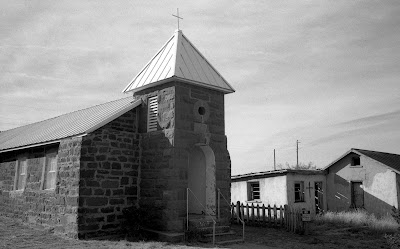
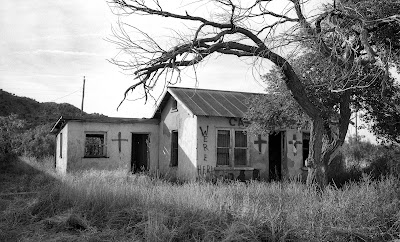
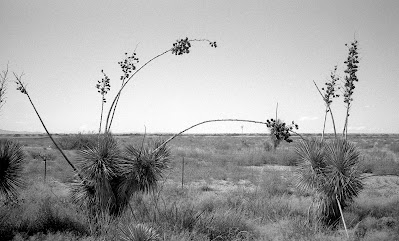
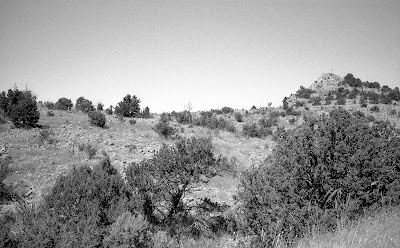
Here are some sample images from this first roll.  


Wednesday, September 29, 2021

DOOMO D light meter review

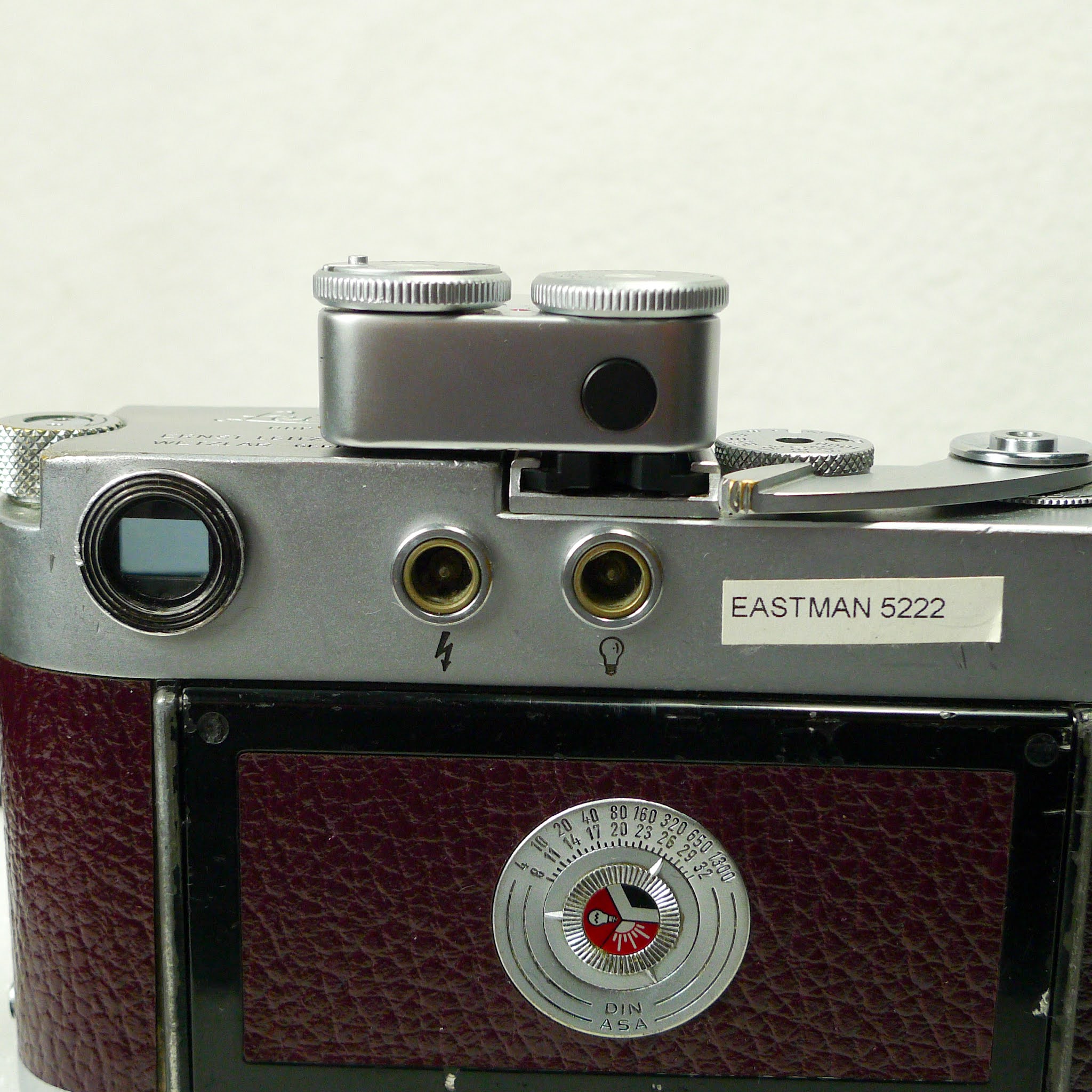
The DOOMO D meter matches the lines and finish of a Leica M2

Lately, we have all seen a number of extremely-compact shoe-mountable light meters such as the one from Raveni Labs, and the KEKS EM01.  These little wonders use a small OLED screen to provide the exposure information, with tiny buttons to change settings, etc.  My biggest problem with these ultra-tiny meters is that the screens are sometimes difficult to read, and that they are small enough to well,... lose.  I have been using handheld meters such as the Gossen Pilot Selenium meters (which work quite well) and the Sekonic L-208 Twin-Mate, a modern, still-in-production light meter.  I originally wanted a Voigtlander VC Speed Meter II, but with a price at over $200, it was more than I wanted to pay.

DOOMO D meter

Now, I think I have found a favorite light meter for my Leica M2. It's the DOOMO Meter D, which at first glance looks a lot like the Voigtlander VC II.  First of all, it has exactly the layout I wanted - an analog dial approach, just as you would find on a camera, with +/- red LEDs and a green one for the "correct" exposure.  It sits in the accessory shoe on the Leica perfectly, and looks like it's part of the camera.  The dials are easy to move, and the LEDS are easy to see in bright light.  On top of that, it has a metal case that looks robust and well-finished, and a perfect match for any classic camera.  However, looks are not everything. It also has to work well, be easy to use, and I need to have confidence in its accuracy.  The DOOMO D meter does all those things. 


Upon receipt of the DOOMO D meter  from Cameractive (direct from China), I was pleased to see it well-packaged in a black box.  Now, I am a pretty experienced photographer and familiar with all sorts of gadgets. The only information in the box is a small card that has brief instructions on inserting a battery (CR-1632 coin cell that is not included) and QR codes to take you to the online manual. I had no trouble figuring the rest out without looking online. The package also includes two shoe mounts, screws, a small black stick-on circle, and a small screwdriver.  My only quibble is that while the slotted head screwdriver fits the Phillips-head screws, it should be replaced by an actual Phillips head screwdriver.  However, if you need to use the manual, the online manual has all you need. If you have used a camera with built-in light meter such as a Nikon FM, then the controls don't need much explanation.  You set your film's ISO on the left wheel, - which ranges from 25-6400, and that wheel also has your aperture settings (f/1- f/22), while the right wheel has the shutter speeds (1 sec - 1/2000).  If like me, you are an aperture priority person, I set my aperture and move the shutter speed dial until it the LED shows green, or +/- 1 stop, and then I set my shutter speed on the camera to match.  Now the funny thing is -- it's entirely possible to forget that you have to adjust the camera settings to match what the DOOMO light meter is at.  I had a brain fart like that a couple of times, forgetting to transfer the meter settings to the camera. That's not a meter problem, it's a human problem!


You can attach the shoe connector to either the right side or the center, and the screws hold it firmly in place to the body of the meter. For my Leica M2, the meter needs to hang to the left of the shoe, and the placement is absolutely perfect.  

online manual


Results. After shooting three rolls of film with the DOOMO D light meter, I feel very confident in its metering accuracy.  It's made me use my M2 more often, and at only a hair over 2 ounces in weight, it's not even noticeable as an add-on.  The metering is easy - press the black button on the rear to activate the meter, and adjust accordingly for your exposure.  The meter has a 30° angle of view for the sensing, and that seems to work quite well.  The advertised battery life is 60 hours of continuous use, and that's a lot of shooting.  I recommend having a spare, just in case. You can get a package of 10 CR-1632 3V cells on Amazon for less than $6. That's the price of one at the hardware store.

underside of meter. The battery compartment is
securely closed with a screw.


Overall, I found the DOOMO D light meter to be just what I wanted - simple, accurate, stylish, and well-made.  For me, it's a perfect fit for my Leica, and I highly recommend it if you want an analog-style meter.   It's available directly from Cameractive as well as Doomo and some eBay sellers.  Also, take a look at the Doomo Instagram account, as well.  At a price of $125, I think it's very affordable and probably the least expensive accessory for your Leica that you will ever find. I thank Zhang at Cameractive for contacting me and sending the meter to review.  

rear view of the DOOMO D meter


Some images from the M2 with Ultrafine Extreme 400 film, using the DOOMO D meter


More images from my October 2021 trip to the Southwest US.  The Leica and DOOMO D meter make a great pair.
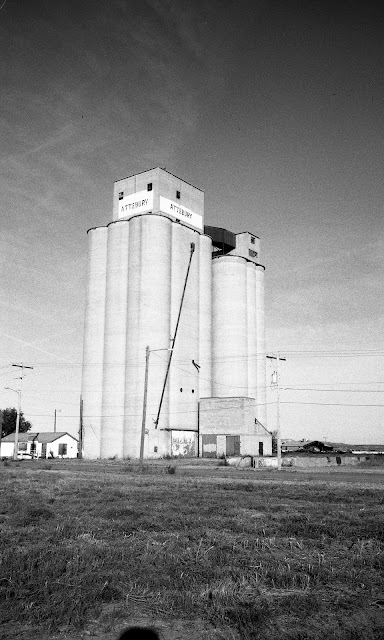
Tucumcari, NM, FPP Frankenstein 200 film

Cuervo, NM, FPP Frankenstein 200 film  

Cuervo, NM, FPP Frankenstein 200 film

Lordsburg, NM, Fomapan 100

Gila National Forest, NM, Fomapan 100

Gates Pass Rd., Tucson, AZ,  Fomapan 100


Wednesday, September 26, 2018

Getting Comfortable with the Leica M2

Colorado Trip, Part 2 of 3
I acquired my Leica M2 in 2014, and over the span of 4 years, I never took it along as my only 35 mm film camera. That changed on my trip to Colorado earlier this month.  Yes, I packed the Nikon D300 as my main camera, but as it turned out, the M2 was often my walk-around camera as the trip went on.   Mostly, I shot b&w film with it, and the more I used it, the more I felt at ease with it.  One could say that we "bonded" on the trip.  After finally going through 1000 images in Lightroom from the D300, and then developing and scanning the 7 rolls of film from the M2, the film was a more relaxing and I think, more rewarding process.  First of all, nearly all of my M2 shots were what I would call "dead on" in terms of exposure.  Yeah, b&w film has enough latitude to cover minor exposure errors, but the thing is, being in an all-manual, no built-in meter situation made me think more about the image and proper settings before I pressed the shutter button.  In outdoor situations in the SW, it's almost always sunny-16 during the day, and my years of experience, intuition, and sometimes my pocket light meter, got me through the rest.
Our condo, Avon, CO. Ilford HP-5+

Avon, CO. Ilford HP-5+

Bev and Adrienne, Bob's Place tavern.  Ilford HP-5+


I wanted to test myself this time -- what could I expect if I went somewhere and ONLY shot with a rangefinder?  As I grew more relaxed with the Leica, it became all the easier to shoot anything with it.  At heart, I have always been an SLR user, and of course, there are many situations when an SLR's capabilities will favor its use.  Long lenses and rangefinder cameras just are not a good combo.  My M2 has the Canadian-made 35mm f/1.4 Summilux, and is that lens sharp.  In the process, I found that the 35mm point of view was a really great choice for the landscape and skies of the West.  The more I shot, the better I felt about my choice.  As I am going through the negatives now, I am very pleased with my results.
Vail, CO  Ilford HP-5+

Pioneer Cemetery, Glenwood Springs CO
Ilford HP-5+

Pioneer Cemetery, Glenwood Springs CO
Ilford HP-5+

Pioneer Cemetery, Glenwood Springs CO
Ilford HP-5+

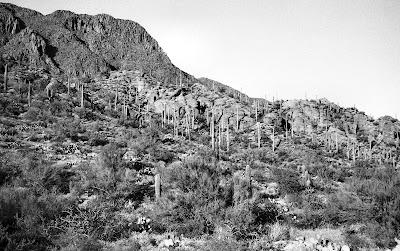
Somewhere, I saw a line that basically said that B&W is an interpretation of the scene, not as how it really looks.  And of course, that is true.  There are many instances when I see something colorful and knowing that it's the colors that make the image, I don't take a b&w photo.  In the West, however, the  landscape and skies are contrasty, the landscape structured, and oooh the shadows!    The Saguaro cacti in Tuscon were tremendous, and even more so  when I shot them with the M2.  My films were Ilford HP-5+,  Kodak Tmax 400, Ultrafine Xtreme 400, and Agfa APX 100.  All look great.   I didn't use any filters over the 35mm lens, as I don't have an adapter for filters.  Still, the shots look fine.

With a camera such as the M2, I wasn't fiddling with the camera.  I was more connected to my final images than I was with the D300, for sure.  The M2 is simple, easy to use, and has a great lens. The viewfinder is wonderful, and of course, the camera is lighter around the neck than the D300 or any other film SLR.

I think now, that I could be fully confident of coming back with great photos from a long trip with nothing but the M2, a bunch of  film, and a simple light meter. Thanks to this latest trip, I also opened my eyes to what I can do when I am not thinking about the equipment.

Gore Creek, Vail, CO  Ilford HP-5+

Saguaro National Park, Agfa APX100

outside Mission San Xavier. Tmax 400

Mission San Xavier, Tmax 400

Mission San Xavier, Tmax 400

4th Avenue, Tucson, AZ. Ultrafine Xtreme 400

Mission San Xavier, Tmax 400

4th Ave., Tucson, AZ. Ultrafine Xtreme 400

Mission San Xavier, Tmax 400

Tucson, AZ. Tmax 400

Mission San Xavier, Tmax 400

4th Ave., Tucson, AZ. Ultrafine Xtreme 400