Showing posts with label rangefinder cameras. Show all posts

Tuesday, August 16, 2022

Contax IIa - a gem from Zeiss Ikon

Contax IIa (1950-1961)

At one time, if you wanted to shoot with the best 35mm rangefinder cameras, there were two choices - the Barnack Leicas from Leitz, or the Contax cameras from Zeiss Ikon. (A third choice would be a Kodak Retina, which I have already discussed here on RCB.)  While both choices were the top of the line, each manufacturer approached the design for a 35mm rangefinder quite differently.  I have shot with several different Leica models, and found that the eyepiece for a Leica IIIc is barely more usable to a glasses-wearer than an Argus C3 viewfinder. The Contax, however, has a larger viewfinder with a wider baseline for the rangefinder, making rangefinder focus more accurate, and without having to look through a separate window.  The design for the Contax II was so good, that it was essentially copied by Nippon Kokagu as the basis for the Nikon S series rangefinder cameras. 
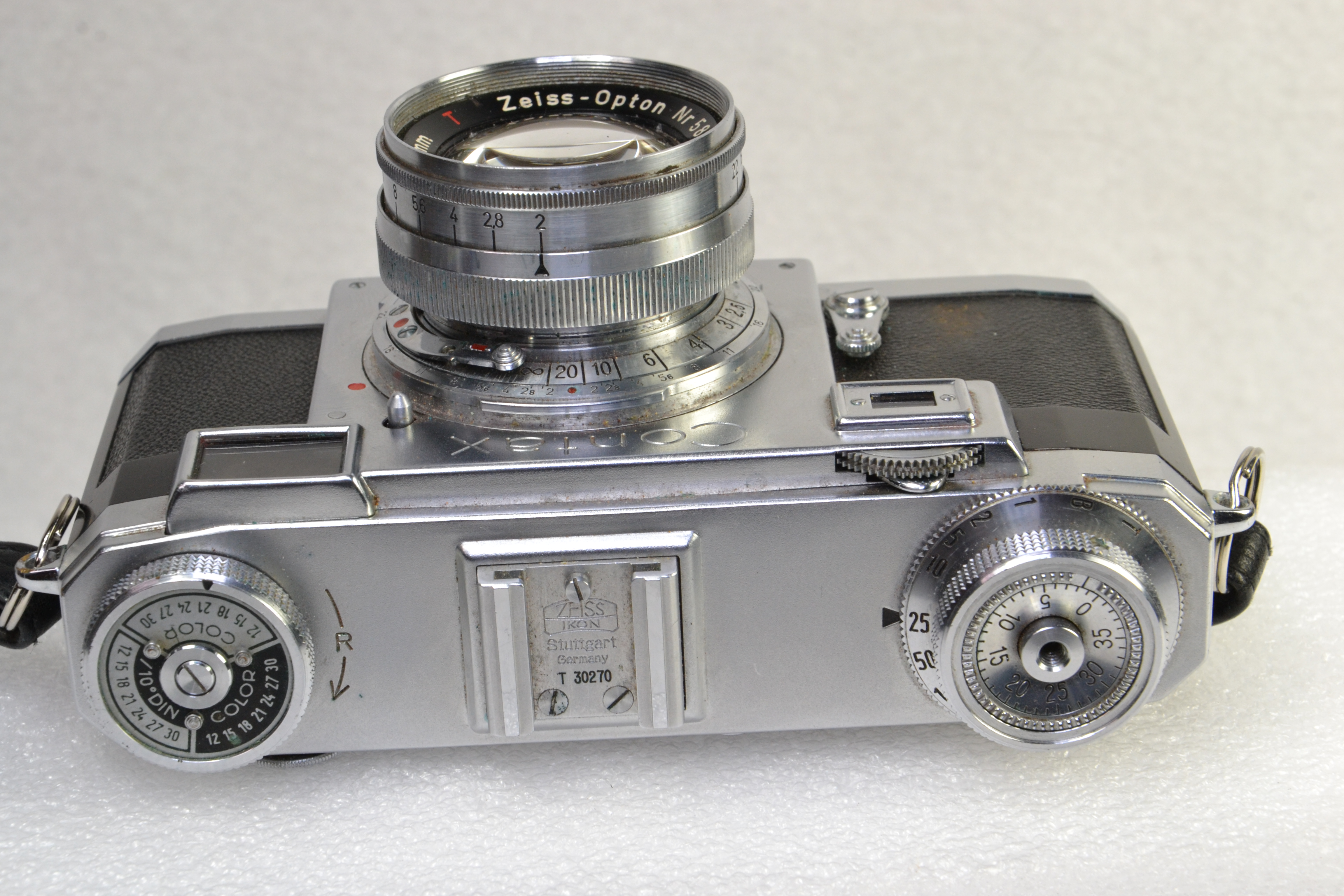


The Contax has a unique shutter design - and the Kiev copies made in Ukraine from 1947-87 share the same type of shutter, which is vertically traveling.  Comprised of thin aluminum slats bound with nylon ribbon, the shutter looks like a set of closed venetian blinds. The Nikon S series use a horizontal-traveling rubberized silk shutter, with the later SP using a Titanium foil horizontal shutter, just like the Nikon F.  So, while a Nikon S series may have a similar appearance to the Contax IIa, only the rangefinder, removable back, and lens mount are really the same.  The Kiev copies of the Contax are remarkably similar, but not manufactured with the same quality as the Contax models.  The best writeup on the Contax IIa is on the Casual Photophile site, and I concur with that author on the quality of the IIa and how it's really one of the best classic 35mm rangefinder cameras ever made.  

Kiev 4a - a copy of Contax IIa

Nikon S front

Nikon S top deck

These cameras are getting on in years, and if you acquire a real Contax model, it may be worth getting it serviced to make sure you get the best from these cameras. While a Contax IIa certainly is a great camera to use, the prices tend to be much lower than a Leica from the same time period.  Nikon S series rangefinder cameras improved on the Zeiss Ikon design, and give the same experience as the Contax IIa. However, prices for a Nikon S, S2, SP, and S3 are really high these days, but certainly worth looking into.  That leaves the Kiev copies in the very affordable range, and the only Kiev Contax copy I ever owned was a Kiev 4a, and the brass used for the film advance spindle broke shortly after I acquired it.  I decided that was enough of an experience with the Soviet copies.

I once tried out a Nikon S that I was selling for an estate, and the user experience was even better than the Contax IIa.  Zeiss Ikon made the decision to drop their Contax rangefinder line and instead concentrate on making SLRs, and I have to say that was a big mistake. Nippon Kokagu improved their versions of the Nikon S series, and the Nikon SP became a professional's choice.  Those cameras paved the way for the Nikon F SLR, which is based on a Nikon SP with a prism and mirror box, all other characteristics being the same.  Meanwhile, the Zeiss Ikon Contaflex, a lens-shutter SLR, was no match for the better engineered Nikon F with a proven focal-plane shutter and excellent array of lenses.  In a nutshell, one could argue that the Contax IIa was the zenith of Zeiss Ikon. Used by photo-journalists, the Contax gave up ground to its successor, the Nikon SP, and once they had those in their hands, it was an easy transition to the Nikon F, sealing the fate of Zeiss Ikon as a lumbering producer of cameras that while broad, was very shallow, with only a few really successful models.  The nimble and innovative camera industry of Japan gave us the Spotmatics, Nikon Fs, Topcons, Minolta SRs, Canon Ps, and others, which pretty much buried most of the European and American competitors in the consumer marketplace.  Leica, Hasselblad and Rollei stand out because they catered to professionals and are quality tools.  However, the various German companies that were NOT Leitz, or Rollei eventually succumbed to market forces, and by the 1970s, had largely died out. The Contax name was purchased by Yashica (and eventually Kyocera), and while the name went on, Zeiss Ikon was no longer a camera manufacturer.  

The Argus C-3 is the poor man's Contax 1.  There are many superficial 
similarities, no doubt because Vershoor saw the Contax 1 at a
camera show in the early 1930s. However, it's a blunt instrument compared
to the Contax I. The Argus C3 sold well in the USA, at a price the
average American could afford. 

Today, you can buy a Contax IIa or IIIa for a modest price, and certainly pay far less than one might purchase a Leica M2, which I would consider to be the approximate equal to a Contax IIa.  Neither camera has a meter, and both are fully mechanical. While the Contax has a better film-loading system, the Leica M2 has different frame lines for 35, 50, and 90mm lenses.  I would recommend that if you are in the market for a classic Contax, purchase a post-WWII Contax IIa with the 50mm f/2 Zeiss-Opton Sonnar lens. With one of the new external light meters in the accessory shoe, you'll have a camera that is a pleasure to use with extremely good optics.

In using a Contax IIa, you'll note that there is no advance lever, but a knob wind.  Film speeds are all adjusted beneath the film wind knob, and they range from T & B to 1-1/1250 sec. That was the fastest shutter speed for any 35mm camera for quite some time. Adjusting the focus with the front focus wheel via your index finger makes it quite easy to focus and make an exposure with the shutter release in the center of the film advance knob.  It's obvious that Charles Vershoor of the International Research Corp. saw the Contax I in the early 1930s, and the resulting Argus C3 has a similar control, it's nowhere as refined or smooth as the Contax! In fact the squared-off appearance of the Contax I must have inspired the brick-like Argus C.

There is a lot of information about the Contax rangefinder cameras available online, but the best overview of these cameras is found in the book "Collecting and Using Classic Cameras" by Ivor Matanle.(1986, Thames & Hudson, 224 pp., ISBN #0-500-27656-0).  Matanle's book is profusely illustrated with more than 300 photos, and his insights on the various cameras are really helpful.  It's certainly a book that anyone collecting/using classic cameras should own.  While there are many versions of the pre-war Contax rangefinders, starting with the Contax I, The post-war Contax IIa is going to be the one that is likely to work as it should.  The Contax IIIa differs in having an uncoupled Selenium light meter, which is most likely not going to work, and modern light meters are so much better.

It's one thing to own a Contax rangefinder, and acquiring accessories for it is another exercise and rabbit hole.  The filter thread diameter of the 50mm f/2 Sonnar is 40.5mm, and I have a Zeiss red filter that was made for my camera.  If you decide that you would like to use other focal lengths, you would also need to find the viewfinders that match the focal lengths. However, sometimes the fun is in the hunt! Of course, of you wanted to use other filters, you could look for a 40.5mm to 46mm thread adapter.
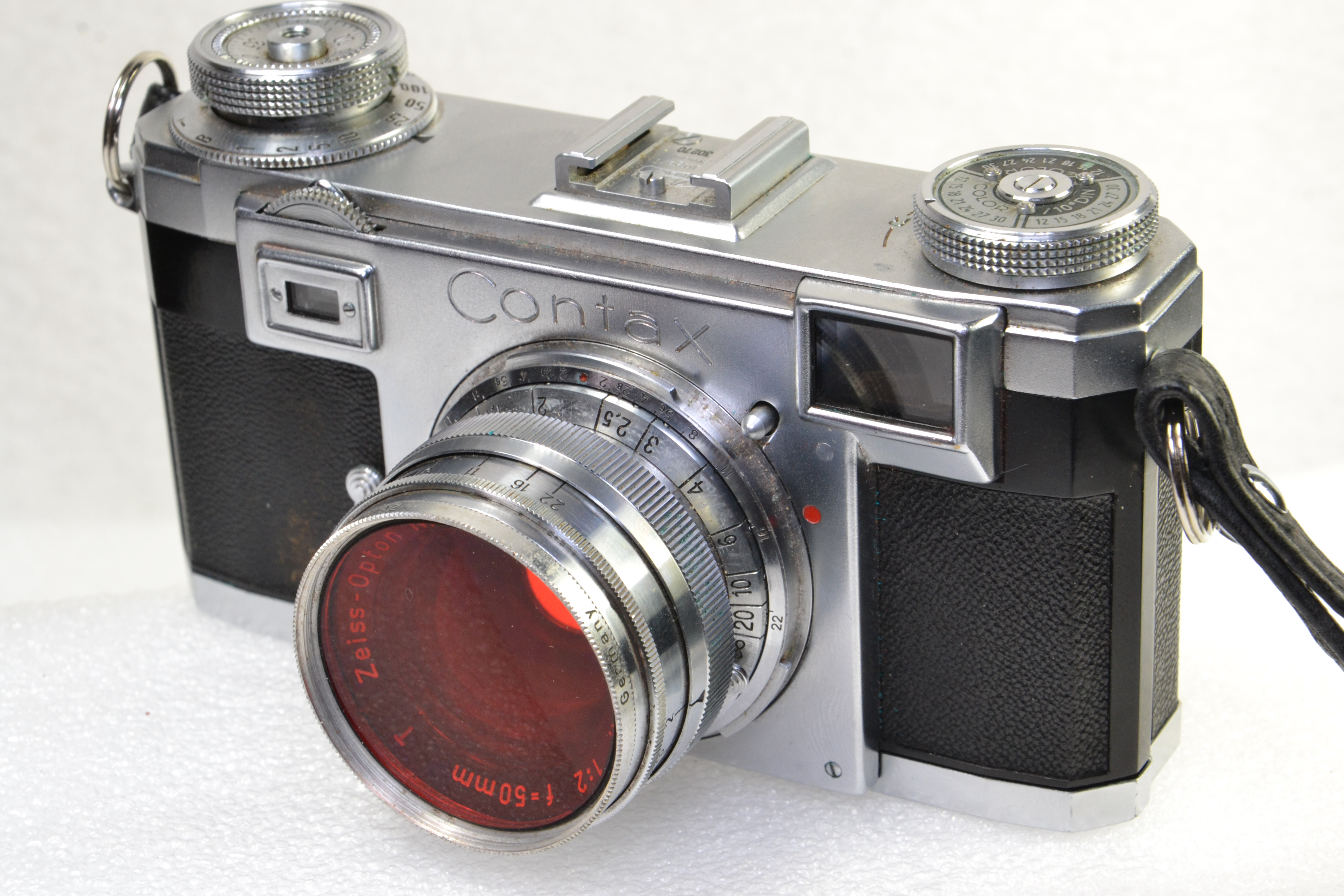
Contax IIa with red filter. Results below.

I found the Contax IIa a pleasure to use - easy to focus and while a lever film advance would be nice - it's not a big deal.  For that bit of improvement, a Nikon SP is what you would be looking for, at a lot more $$!  

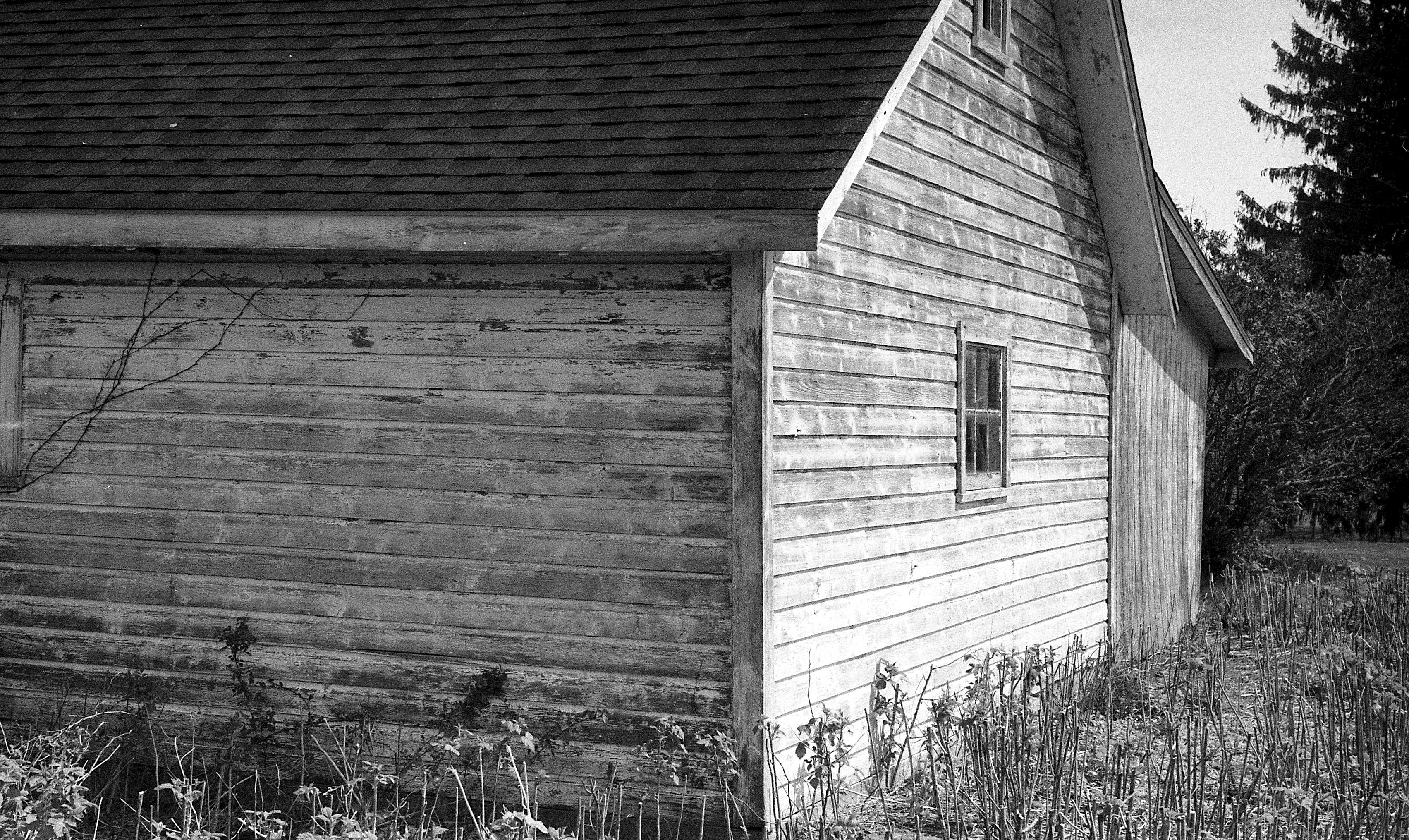
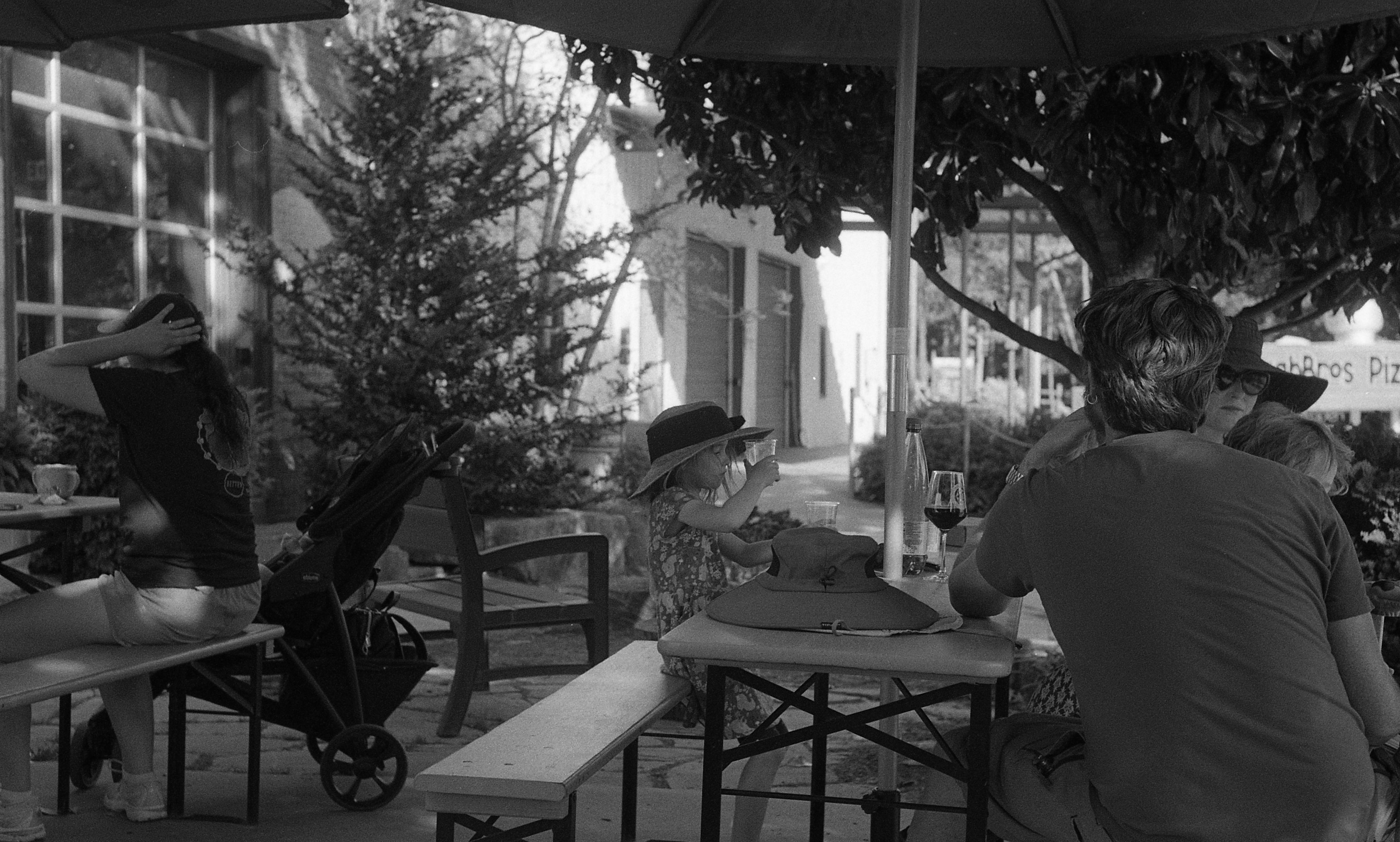
Some images:  All taken with Ultrafine Extreme 400 film, May, 2022.


red filter

red filter

red filter


Right now, I have a roll of Kodak Color Plus 100 in the Contax, and am looking forward to the results.


Wednesday, September 26, 2018

Getting Comfortable with the Leica M2

Colorado Trip, Part 2 of 3
I acquired my Leica M2 in 2014, and over the span of 4 years, I never took it along as my only 35 mm film camera. That changed on my trip to Colorado earlier this month.  Yes, I packed the Nikon D300 as my main camera, but as it turned out, the M2 was often my walk-around camera as the trip went on.   Mostly, I shot b&w film with it, and the more I used it, the more I felt at ease with it.  One could say that we "bonded" on the trip.  After finally going through 1000 images in Lightroom from the D300, and then developing and scanning the 7 rolls of film from the M2, the film was a more relaxing and I think, more rewarding process.  First of all, nearly all of my M2 shots were what I would call "dead on" in terms of exposure.  Yeah, b&w film has enough latitude to cover minor exposure errors, but the thing is, being in an all-manual, no built-in meter situation made me think more about the image and proper settings before I pressed the shutter button.  In outdoor situations in the SW, it's almost always sunny-16 during the day, and my years of experience, intuition, and sometimes my pocket light meter, got me through the rest.
Our condo, Avon, CO. Ilford HP-5+

Avon, CO. Ilford HP-5+

Bev and Adrienne, Bob's Place tavern.  Ilford HP-5+


I wanted to test myself this time -- what could I expect if I went somewhere and ONLY shot with a rangefinder?  As I grew more relaxed with the Leica, it became all the easier to shoot anything with it.  At heart, I have always been an SLR user, and of course, there are many situations when an SLR's capabilities will favor its use.  Long lenses and rangefinder cameras just are not a good combo.  My M2 has the Canadian-made 35mm f/1.4 Summilux, and is that lens sharp.  In the process, I found that the 35mm point of view was a really great choice for the landscape and skies of the West.  The more I shot, the better I felt about my choice.  As I am going through the negatives now, I am very pleased with my results.
Vail, CO  Ilford HP-5+

Pioneer Cemetery, Glenwood Springs CO
Ilford HP-5+

Pioneer Cemetery, Glenwood Springs CO
Ilford HP-5+

Pioneer Cemetery, Glenwood Springs CO
Ilford HP-5+

Somewhere, I saw a line that basically said that B&W is an interpretation of the scene, not as how it really looks.  And of course, that is true.  There are many instances when I see something colorful and knowing that it's the colors that make the image, I don't take a b&w photo.  In the West, however, the  landscape and skies are contrasty, the landscape structured, and oooh the shadows!    The Saguaro cacti in Tuscon were tremendous, and even more so  when I shot them with the M2.  My films were Ilford HP-5+,  Kodak Tmax 400, Ultrafine Xtreme 400, and Agfa APX 100.  All look great.   I didn't use any filters over the 35mm lens, as I don't have an adapter for filters.  Still, the shots look fine.

With a camera such as the M2, I wasn't fiddling with the camera.  I was more connected to my final images than I was with the D300, for sure.  The M2 is simple, easy to use, and has a great lens. The viewfinder is wonderful, and of course, the camera is lighter around the neck than the D300 or any other film SLR.

I think now, that I could be fully confident of coming back with great photos from a long trip with nothing but the M2, a bunch of  film, and a simple light meter. Thanks to this latest trip, I also opened my eyes to what I can do when I am not thinking about the equipment.

Gore Creek, Vail, CO  Ilford HP-5+

Saguaro National Park, Agfa APX100

outside Mission San Xavier. Tmax 400

Mission San Xavier, Tmax 400

Mission San Xavier, Tmax 400

4th Avenue, Tucson, AZ. Ultrafine Xtreme 400

Mission San Xavier, Tmax 400

4th Ave., Tucson, AZ. Ultrafine Xtreme 400

Mission San Xavier, Tmax 400

Tucson, AZ. Tmax 400

Mission San Xavier, Tmax 400

4th Ave., Tucson, AZ. Ultrafine Xtreme 400


Friday, August 24, 2018

A Quick Review of the Olympus 35 LC Camera

If you ask film users about Olympus 35mm rangefinder cameras, there is no doubt that you'll hear about the popular Olympus 35 RC, the Olympus XA, and probably the Olympus 35 SP. It's unlikely that you'll hear a peep about the Olympus 35 LC.  While the 35 LC was produced from 1967 to perhaps 1970, it just does not seem to be as commonly seen as the subsequent Olympus rangefinder cameras.
Last year, I happened to come across an Olympus rangefinder camera that I had never seen before.  The Olympus 35 LC is an interesting 35mm rangefinder with a CdS light meter.  It's not auto-anything, and is somewhat on the large size, compared to the later Olympus 35 RC.  The 35 LC features a 42mm f/1.7 Zuiko lens, shutter speeds from 1 sec to 1/500 sec + B, an ISO range of 10 to 800, and an easily focused lens with a lever on the lens barrel.  This is a nice all-metal camera, with a very quiet shutter.  There is both a PC socket and a hot shoe for the flash.  The meter needle shows both in the viewfinder and in a window on the top deck of the camera.  The meter requires a mercury cell for 1.3 V, but I used a 1.5V silver-oxide cell, as that will be close-enough for b&w and C-41 films.    The bright-frame viewfinder is large and has parallax correction.  The RF focus patch is easy to see, making the camera a joy to focus.  No squinting into a tiny window with this camera.    Since the CdS meter window is inside the lens ring, you can use filters and the camera will meter through them for proper exposures.

The Olympus 35 LC stands out as being larger than the compact 35 RC.  Released in 1967, it predates the smaller SP and RC rangefinders by 2-3 years.  The 35LC dimensions are  138 mm W x 81 mm H x 70 mm D. Compare that to the 35 RC, which is 110 mm W x 70mm H x 50mm D.  While it's a larger camera, it feels right in the hands, much like a Konica Auto S2. 


The Olympus 35 LC features:


  • Lens: G.Zuiko 42mm f1.7, 7 elements in 5 groups, 55mm filter ring
  • Apertures: f/1.7 - f/16
  • Shutter: Copal-X, speeds B, 1-1/500 sec.
  • Meter: CdS cell, inside the filter thread
  • Viewfinder: Bright frame viewfinder with parallax correction.
  • Film speed: ASA 10 to 800.
  • Self timer: on lens barrel
  • Tripod socket centered 
  • Flash- PC  socket on left side, standard hot shoe, x-sync only
  • Power: 1.3v mercury for meter - I used a 1.5 V cell with good results.
  • Weight: 660 grams.


The meter is actuated by a button on the top right of the rear of the camera body. You can use the top-mounted display to see where your settings are centering the needle (or not), or you can use the display that appears in the viewfinder.  There is no auto setting. 

The camera has a fast 42mm f/1.7 lens.  The 42mm focal length makes it just slightly wider than the standard 50mm that we consider "normal."  By comparison, the Olympus 35 RC has a maximum aperture of f/2.8 with its 42mm lens, which makes it more compact, but definitely not as capable.  The shutter speed range on the 35 LC is B, and 1- 1/500 sec, with all of the standard intervals.  You can use any 55mm screw-on filter, and the CdS cell will give you an accurate reading through the filter. Of course, with a polarizer, you won't be able to see the maximum effect like you would in an SLR.

I find the camera to be pleasant to use. The focus ring has a lever to grip, and the focus range is just under 3 feet to infinity.  The outer ring on the lens barrel comtrols shutter speed, and the inner ring controls aperture. Each has a different feel, making the operation easier without looking.  The shutter is very quiet, and the film advance is a single stroke.  It's not as light as my Olympus Trip 35, but then again, this is a far more capable camera, not a point and shoot.  I love the logo on the front -- rather old-school, and it looks like a quality camera.   I see the 35 LC on eBay for around $100 for good examples.  As a quality camera, this is a steal.

As always, the proof is in the results. 

Marquette, MI, Tri-X

Ann Arbor, MI. Tri-X

Collingwood, Ontario, Polypan-F

Collingwood, Ontario, Polypan-F

Collingwood, Ontario, Polypan-F

Ann Arbor, MI, Polypan-F

Collingwood, Ontario, Polypan-F


Tuesday, August 21, 2018

A Quick Review of the Minolta A5 rangefinder camera

I like the simple large M for the logo!
Minolta had a series of non-automated rangefinder cameras, starting with the Minolta 35 in 1947. The 35 model morphed into a series of ever more sophisticated Leica clones that are typical of many post-war rf cameras from Japan.  They were followed a series of RF cameras that had non-interchangeable lenses beginning with the Minolta A in 1955. The A series have the shutter between the lenses, a viewfinder with the rangefinder patch visible, and a 45mm lens that was either an f/2.8 or f/3.5. The A and A2 were slightly boxy and had a wheel on the top of the camera for setting the shutter.  The A3 had a more sleek and conventional design, and appeared in 1959.  As far as I know, there was no A4, but the A5 was released in 1960, and there were three models:

  • Japanese models - f/2.0 or f/2.8 45mm lenses, B- 1/1000 shutter speed.
  • USA model - 45mm f/2.8 lens and B, 1-1/500 shutter.

The model that I have must be a Japanese version, since it has:
  • 45mm f/2.8 Rokkor, 4 element lens  
  • Citizen shutter, B, 1-1/1000 sec 
  • cold shoe with PC connector on lens, m and X-sync

Later models of the A5 have a hot shoe (about 1965-66).

None of the A series cameras have any sort of meter, and therefore, do not need batteries.  With it being an all-mechanical camera, you are spared the aging selenium or CdS meters, non-obtainable batteries, and/or electrical problems of the more automated cameras of that time. The Minolta A5 was the last model before the Hi-Matics were introduced in 1962.

This is a nice all-mechanical RF camera with a Citizen between the lens shutter. With its bright viewfinder, easy opperation, and impressive range of shutter speeds, it's a fun camera to take anywhere.  No meter? No problem -- sunny-16, external meter, or the Black Cat Exposure Guide.

I find the A5 quite easy to use, and its control layout is simple. The apertures range from f/2.8- f/22, and the 45mm Rokkor lens is sharp!  There is an exposure counter on the top deck, and I like the way the rewind lever folds down as to not catch on anything.  The self-timer and X or M flash synch are located on the lens barrel.  The rings for the shutter speed and aperture are easily turned, and the focus ring has a nice little bump out to rest your thumb on. It has an extremely quiet operation. There is a film speed reminder wheel on the back door of the camera, and a tripod socket and rewind release on the bottom plate. The serial number of my camera is 125061.

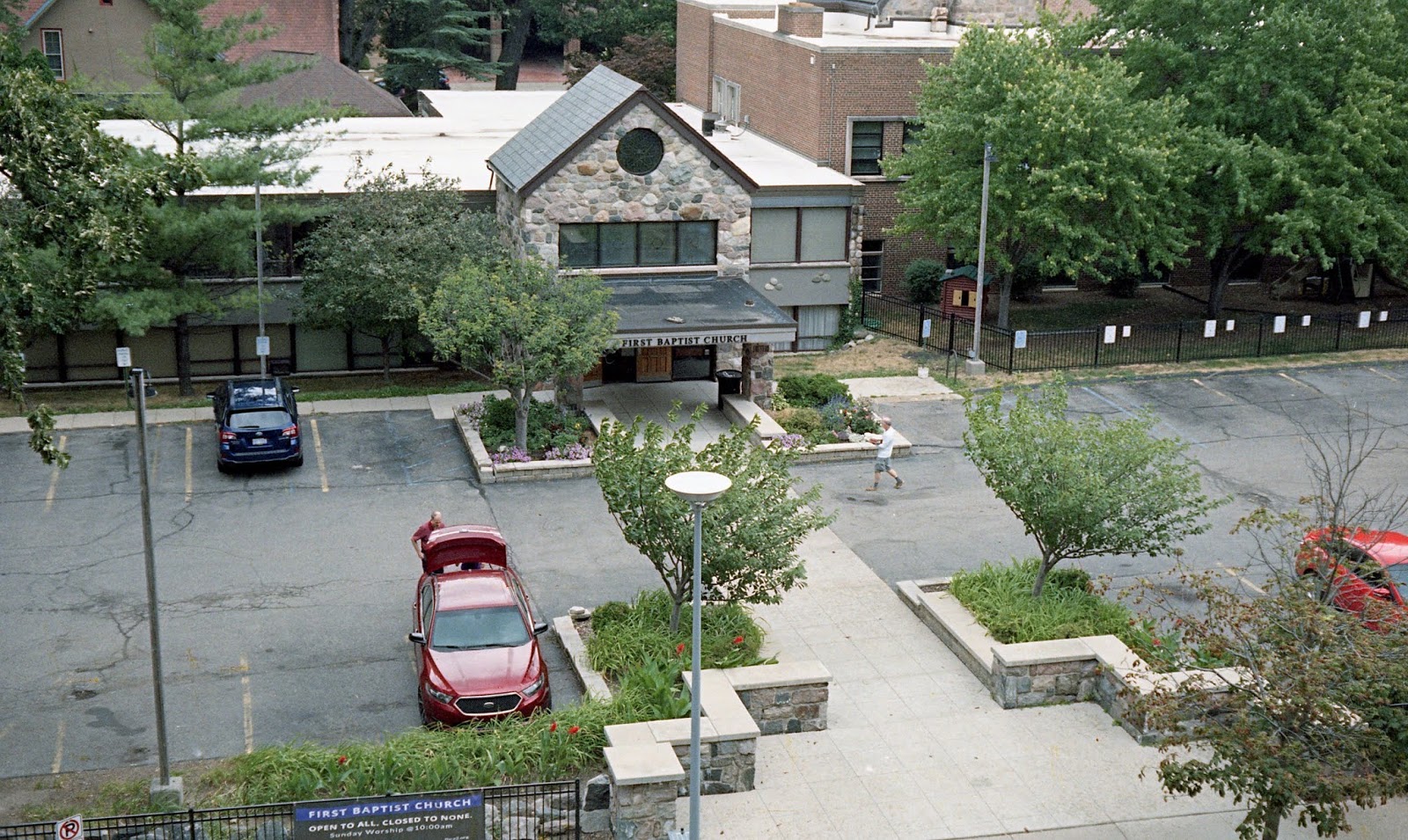
Here are some scans from a recent roll of Svema 125 C-41 film that I shot.


I don't know how often the 1/1000 version turns up, but it certainly is a nice camera to shoot with. You can also find a nice review of the A5 at Mike Eckman's excellent site.