Showing posts with label crappy camera. Show all posts

Thursday, October 05, 2023

The Simple Plastic Camera

 Over the course of a couple of decades of photography, I’ve often extolled the virtues of simple plastic cameras, and with two issues of Monochrome Mania that dealt with medium-format and 35mm simple cameras, I guess I have promoted them as much as anyone can. That doesn’t mean that they are the best cameras, by any stretch of the imagination. But what they do well, is to offer a different image than something from a much better set of optics that are found in your "real cameras."  I’ll never forgo using my Nikons or Spotmatics, Leica M2, or my Yashicamat, Pentax 6x7, etc. in favor of a simple plastic camera. However, that does not mean that I won’t carry one in a camera bag along with the pro gear. Michael Kenna, a fantastic photographer that has mostly used Hasselblads, published a wonderful book of Holga-based photographs which I wrote about several years ago.  It’s often dependent on a situation where one can use a simple plastic camera (toy camera, crappy camera, etc.) in a way that complements your other cameras. In fact, there have been times when a Holga image from my travels captured a place and time far better than any more complex camera could have. Part of that is knowing the best situation for simple cameras, and knowing that the exposure falls within the capabilities of the camera. 


In the past few years, we have been inundated with new plastic 35mm cameras that are reusable, and generally have the same specifications - a 35 mm focal length lens with an aperture of f/8 or f/11, and a single shutter speed of about 1/100 sec.  All have a flash, and that’s pretty much it for control.  We all know that those small acrylic lenses are actually pretty good, because the single-use cameras have been using them for years. I’m not saying they are better than my 35mm f/2 Nikkor, which they are not.  But they have a specific character that I find endearing - sharp at the center, but no so much at the edges.  These cameras also weigh nearly nothing and are compact.  So, adding one of them into your camera bag or jacket pocket isn’t a big deal. 


I recently finished up a roll of film in my Dubble SHOW camera.  It had been bouncing around from bag to bag for over a year, and it had a roll of Fujifilm Superia 200 loaded the whole time.  It’s obvious that I didn’t shoot with it a lot, but when I had the film developed I was surprised at how long it had been loaded with the same roll of film. I had shot the last half of the roll when I was in downtown Asheville, and had already shot the film that was in my Leica M2 and Spotmatic, and rather than reload them, I just shot with the Dubble camera on my way back to my car.  I’d forgotten even what film stock was in it.  I was quite pleased to see the negatives, and the Superia 200 has a very good latitude of exposure.  What pleased me the most though, was that the scanned images had saturated tones and just enough loss of detail, that they demonstrated that sharpness does not matter nearly as much as composition and subject matter.


It’s certainly possible that one could use one of these little plastic cameras for a lot pf photographic projects and come away with some memorable images. Yeah, I know it’s not the camera, but the photographer, but if you work within the parameters of the camera’s best scenario of exposure, you will come away with better images.  A lot of people trying film for the first time will pick one of these simple cameras and then wonder why their photos look like crap.  Most of the time, it’s because they don’t understand exposure or understand light.  These cameras will do fine if in perfect (for them) conditions, and loaded with any film of ISO 200-400.  After all, they are basically nothing more than 35mm box cameras.


But whoa, if these cameras are just cheap little plastic box cameras, why am I recommending one?  As I said in the beginning, put one in your bag with your better gear.  You may find that perfect moment when using one makes sense.  It’s not about the megapixels, it’s not about perfect sharpness and great detail - it’s about emotion, sense of place, and the unsharpness of memory. I’ve used toy cameras for 20+ years, and whether it’s a 35mm Holga, a Vivitar T101, a Reto Ultrawide and Slim, or the latest Kodak/Harman/Ansco/Reto /Dubble 35mm camera, you’ll find that having one (or even two)  in your camera bag will afford you the opportunity to exercise some creativity and even freedom to try something different. If you are curious about what 35mm simple plastic cameras are available, get a copy of Monochrome Mania Number 7 - The Magic and Allure of Toy Cameras, Vol. 2 - 35mm. It’s a steal at $10.


Someone’s going to ask - "How do I know what are the right conditions?"  Learn about exposure as it relates to ISO - film sensitivity to light, aperture, and shutter speed.  If your plastic camera is the Harman simple use camera or the Dubblefilm SHOW - it has a 32mm f/8 lens with a 1/100 sec shutter speed. On a day in full sun with ISO 100 film, it will slightly overexpose the film (should be f/11 or f/16) with that combination.  Overexposing a bit is not a problem with b&w and color negative films.  On on cloudy bright day, it should still be good.  Not so good in shade or overcast conditions, though.  Under overcast conditions, ISO 400 film would be a better choice.  Indoors, you’d need to use the built-in flash for subjects no farther than 12 feet away.   The specifications for the other cameras introduced in the past few years are going to be similar.  In most cases, if you use a 200 ISO black and white or color film, you will be pleased with the results with outdoor photographs on sunny to partly cloudy days.  


I highly recommend David Mihaly’s "The Old Camera Guy" YouTube videos where he uses simple plastic cameras.  They’ll give you a good idea of the type of results you can expect.  Unless your camera has a Bulb mode for long exposures, stay away from any film that has an ISO lower than 100. ISO 200 film is the sweet spot for most of these cameras.


Photography should be fun, and while one should be attentive to the proper techniques for the best results, sometimes it doesn’t hurt to take a chance and let that imprecise 35mm plastic camera do its magic.  


Sunday, September 19, 2021

I AM SPARTUS!


The Spartus 35 and 35F  cameras were sold from 1947-1954, and were manufactured by Spartus and then the Herold Manufacturing Co. in Chicago.  Although they are basic 35mm cameras, there are several iterations under the name, some with more than 1 shutter speed. All have several apertures.  While they somewhat resemble an Argus A, they are nowhere near the precision of that camera.  Lenses are inconsistent in results, and the cheap construction, rough finish, and lack of accurate control make them definite candidates for the Low-Fi camera selection.  Produced in the post-war photography boom, the Spartus 35 sold for about $12.00 - $29.00 depending on the model and the year.  The latter version of the 35 has a more streamlined styling, but no real change in features.  

 Spartus 35 F and the Spartus 35 front views

Spartus 35 F and the Spartus 35 back views. Note the differences
between the two


interior of Spartus 35F


While researching the Spartus cameras, I believe I found an error in Glass, Brass, & Chrome by Lahue and Bailey (2002 reprint by Univ. of Oklahoma Press, 347 pp.).  The authors claimed that the Falcon cameras – cheaply built 127 snapshot cameras that resemble a 35mm camera, had one model that was 35mm.  I have looked in every catalog and on-line source, and there is no evidence of a 35mm Falcon.  However, the interesting thing is that the Falcon models were originally made by the Utility Mfg. Co. in New York, until 1941, when the Spartus Corp. bought the company and moved its operations to Chicago.  This is where things get a little fuzzy, as Spartus then became the company name, producing a dizzying array of cheap 127, 120 and 620 cameras under various names, as well as clocks and razors.  In 1951, Harold Rubin bought the company, and renamed it Herold Mfg. Co., still at the same address on Lake Street in Chicago. So, in the end, it is certainly possible that some part of the Falcon 127 body molds may have been modified to make the Spartus 35, but there was no Falcon 35mm.  Also noteworthy – on the face of my Spartus 35 it reads NOT INC. under HEROLD MFG. CO., meaning that it wasn’t incorporated.  The Spartus 35 was the only 35mm camera produced by the Spartus and Herold companies.


I picked up a Spartus 35F on eBay just a little over a week ago, and paid $15 plus shipping.  I was amazed that the leather case with it looked practically new.  That’s a lot of years  - close to 70, without much use. I had to add a bit of oil to gt the shutter to function as it should, and as there are only two shutter settings – Time and Instant, not much to worry about.  There are four aperture settings – f/6.3, 8, 11, and 16.  The body is Bakelite, with aluminum and brass parts. The back opens by releasing a spring catch on the left side. The film loads on the right side, with the takeup spool on the left.  An aluminum button on the back is pushed in every time you wish to advance the film, which releases a cam that does one rotation as the film advances. You must manually reset the frame counter to 0 before loading the film.  

There are a few differences, other than the styling between the black plastic Spartus 35 and the last iteration – Spartus “35” with a gray plastic top deck and brown body.  The last version has the film cassette on the left side, and the takeup spool on the right.  The flash contacts are moved to the right side, and the frame counter to the left.  A push button on the right side opens the back, which is fully removable, and the button to allow the film to advance is on the lower right side of the back.  The tripod socket has moved to the center, rather than the left as part of the takeup spool assembly. Also, instead of using actual f/stop numbers on the front rotating selector, it has dull, cloudy, hazy, and bright. 

Overall, a fairly simple camera to operate. While the lens rotates to focus from 4 feet to infinity, it’s pretty much guesswork. Since I was shooting mostly at f/11, with a roll of Ilford Pan-F, most subjects were over 50 feet away.  Closer shots ranged from 10 feet to 40 feet, so really, at f/11 or f/16, I don’t think the focus is as critical.  The viewfinder is just an approximation of what will be in the frame.  

I took the Spartus “35 F” on a walk through the River Arts District in Asheville, which is my usual place to shoot and test new cameras.  It was a hazy sunny day, so f/11 it was, and I shot the roll of Pan-F pretty quickly as I walked through the area.   I developed the film in Rodinal 1:25 for 6 minutes, and when the film was hung to dry, I was amazed at the quality of the images.  My work on the shutter had paid off, as every frame was exposed pretty well.  I purposefully did one multi-exposure frame as 3 shots at f/16, and not too bad.  The frame spacing is pretty tight, and the actual frame size is 24x37.5 mm.  There was a small crescent shadow in the lower right corner of the frame (actually upper left in the camera), which turned out to be from a wire connecting the flash contacts to the shutter.  I pushed it upward away from the film gate, so future shots should be fine.  

Here are a few images from the 36 exposure roll of Pan-F. 


triple-exposure


I am pretty impressed with the quality of the photos, and a low-speed ISO film such as Ilford Pan-F is perfect for this camera.

If you want to read more about the Utility/Spartus/Herold history, here are some links to follow:


Sunday, November 29, 2020

The Magic and Allure of Toy Cameras

Just a few of the cameras in Monochrome Mania #3

If you have been following this blog for a while, you have probably seen a few recent posts about 620 and 120 low-fi cameras.  Whether you want to call them toy cameras, crappy cameras, low-fi cameras, or plastic fantastic wonders, is up to you. I’m sticking with toy cameras, because it’s a pretty simple term, but also a bit misleading.  To some, the "toy camera" conjures up a child’s toy that doesn’t really take photos, sort of like one of those Fisher-Price cameras with the rotating images.  That’s not what I am talking about here, or in my new issue of Monochrome Mania #3, "The Magic and Allure of Toy cameras." These are cameras that lack a lot of the controls that we typically use in our photography, or have at best, a reduced amount of functionality.  That puts box cameras, plastic brownies, Dianas, Holgas, faux-TLR Duaflexes, and a bunch of other simple cameras under that umbrella. That lack of precise control is what makes them alluring, and you can make magic with them. 

Some of the crowd that attended the 2007 Cheap Shots exhibit

The work for this latest zine actually started in 2007, when I typed up a partial manuscript for a book on toy cameras.  I had just hung my "Through A lens Softly" show at Pierpont Commons at the University of Michigan, and I was also in the planning stages of an exhibit by members of the Ann Arbor Crappy Camera Club, called "Cheap Shots." While I had been using a Holga since late 2001 and an original Diana a little after that, it wasn’t until the formation of the Ann Arbor Crappy Camera Club in 2006, that I really became encouraged by the use of these cheap cameras. Finding kindred souls just as the digital onslaught was underway was a propitious event that influenced my creativity and social circles.  While I am no longer living in Michigan, I still keep in touch with my Crappy Camera friends.

The many iterations of Kodak "Brownies" not all are 120/620.

The manuscript sat dormant until 2019. As COVID-19 eliminated many of the activities that I had planned, I knew that working on a toy camera issue for my new zine Monochrome Mania would occupy my time.  What I soon realized, was that if I was going to expand the selection of cameras, I needed to go on eBay and purchase camera models that I once owned so that I could photograph them as well as run film through them. At one time, I probably had well over 250 cameras in my house in Ann Arbor, and over the course of a decade, sold off a lot of the ones that I had lost interest in, were shelf queens, or were just unrelated to my photographic interests at the time. Luckily, the market for cheap Bakelite cameras is not an expensive one, and I was able to procure ones that I felt should be in the issue. I limited the scope to medium-format toy cameras for a reason -- 120 and 620 film cameras offer the largest negatives, and one gets all the benefits of cheap lenses. There are quite a few models to choose from, as well.  I left out 127 cameras even though there were hundreds of models made. The film just isn’t readily available, and that made little sense to include them. I do plan on doing a follow-up issue with 35mm toy cameras sometime in 2021.


I don’t know how many hours I spent on writing and rewriting the text for this issue, but the text went through several iterations, and several people received copies to read for any errors of fact and readability. My wife Adrienne is my copy editor and found places where I needed to be more clear.  I was also busy trying out cameras and re-spooling 120 onto 620 spools into October, before I felt that I had enough cameras to include in the issue. In searching for examples from the various models, I ended up going through all my filed negatives back to 2002. It turns out that I had scanned very few of those older negatives because I had made prints of some of them for shows, and the early work really pre-dated the explosion of social media. I found myself scanning in hundreds of negatives, and in doing so, found a good many excellent images that I had forgotten about. I realized that I had nearly 100 negative sheets from my Holgas alone. Another plus for film, as looking only for digital files would have been a real difficult task.

sample pages from MM #3

So, the issue "The Magic and Allure of Toy Cameras" is now available.  It contains reviews of over 20 cameras with historical information, tips on using them, how to modify them, and a multitude of images taken with these cameras.  Every camera reviewed is one that I have shot.  With over 100 figures, this zine is filled with photographs in its 36 pages.  I think it’s one of the best pieces of writing that I have done, and people that have already received a copy are really enthusiastic about it.   At $12 in the USA (which includes shipping) it’s one of the best bargains you’ll ever find.  

Erwin, TN, Spartus Full-Vue

You can order from my marketplace on Square -- links are to the right, and if you live outside of the USA, there are additional order options.  Like all of my issues of Monochrome Mania, this is a real, tangible, in-your-hands item. I do not offer digital versions. If you love film cameras, or know someone that does, this makes a great gift for yourself or others!

Imperial 620 camera


Wednesday, March 14, 2018

Agfa Isola I Review

Last fall I picked up an Agfa Isola I at a thrift shop for a few bucks.  I suspect the price was low because the staff didn't know that to make the shutter fire, you have to telescope the lens away from the body.  It was in a brown leatherette case, and while I had hopes for a more advanced 120 camera, the Isola I was a new one for me, so I picked it up. 

Agfa manufactured these cameras from the 1956 into the early-60s, and produced three Isola models - Isola, Isola I, and Isola II.  If you are  looking for any particular one, get the Isola II, which I'll explain a bit later on.  The original Isola and Isola II have the same features, that is, B, 1/30, and 1/100 shutter speeds. 

All Agfa Isola models feature a telescoping lens tube, which when fully extended from the body, click in place to allow the shutter to function. That's important, and otherwise the camera will seem inoperable.  Also, the shutter has double-exposure prevention, as the film takeup knob needs to wind on a bit for the shutter to re-engage. There is a tiny red window by the shutter button to show that it has been fired.

The Isola I has two shutter settings - I and B - instant is ca. 1/35 sec, and B is obviously however long you want to hold it open.  The 1/35 speed is the Achilles heel of this camera.  Knowing this, I loaded a roll of Ilford Pan-F (nominal ISO 50) to try it out.  The sunny and cloudy aperture settings are ca. f/11 for sunny, and f/6.5 for cloudy, and a third setting provides a yellow filter which would be fine for b&w film on a sunny day using ISO 100 film.   If you wish to use any faster films, you will need to tape a neutral-density gel over the lens. 

I took the camera to Chelsea, MI to try it out, and shot a roll in an hour or so, testing out the distance scale and the aperture settings.  I finally got around to developing the film this week, and I have to say that overall, I am pleased with the results.

Using the camera is fairly simple, and like most roll-film cameras, there is a red window on the back to see what frame you are on. It takes 120 film, so no 620 fuggery is necessary.  There is a PC cord socket to enable the use of a flash, should you want to.  I did not try using one.

For me, the most limiting factor of the Isola I is the 1/35 sec shutter speed.  Even the most basic box cameras have a shutter speed closer to 1/60 sec.  Other than that, it's a pretty straightforward budget box-type camera that will provide results that would be expected from a camera in its class. 
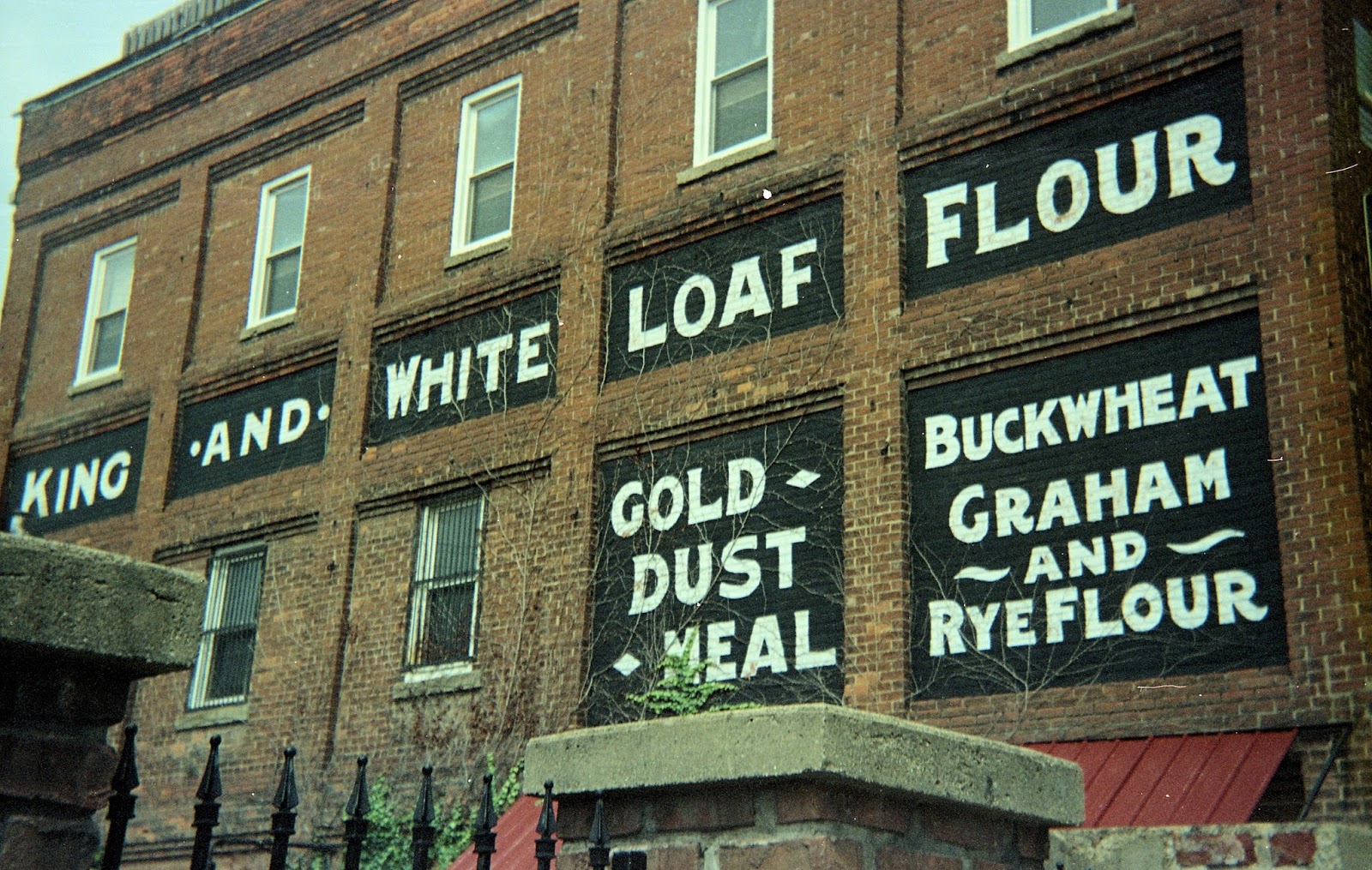
You can get a manual for the Isola over at Butkus, of course. There is also a nice online presentation of using the Isola II over at UK Camera.  I recommend using low-ISO film for outdoor shooting, so Ilford Pan-F would be my first choice.  For indoors, you could use ISO 400 with a flash. Since the camera has a thread for using a cable release and a tripod socket, it certainly could be used for long-exposures, which I will have to try sometime.  Right now, I have a roll of 1992-expired color Ektar 25 loaded to see what I get from it.


Monday, February 19, 2018

The Halina 35 - Plastic Fantastic

Over the past 18 years, I have used my share of "toy cameras."   Usually, I expect the results to be typical for cameras deserving of that classification.   A few months ago, I was given a Halina 35 camera.  If you do any searches, you'll see all sorts of Halina-branded cameras, most of which were manufactured in Hong Kong by Haking Co.  I have previously owned a Halina TLR, which was similar to one of the Ricohflex models. It was charming, but not exactly in the league with a Ricohflex.  The Halina 35 appeared in the early 1980s as a premium camera, often under other names, and with slight cosmetic changes.  Don't confuse this with the metal-bodied Halina 35mm cameras.  The model that I have is typical of a simple "optical lens" premium camera with few controls.  It looks better than it ought to, and I figured that I would test it with a roll of Kodak Vision 100T film from the Film Photography Podcast.   The shutter speed is about 1/100th sec, and with aperture control for sunny to cloudy and flash, I figured that would work out okay.  I shot the roll back in late summer-early fall, and it wasn't until last week that I finally processed the film at home with a home-brew ECN-2 kit that I got from August Kelm. 

The Halina 35 is a simple camera, and I certainly expected my images to look like something from a Time  camera -- soft, and lacking in contrast.  However, after looking at the scans from the negatives, I am fairly impressed with the results.  I did have a few frames with double exposures, and I am not sure if it was my fault or the camera.  I'll try a roll of b&w and see if the problem is with the camera.

Here are some of the best images from the camera that I shot on the Kodak Vision 100T film.
double-exposure

light-pole flyers

bricks with words

new hotel downtown

old Muskegon train station

old Muskegon train station

farm stuff

Not too bad for a "crappy camera."