Showing posts with label ECN-2. Show all posts

Thursday, December 28, 2023

2023 - Another great year for film users

Millbrook Diner, Kodak Aerocolor.


Here it is, almost the end of December, and it’s a good time to review some events of 2023, both good and bad, that involve film-based photography.  In the digital world, it’s all about mirrorless wonders from Nikon, Canon, Leica, Fuji, etc., but over here in film land, we rarely get new film cameras, so we get excited by new film stocks, right?  Of course, there was the announcement by Ricoh/Pentax about a new film camera project, and we will have to wait to see where that goes. The release of the Polaroid I-2 advanced instant camera was met with enthusiasm by many, and jeers by a few. I’m never going back to any instant cameras, but if I was looking for  one, the I-2 certainly has all the bells and whistles that makes it stand out apart from any others currently on the market.  


I can’t really get excited by any of the simple-use cameras that arrived in 2023.  I get that they are designed to attract a different segment of the market, and anything new and shiny that takes 35mm film is at least better than nothing at all.  The Kodak Ektar H35N doesn’t do it for me, as I’ve had my fling with GOOD half-frame cameras, and I’m not about to use another one.  But if you are looking to maximize your picture-taking on a single roll of film, the H-35N could be a good choice for you.  Take a look at Dave Mihaly’s YouTube videos and make your decision from them.  Yes, I have done a lot of photography with cheap plastic cameras, and I have my favorites.  But, I don’t need to buy any of these “new” plastic cameras currently being sold.  


That brings me to Lomography, which as long been the home of the plastic fantastic (and not necessarily cheap).  Some models that were out of stock are now back in production, such as the Lomo Kino (at $60, a bargain), and the Spinner 360 (less than $50).  Say what you want, but Lomo has been innovative, interesting, and has been a big booster for analog photography.  


I’m sure there have been some interesting introductions of other film cameras this year, and I apologize for not covering some of the boutique offerings in the pinhole and large-format world.  As the saying goes, “if you know, you know.”


FILMS


The year started out with the stock of color films being low, and price hikes had a lot of folks bitching about that. I get it, and for some people, finding that they’d spent over $15 for a roll of film, $30 for processing and prints or scans, it was a bridge too far.  It wasn’t the best for anyone wanting to get started, especially with their $50 simple-use camera, and getting back a bunch of underexposed shots.  For us old-timers (since I’m not a 30-something YouTuber - I’m twice their age, so I’m probably a film dinosaur) film prices haven’t been the limiting factor in the avocation.  But  yes, color film was definitely more expensive in the beginning of the year than at the end, when Kodak and Lomography were discounting their 120 film stocks.  


The rising prices and scarcity of C-41 films definitely drove up the interest in using ECN-2 films, especially from sellers that were removing the remjet so that the films could be developed by any C-41 lab.  That lead us to the Cinestill 800T shit show, and enough has already been said about that on social media, YouTube, and blogs.  My opinion, for what it’s worth, is that Cinestill was improperly granted a license to trademark 800T.  Second, they don’t want competition from sellers like Reflx Labs in China.  Third, we all want a bargain, so vote with your wallet.  Rem-jet removed films such as Amber (from RETO), Reflx Labs, and others are definitely cheaper than the Cinestill versions — and they are the same emulsions. 


Lomography’s introduction of Lomochrome Color ’92 added another unique film stock to an already interesting array of films.  I reviewed that film (https://randomphoto.blogspot.com/2023/08/one-roll-review-lomochrome-color-92.html) in August.  With Metropolis, Turquoise, and Purple, you can do some fun stuff.  Lomochrome Purple in particular, gives results somewhat akin to a color IR film.  


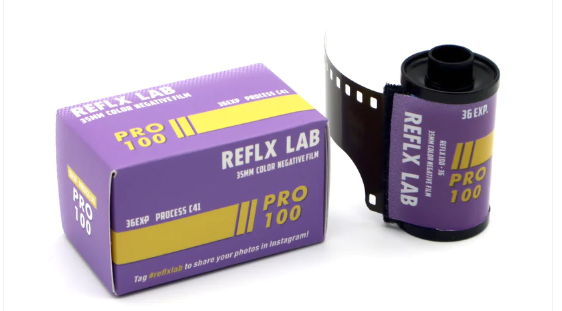
The winner for the least-hyped color film is Kodak Aerocolor, which is being repackaged under various names, such as Elektra 100, Santa Color 100, Reflx Lab Pro 100, and Karmir 160.  Aerocolor is a fine-grained aerial photography film with great latitude, and a lot of people are just discovering it.  If Kodak/Alaris could get their shit together, they’d be offering Aerocolor  as a Kodak product in 35mm and 120.  Instead, they have siloed the different divisions and that’s to their detriment.  


The winner for the most-hyped color film is obviously Harman Phoenix.  I’ve never seen a film rollout like this one, and love it or hate it, Phoenix is a unique emulsion. Lens caps off to Harman for their foray into the world of color.  I’ve shot one roll so far, and I’ll wait for a day with light clouds and no bright sun for the next one.   


I believe that the Kentmere Pan 100 and 400 are two of the least-expensive b&w films out there, and in my experience, give outstanding results.  I’ve used them for years, when they were only sold as Ultrafine Extreme by Photo Warehouse, in California. Now, in their own branding, the Kentmere films are an excellent value in 35mm and 120.


Reflx Lab in China has been doing a great job with their branding and selling of various film stocks, and their recent introductions of several ECN-2 films with the remjet removed so that they can be developed as C-41 is a great thing.  In my local camera store - Ball Photo, in Asheville, I’m seeing more variety of films than ever before.  Sure, some of them are just rebranded stocks, but if that gets someone to try one out, all the better.


The Film Photography Project just keeps rolling along with their films for still and cine cameras.  Their catalogue of FPP-branded film stocks is impressive, and while it’s the place to go for the unusual, they also sell the major brands at the best prices.  


Another very positive development (the photo puns write themselves) is the production of Kodak-branded photochemistry coming back to the USA.  Photo Systems, Inc. in Dexter, MI which used to be known as Unicolor, will be producing Kodak-branded photo chemistry.  I toured that facility a number of years ago, and it looks like Dexter, MI will be seeing ever more semi-trucks coming and going from that factory.  In case anyone forgets, Kingsport, TN is the home of Eastman Chemical, which used to make photo chemistry there.  That’s about an hour from my home.


Deaths (certainly not comprehensive)


The permanence of great photography is exemplified by Elliot Erwitt, who died at the age of 95. His images have appeared in various books and monographs.  He left us with many indelible images of the every-day that were never ordinary.  https://www.elliotterwitt.com/

John Fielder, a well-known photographer of the natural scenes in Colorado, died at 73. 

https://www.cpr.org/2023/08/13/john-fielder-photographer-colorado-outdoors-died-at-73-years-old/

Frank Borman, astronaut, died in November, at the age of  95 - took the first photograph on the Apollo 8 mission of the earth from the moon - that image is lesser known than the one taken by William Anders - Earth Rise- which inspired a consciousness  of Earth being our home, alone in the cosmos.  Those Hasselblad cameras were instrumental in the Apollo program, and the quality of the images from them are unsurpassed, especially when you consider the environment in which they were used.

Frank Borman's photo


Larry Fink, well-known for his photography in Greenwich Village, and chronicling the Beat generation, died at 72.  https://www.youtube.com/watch?v=Qt9M2aQAFT0

Lawrence McFarland, photographer and educator, died at 81.  Known for his landscapes, he was a respected professor of photography at the University of Texas, Austin. https://www.lawrencemcfarlandphoto.com/home

John Benton-Harris, photographer/visual sociologist, died at 83.  An American in the UK, he was renowned for his photo essays of the British people. https://www.theguardian.com/artanddesign/2023/oct/23/john-benton-harris-obituary

Helen Marcus, a noted photographer of the famous in New York, died at 97. Her career started late - at age 50.  Her black and white portraits of famous writers such as Tom Wolfe and Toni Morrison are iconic.  https://www.shelf-awareness.com/issue.html?issue=4601#m61893

Georgia M. Coxe, died at 92.  She was known both for her poetry and her photography, which in my mind, is an ideal combination. https://provincetownindependent.org/obituaries/2023/09/20/poet-and-photographer-georgia-coxe-dies-at-92/

North Carolinian photographer, Bruce Roberts, died at 93.  He pioneered the use of 35mm in newspaper reportage, and photographed a LOT of North Carolina for Southern Living and Our State magazines.  https://en.wikipedia.org/wiki/Bruce_Roberts_(photographer)

Cary Wolinsky, who often photographed for National Geographic magazine, died at 75. He was an astute photographer whose creativity with the camera is well-known. https://thephotosociety.org/cary-wolinsky-1948-2023/

Lisl Steiner, a photojournalist, documentarian, and film-maker, died t 95.  https://www.nytimes.com/2023/06/18/arts/lisl-steiner-dead.html


There are a lot of photographers that have lived into their 90s, so I guess there’s hope for me yet.


What else to say about 2023?  I published 4 zines, which was pretty good. All of them were well-received.  I shot well over 100 rolls of film, developed most of it myself.  The nascent Asheville Camera Club published a zine, and is now meeting monthly. For once, I am just a participant, not an organizer.   I didn’t go on any lengthy road trips, which I hope to make up for in 2024.  However, I did pretty well with trips to Michigan, Ohio, New York, and South Carolina.


I hope 2024 goes well for everyone (well, almost everyone - democracy has to survive). 

How did 2023 work out for you?


Monday, February 13, 2023

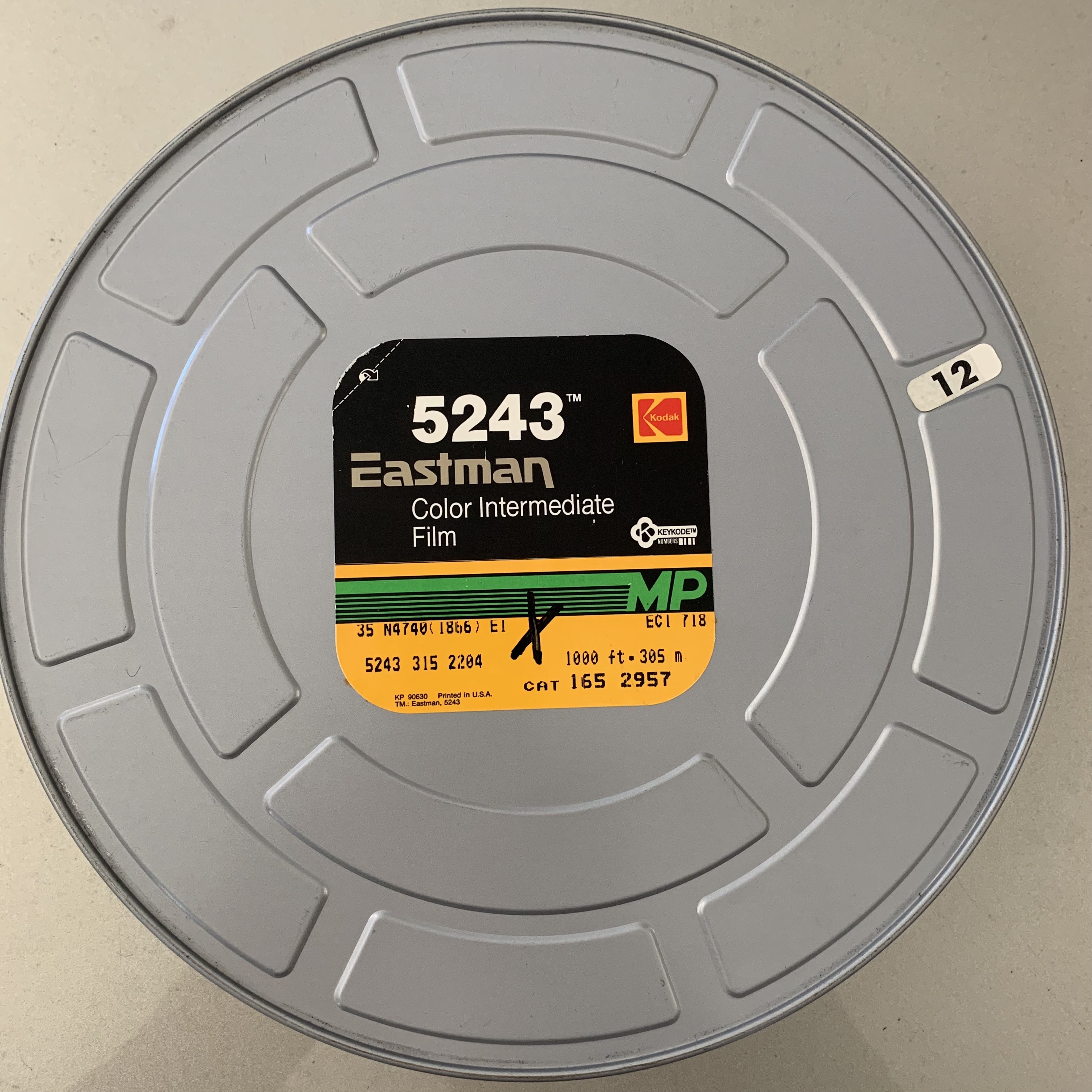
Eastman 5243 Internegative Film

Sometimes it's fun to just try things and see what happens...


My buddy Bill Pivetta gave me an unopened 1000 ft reel of 35mm motion picture stock last summer, and until recently, it sat in the fridge.  I finally got around to spooling up some of that 1000 ft reel into a 35mm bulk loader, and from that, I loaded up a couple of 35mm cassettes.  The “mystery film” is Eastman 5243 color internegative film.  It’s been really difficult to find much information about it, except that it was used in Star Wars (1977) to produce the final negative for the positive copies for distribution.  The database of film stocks indicates that this film was discontinued in the late 1950s, but that is not the case.  These big reels of film appear to be relatively “recent” - perhaps from the 1980s.  In any case, I was intrigued to see what I might get from this film.  Knowing that similar special-purpose cine films have a low ISO, I decided on an ISO of 1.5, which is 2 stops more exposure than my F4’s lowest ISO setting. So, I just set the exposure compensation dial to +2, giving me an ISO of 1.5 for in-camera metering purposes.  While shooting, I bracketed from +2 to +1 and 0, for an estimated ISO of 1.5, 3.0, and 6.   On a full sunny day, sunny-16 for this film would be about 1 second at f/16, or about 1/15 sec at f/4.  


I shot the roll in the River Arts District, and developed the film in C-41 chemistry along with a roll of Kodak Vision 3 500T.  Before developing, I gave the two rolls a good soak in an alkaline solution of Sodium bicarbonate and Sodium carbonate, and then shook the tank like a cocktail shaker for 4 rinses to get as much remjet off the films as possible - about 99%. I then proceeded to do a typical developer and blix, followed by a series of washes.


before  scanning

The resulting negative has a greenish base, and while the base was rather dense, I could see the negatives, and my eye says the ISO 1.5 was pretty close.  Scanning gave me some interesting results.  For one, it’s obvious that the film has lost some color sensitivity, and I don’t know if the blue-green base color is merely the result of age - which it certainly could be, or a factor of age and storage conditions.  I don’t think the film was refrigerated.  The color matrix in the first image shows how the film now records colors.   The grain is fine, as I would expect from an internegative film.  There is some odd coloration in some frames - and perhaps that’s from age, as this was the beginning of the large roll.  With some post processing in my favorite image editor (Corel Paint Shop Pro), I did some fade correction and exposure correction.  The resulting colors are muted, and some people might find them very appealing.  


5243 color chart after some tweaking


color chart as it's supposed to look (iphone)

I don’t think there would be all that much difference had I developed the film in ECN-2 chemistry.  After all, this is a special purpose, slow cine film that’s probably at least 40 years old.  I may try another roll soon and see how it goes.  However, that’s the beauty of testing a strange film --strange results.   I don’t know if there would be enough interest for me to sell any reloaded 35mm cassettes with the 5243 film at ISO 1.5.  Obviously there’s no guarantee on the results, but if you are interested in acquiring a few rolls of 5243 at a low price, let me know (USA only), as I have almost 1000 feet of it... 


before any corrections


For  comparison, here is a frame from Vision 500T developed in the same tank:

Vision 500T, Nikon FE10.


Saturday, October 08, 2022

Reflx Lab 400D Film Review


A few months ago, I received a package from China with two rolls of film from Reflx Labs.  I’d seen their products on Instagram, and they offered to send me a couple of rolls  to try out. I hoped that I would have gotten this review done sooner, but now that I have developed the second roll, I think I can finally provide some observations on this film.


The Reflx 400Daylight is actually Eastman Vision 250D with the remjet layer removed.  I commend Reflx Labs for providing this information on their website.  There is only one company making ECN-2 film at this time, and it’s Eastman Kodak. While the film is being pushed 2/3 of a stop, the Eastman Vision 3  film has enough latitude to handle the modest push.  

I really like the screw-top aluminum canister that the film cassette is sold in.  That harkens back to the really good old days, and the aluminum canister reminds me of some 1960s Perutz film.  Inside the canister is the roll of film, a keychain ring, and a DX-code sticker to replace the one on the film cassette.  There is a small hole on the end of the spool to attach the keychain, which means you’ll need to ask the film lab to return the cassette if you wish to use it on the keychain.   There’s nothing second-rate about this cute little package, and I loaded up the first roll in my Nikon FE.   I shot that roll at the end of July, and had my local lab (Ball Photo) process the film as C-41.  The results were quite good, though at the time, I thought I was seeing some “light piping” going on.  There was a tiny bit at the beginning of the roll, but further camera testing revealed that I had a slight light-leak by the film door hinge. Argh!!

The second roll was loaded into my Nikon F3HP which does NOT have any light leaks. I shot that roll during my trip to Lexington, VA, and finally developed it with the new Film Photography Project ECN-2 kit.  Even though the remjet has been removed, the ECN-2 chemistry and temperatures are just a bit different from C-41, and are the recommended developer.  It also allowed me to compare colors with the first roll.

The only problems that I have seen with this film are the obvious light-piping early on in the roll, and after going through the images and editing, there are quite a few frames on the second roll that have black hair-like marks in the image.  Dust spots and hairs will show up as white in scans, but emulsion defects will be black.  It could be that these are caused by the remjet removal process, which is done prior to packaging.  They are easily cloned out in editing, but I'd rather not have to do that. This wasn't seen on the first roll, so maybe it's just a random occurrence.

the arrow points to the black lines on the image


Not all were as bad as this - the arrows point to the black lines
on the image.  The next image shows the edited version.


The lowest point on the Blue Ridge Parkway - over the James River in VA


I did not attempt to test the 400D in all types of situations, but shot it as I would any color film, and I think the images I got from the two rolls are very good in rendition - though there are a few times when there is some halation effect - an orange-ish halo around a "hot spot."

It should be no surprise that another seller has done what Cinestill has done. In the world of ECN-2 film stocks, Cinestill figured out a way to remove the remjet coating before packaging the film, so that the film could be processed as C-41.  In addition, Cinestill uprated the Vision 3 500T film to 800 ISO, about 2/3 of a stop.  I typically advise shooting the ECN-2 films at the box speed, but a 2/3 stop push isn’t a big deal.  The Reflx Lab 400D is similarly uprated, and the results show that the push isn’t a problem - at least in my experience. It looks good developed in C-41  as well as the native ECN-2.

Images from Roll 1


note the reddish halation from the bright spots


Images from Roll 2


ghostly sprite from the light piping

Conclusion - overall, I like this film - Vision 250D is an excellent daylight film - which I have always shot at box speed.  The Reflx Lab 400D may need some additional care by the company to avoid the light-piping along the frames and the abrasive marks that I see on roll 2.  As in any secondary sale of a film, there is always the chance that your results may vary if uses or treatment are different from the manufacturer's recommendations.

Monday, April 11, 2022

More Slow Color - EASTMAN 5244 - ISO 1

You know if there is a low-ISO film out there to try, I will do so.  Ultrafine Online has the Motopix line of color films that are ECN-2 process cine films that are repackaged in 35mm cassettes for your still camera.  A while back, I purchased a roll of the Eastman 5244 from them. Rated at ISO 1, it's a tungsten-balanced film that was manufactured in the 1990s for use as a intermediate film for making master positives from Eastman color negative films and making duplicate negatives from those master positives.  To do this, the film has to be very fine-grained, have high sharpness and resolving power.  The film is on a clear acetate base, and has a remjet backing.

Eastman 5244 (image from Ultrafine Online)

The roll of 5244 sat around in my film box for a few months before I finally loaded it up in my Pentax Spotmatic F.  Here's the thing - of course my Spotmatic F does not have an ISO setting even close to  ISO 1.  Because the camera is all-manual, I could shoot it sunny 16 in full sun handheld at F/2 and 1/30 sec shutter speed. Here's how you can figure this out:

If the reciprocal of sunny-16 for an ISO of 1 is 1 sec at f/16, then:

f/11 = 1/2 sec, f/8 = 1/4 sec., f/5.6 = 1/8 sec, f/4=1/15 sec, f/2 = 1/30 sec., f/1.4 = 1/60 sec.

That of course, is in full sun.  I also used an external meter and set my shutter speed and aperture accordingly when I used the camera on a tripod for some of the later images.

You may think that one might want to use a warming filter over the lens as the film is a Tungsten-balanced emulsion.  That would only decrease the light, and make for longer exposures. I can always fix the colors post-scan if necessary. That said, the beauty of these odd films are the sometimes serendipitous crazy results that convince one that using these films presents a different avenue of exploration.

I shot some of the roll two months ago and finished it up at the end of March, when our daffodils were coming into bloom.  I used a tripod for many of those shots, but the early ones were hand-held - hence the shallow depth of field, as you'll see.  I developed the film in the FPP C-41 kit, but first used a sodium carbonate and sodium bicarbonate pre-bath at 102°F for one minute, and then after pouring out the pre-bath, poured in several changes of water at the same temp, shaking that developing tank like a cocktail shaker. The first pour out will be really black, and subsequent rinses will go from gray/brown to light pink.  At that point, you are ready to do the  C-41 or ECN-2 developing.  The initial carbonate prebath is essential in removing 99.9% of the carbon remjet and not contaminating your developer. After hanging the film to dry, I used a photowipe on the base side of the film to remove any remaining remjet, of which little remained.  

The film was scanned on my Epson V700 scanner, and files were opened in Corel PaintShop Pro, which has been my image editor for over a decade.  

Hand-Held Results --


Upper photo before adding a filter post-scan.
Lower photo, after an 85B equiv. filter

As you can see, the film is extremely fine-grained, and in the photos below, I'll point out any that have been altered by filters.


85B post-scan filter


Tripod-mounted results

Just a bit of filtration


This was pretty much a test of this film, and I should get more of it to shoot some colorful city scenes.  Shooting it indoors would be crazy, as it is so slow, and for photos of people - well in bright sun you could go f/4 at 1/15 sec if you dare.   However, it could be nice for shooting a 1 sec (or longer if not sunny) on a tripod to achieve a series of ghostly movements of people in a city landscape.