Showing posts with label Tennessee. Show all posts

Thursday, June 22, 2023

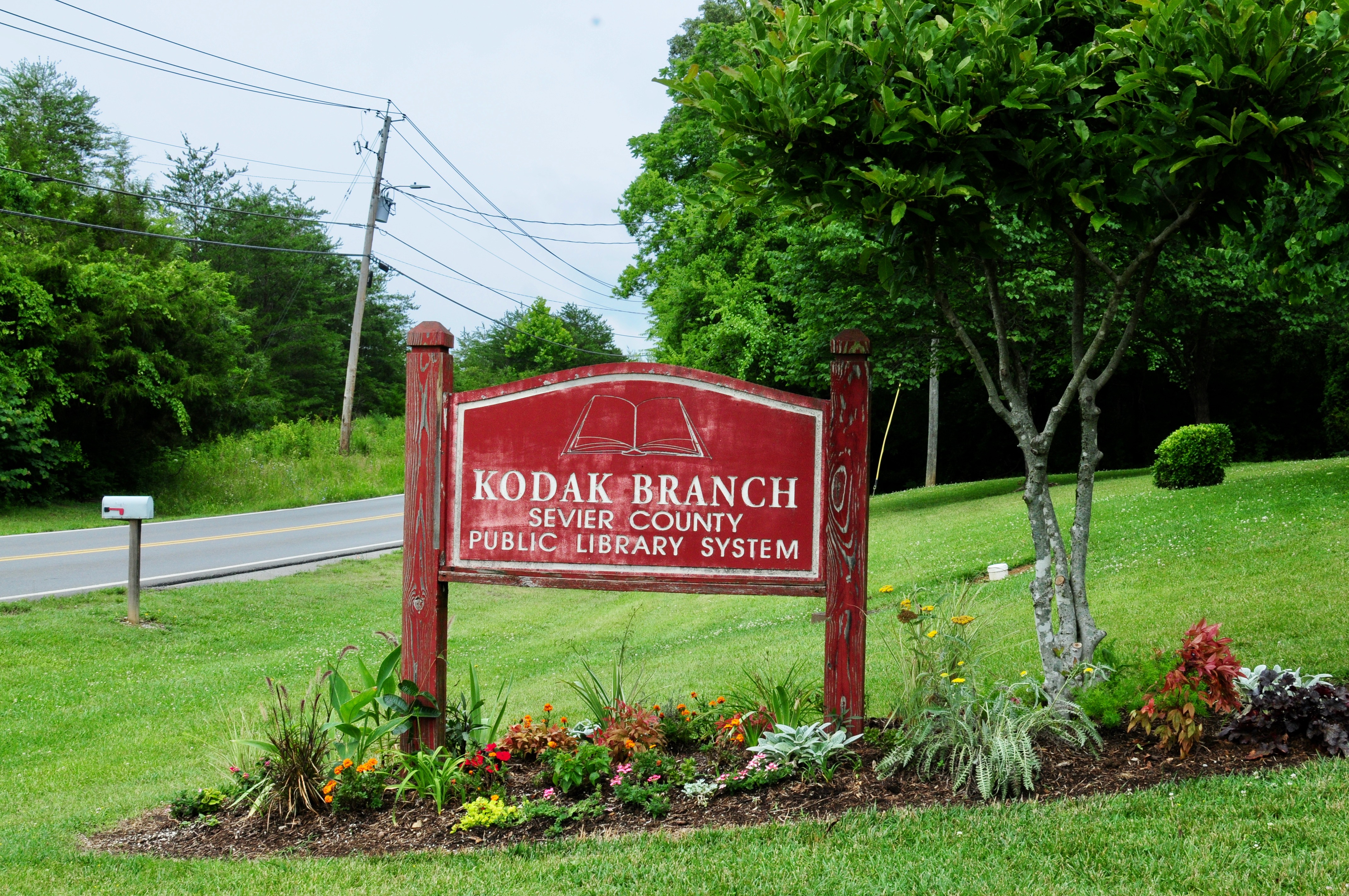
Kodak, Tennessee


Ever since we moved to western North Carolina, I have been interested in exploring and photographing many of the small towns that are in the surrounding counties.  However, once I found out there was a town in Tennessee named Kodak, I knew that I had to visit it to satisfy my curiosity, sort of like when I went to Mongo, Indiana in 2018.  So, after yesterday, I can delete Kodak, TN from my bucket list.

First, you may wonder how the town came to be called Kodak, since Kodak is an invented word by George Eastman.  In 1892, the postmaster Harvey N. Underwood, learned of the new "Kodak" brand of camera. Underwood decided that this was a name that was easy to remember and spell, hence he sought permission from George Eastman, to use this name for his village and its post office. Eastman granted this permission. I am pretty certain that the original PO building is now a real estate office.  So, here we are with Kodak Road, which alone is a pretty good name. 

Possibly the original site of the Kodak PO.


So, for the summer solstice of 2023, I decided that I would do a day trip to Kodak, photograph places with the name Kodak on them, and do my usual meandering road trip.  When I started out a little after 8:30,  the weather was overcast with light rain, and taking US-25 from Weaverville, made for a scenic ride.  US 25 passes through Hot Springs, as does the Appalachian Trail.  I’ve visited Hot Springs several times, and it sits along the French Broad River, which US-25 crosses several times in Tennessee.  At the TN/NC state line, I stopped to photograph an old sign for the State Line Cafe, which has been replacaed with an antiques store.  US 25 25 took me through Newport, TN, where I found this lovely old store along Lincoln Avenue.  I was supposed to meet up with Donna Moore to receive a bunch of cine film and odd lenses, so we met in the parking lot of the BassPro/Cabela’s store off of I-40W.  The entire region is geared towards tourists, as the Great Smokey Mountains are not far off, and neither is Pigeon Forge,  Dollywood and Gatlinburg. Sevierville is adjacent to Kodak, and parts of Kodak have been incorporated into Sevierville.  The main roads are definitely lined with places that cater to the tourists, except in Kodak proper.  


Kodak Road turns into Dumplin Valley Road, which feeds into TN State Route 66, which is also called the Winfield Dunn Parkway.  That’s where the preponderance of business have the word Kodak, including the Kodak Post Office, which dates from the 1989.


Driving around the many back roads in the area reveals the rural character and agricultural nature of the businesses.  However, as is typical, there are housing developments being carved out if the farmland.  The original center of Kodak is a four-corners without a traffic light.  The brightly colored Kodak Trade Center is probably the most notable of buildings.  I wonder how much has changed since Kodak was founded in 1892.

I had originally planned to shoot a Kodak camera with Kodak film while in Kodak, but the weather was more suited to pulling out a Nikon D300, while dodging the rain drops.  I think I managed to hit most of the highlights.  I also finished up a roll of Derevpan 100 in my Nikon F3HP.   

On my return trip, I went S on TN 66 to US-411, which eventually took me to I-40, and back to Asheville.  US-411 is also an interesting drive, as it’s named the Dolly Parton Parkway in Sevierville.   There is a Bush’s Beans plant on that route, and it has a visitor center that was closed by the time that I arrived.  

I wonder if real hillbillies get tired of their portrayal?

That's a LOT of beans

Bush's factory.  


It was a lot of driving for the day -- the twisty mountain roads eat up a lot of time and not as much distance as those road trips that I used to take in Michigan, Ohio, and Indiana.  But, it's NEVER boring!

I suppose my next trip that's Kodak-related should be in Kingsport, TN, where Eastman Chemical was located.  That's a little over an hour from my house.


Sunday, March 06, 2022

A Tale of Three Films

I typically have a variety of film types in my camera bags, so that when I pick one up, it's ready to go.  The types of films I include in the bag usually reflects the cameras inside and the type of photography that I use them for.  For example, my small bag with the Leica M2 has b&w ISO 100 & 400 film, whereas my canvas shoulder bag often has the camera of the week that I am using, along with the right lenses, as well as a couple of toy cameras, etc.  Therefore, it has a variety of film types from color to low-ISO b&w.  

On Feb. 25, we had friends visiting and I thought we might to go the NC Aboretum, so I grabbed the canvas shoulder bag.  I had to make a stop at the local post office first, and when I got back into the car I decided that we would go N instead, to Rocky Fork State Park in Tennessee.  It turned out to be the right choice, as everyone really enjoyed Rocky Fork, and the volume of water roaring through the creek was quite amazing.  

My canvas messenger bag 

Unfortunately, the Nikon FM2N SLR that I had in the bag was loaded with Fomapan 400.   It was also a sunny day, which is not ideal for photographing waterfalls. Oh well, I had to make do, so I put on a 2X Neutral Density filter and a polarizer, so that I could take longer exposures in the semi-sunny conditions along  Rocky Fork.  Once I finished the Fomapan 400, I decided to use a slow film, so I pulled out a roll of Adox CMS 20 II, and loaded it. That was a mistake, in hindsight, as you'll see from the images.  After that roll was done, I used a roll of Eastman 5231 - an expired cine film that's a lot like Plus-X.  It's rated at ISO 80, so with a polarizer, I was still getting some good 1/2 second exposures.  Of course, I wouldn't know any of this until after I developed the film, and that's one of the things that I like about film - be prepared to fail, or succeed spectacularly.

Rocky Fork State Park is a stream with a pretty exciting course through rocky terrain, and having been there a number of times, I know what sections are the most photogenic later in the year. But after some recent rains, just about any part of this stream with cascades of plunge pools, and white water is going to be photogenic. My trusty 22-year old Bogen/Manfrotto tripod has certainly been to its share of riparian scenes, and yes, if you want to shoot water scenes with long exposures, hand-held is not gonna do it, no matter what camera system you are using.  I started with the 24mm Nikkor on the FM2N, and then went to the 50mm. While I used the ND filter and the polarizer with the Fomapan 400, I just used the Polarizer with the Adox and Eastman films.

The Fomapan 400 was developed in HC-110 B for 7 min, the Adox CMS20 II was developed in D76 1:3, for 10.5 minutes, and the Eastman 5231 was developed in D96 for 6.5 minutes.  The Fomapan 400 looks like it always does - grainy, but otherwise, okay.  The Adox CMS 20 was NOT the right film for this, though, and probably the D76 1:3, while one of the suggested developers  in the Massive Development Chart, it would probably have been better going with a Technidol-style developer, as the Adox film is very contrasty, and did not have much latitude. The clear polyester base really shows the lack of grain, but also the high contrast. I'll try this film again, but in a situation where the lighting is even, and also rate it at ISO 12 instead of 20.  The real champion that day was the Eastman 5231 film.  I have a large supply, thanks to my friend Bill Pivetta, and I look forward to shooting more of it in the future.  At Rocky Fork, it was the perfect film with great latitude, low grain, and in the mixed lighting (sun and shadows), it showed how great it really is.  

This is not just a tale of three different films, it's a microcosm of the film world. Yes, I could have just shot Rocky Fork with my Nikon Df and not have to worry about film, and making adjustments as I worked the creek.  But you know what? By using film, I was learning something new, and creating a body of work that I can derive great satisfaction from.  It's not that the Adox film was a failure, it was just the wrong film for the conditions, and I learned from that.  The Fomapan was grainy, yet, I liked the effects that I got from it.  The Eastman 5231 is butter,  Smooth, creamy, and it really did well in the shadows and highlights. I don't want it to sound like I am knocking digital, but I could churn out a 100 digital images of Rocky Fork without even breaking a sweat and would have learned nothing new. Sometimes the journey IS the reward. 

Herewith are samples from the three films.

Fomapan 400-


Adox CMS 20 II-


Eastman 5231--


As you can see from the above, I did get some nice images from all three films.  However, the Eastman 5231 really performed the best when considering the overall exposure.  The shadow detail in the Adox is pretty bad, and the Fomapan 400 certainly did fine with the shadows, but one may not like the grain.  It's all a matter of taste and expectations.