Showing posts with label nature. Show all posts

Saturday, September 07, 2019

Trees...

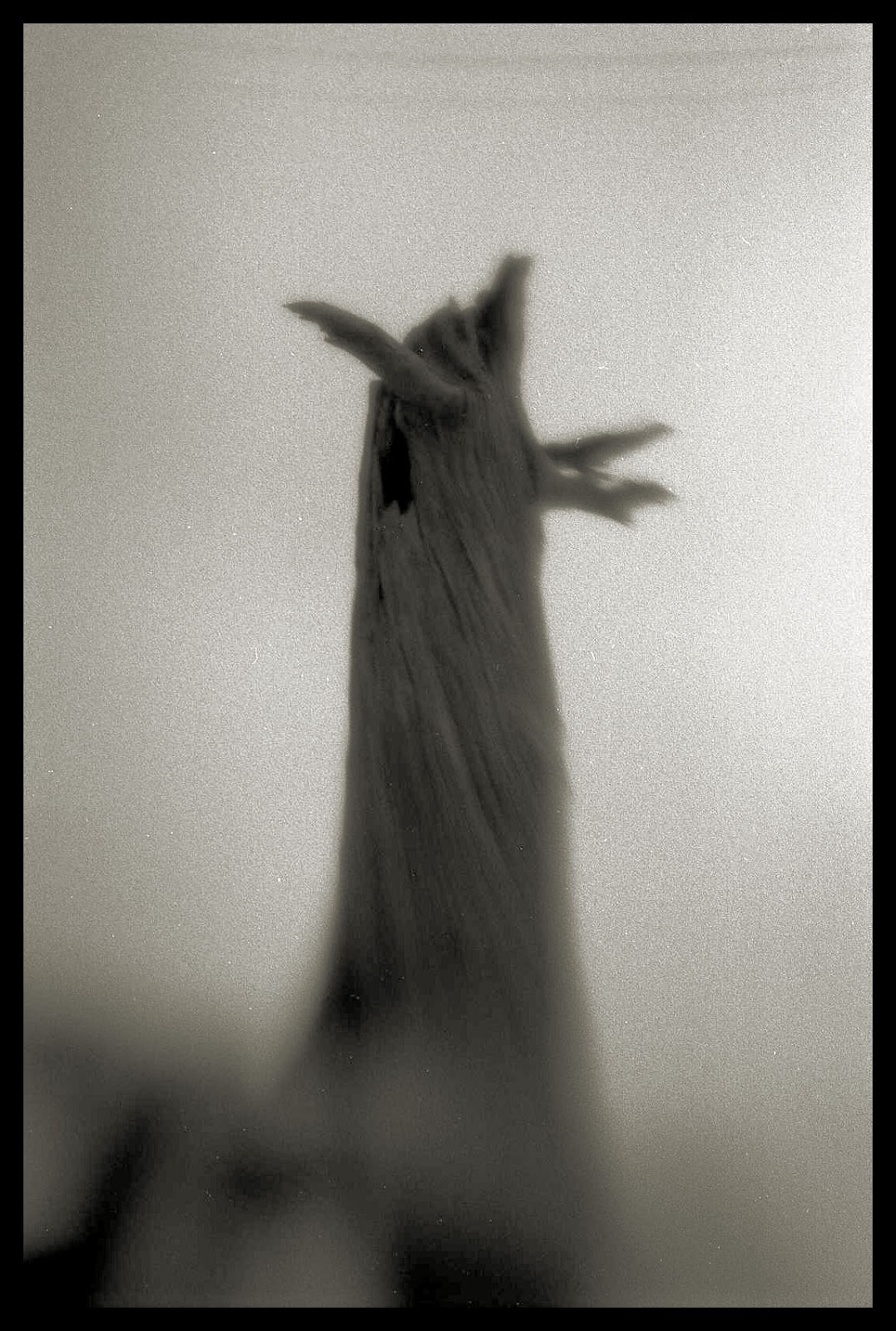
I have always  been fascinated with trees -- their form, the shadows that result from them, and the fantastic moods that they can create, along with whatever weather is impacting them. Of course, as we now head towards autumn later this month -- the autumnal equinox, many trees are starting to exhibit that change towards the fall colors that we so love to see.   I grew up in the Adirondacks of New York, and even as a child, I loved the big sugar maples along our driveway blazing forth with brilliant oranges and reds.  In the northeast, fall was a glorious time of year with crisp mornings and slightly warm afternoons, until heavy frosts took their toll and the leaves dropped like snowflakes.  When my wife and I moved to Michigan in 1981, fall color was a bit of a disappointment in the lower part of the state, as the predominant oak-hickory forest was more subtle in its colors.  One really needs to travel north in Michigan to see the wonderful climax of color that's found in aspen-birch-maple forests.  Now, we are living in the mountains of Western North Carolina, and this will be our first fall and winter in the South.  I know that we will get some good color here in late October, and I look forward to shooting it and traveling around the nearby Appalachians.

"A woodland in full color is awesome as a forest fire, in magnitude at least, but a single tree is like a dancing tongue of flame to warm the heart." -- Hal Borland


However, trees are more than just color. Think of the myriad of forms and the different times of the year that a deciduous tree can look so different, and the arrangement of branches makes a species identifiable in the field.  When I was a forestry student, we had to identify at least 75 species of trees and shrubs by their leaves, fruit, buds, bark, etc., and of course also know their Latin names.  That course was a lot of fun, and also quite challenging.  I have never regretted any of those hands-on field classes in botany and zoology. All have been a part of my world since, and while I may not always know what a plant or an insect is, I know how to find out.   My point is, that you have two eyes, yet many people don't know how to look.  As a photographer, you should be seeing more than just the forest -- you also need to pick out the trees.  Seeing and understanding what you are seeing makes for a better image.  Deciphering the scene before you press the shutter button can result in a more  meaningful image.  I'm not saying I do that all the time, but when I do, I know that I am more in control of the final result on film or the sensor.


Sometimes, the shapes of the trees just resonate with me, and it's just using my intuition and imagination that propels me through the creative process.  I immerse myself in the little world of that place and time, and sometimes, I come away with some great images.  But it's not all about the image -- being in the woods -- in the moment -- with nature, is a refreshing connection with the earth.  I always felt some connection, and it's taken me years to appreciate just how essential that connection is to well-being and to creativity.

"To really feel a forest canopy one must use different senses, and often the most useful one is the sense of imagination." -- Joan Maloof 


Lately, I have been more captivated with trees and their shapes, and here in North Carolina, the trees in the mountains can exhibit some fantastic shapes.  I hope to get a portfolio together in the next year or two and see where that obsession goes.

"I often lay on that bench looking up into the tree, past the trunk and up into the branches. It was particularly fine at night with the stars above the tree." -- Georgia O'Keeffe


Here is a small selection of my images that showcase trees.  I hope that you enjoy them.


Sunday, January 22, 2017

In a Fog

In the literal sense.  The past two days have been wonderful for shooting in a dense fog.  While it is late January, it feels like March, as the temperatures have been mild for this time of year. The fog yesterday lingered until the sun burned it off around noon, but today's hung around quite a bit longer.

One of the fun things about shooting in these conditions is the soft light, and the muted details. Forms become important, rather than the details, and such weather just screams for b&w, or at least it does for me. With the backgrounds obscured by white, it becomes a dreamland where you really can't quite pin down where an image was taken.

I shot mostly film yesterday with my Nikon FG and 50mm  and 36-72mm E lenses.   I took along my Fuji X100S digi, and therefore have some lovely b&w scenes to share right away. Today, I was running errands, and stopped along the Huron River, again with the X100S. The scenes I was seeing reminded me of some Japanese woodblock prints.  With such a serene, soft landscape, one can lose those negative thoughts and live in the moment.  It was a needed break offered to us by nature.


Wednesday, October 21, 2009

A woodsy walk soothes the psyche


Today was perhaps one of the nicest days all month. October has been chilly and often damp this year, and there haven't been all that many days when it has been without a chill. I took a hike over to Nichols Arboretum for a long lunch, and shot a roll of Kodak Gold 100 with my Nikon FG. There are not than many reds in the woods at the Arb, but there are lots of yellows. I had a good time traipsing around and realized that I should throw out the crappy tripod I keep at work and bring in one of my better ones.

Nonetheless, it was better than no tripod at all, and I took some fun photographs. I stopped at Walgreens after work, dropped off the film, went next door and browsed books at Barnes and Noble, and went back and picked up my developed and scanned film.


warm day in October

Friday, August 07, 2009

Porcupine Mountains Trip 2009

Overlooked falls
Overlooked Falls, Finepix S2


I have lived in Michigan for a few months more than 28 years. I have made numerous lengthy trips to the Upper Peninsula, and have been all over it -- except for one area, the Porcupine Mountains. Finally, this past week I made a brief visit to the Porkies with my wife Adrienne, my daughter Marjorie, and her GF, Stephanie. We stayed at the Superior Shores Resort, in a nice cottage right on the shoreline of Lake Superior. It was a nice base to have, to able to make our meals there, have the waves crashing not 70 feet from our bedroom window, and be just a short drive from the Porcupine Mountains State Park. It was nice having Steph and Jorie prepare the meals, too.

Two peas
Jorie and Stephanie, shot on Ektar 100.

We went on several forays to view various waterfalls, hike some trails, and enjoy nature. The weather was excellent, never really hot, and although we didn't hit every spot, I think we came away wanting to see more next time, which is a good thing. Photographically, I kept my equipment fairly simple for this trip -- a recently acquired Fuji Finepix S2 Pro (which I found on ebay for $220), 18-50mm, 50mm 1.8, 70-200 Nikkor, lensbaby, and various ND and polarizing filters; Nikon F3HP, 50mm 1.4, 24mm 2.8, 90mm Tamron macro, and 80-200 f4. Also brought my "new" Great Wall medium format SLR that I bought on ebay from a seller in China. Oh, and a Bogen tripod w/ball head -- it is my lighter of two Bogen/Manfrotto tripods, and in retrospect, wish that I had brought the heavier one.

I really enjoyed shooting with the Fuji Finepix S2 -- ergonomically better than my D70, with sensible controls and the ability to also shoot b&w. I still need to do more work on some dirt removal from the sensor. Makes me think that my next "new" DSLR might be a FinePix if they come out with a full-frame version. However, that's a way down the road.

I shot three rolls of Kodachrome 64 -- the last of it that I will ever shoot, so doing it on a vacation is a very fitting end of such a unique film. I'll send those off to Dwayne's photo for processing next week. Look for images sometime in September.

The waterfalls are varied, ranging from small intimate falls on Union Creek and the Carp River that are very photogenic, to quite large falls on the Presque Isle River. Outside the park, we found Bonanza falls on the Big Iron River, which were a favorite. Farther west, we briefly visited Conglomerate and Potawatomi falls on the Black River. However, you can't really get close to those falls, as the viewing platforms are high above the river. Probably a good thing at high water. So, our favorites were smaller waterfalls that we could explore from every angle.
Bonanza Falls 2
one aspect of Bonanza Falls

If you want to capture the water over a long exposure, use at least one ND4 filter and your lowest ISO setting. I suggest using a polarizer and an ND4 filter for best results unless you are shooting very late in the day.

Greenstone Falls
Greenstone Falls

Overall, it was an excellent, if short trip. I think if I lived in the UP, I would be out shooting almost every day.

Sunday, January 18, 2009

Winter Photography With A Hammer


Well, perhaps not really a hammer, but there is no doubt that the Nikon F2 could be used for one if necessary. Like a hammer, it is a basic tool - what you create with it depends on the wielder. My F2 pictured above, has a plain (non-metered DE-1) prism, making for a very solid and attractive SLR. Winter photography (and by that, I mean with snow being present) is challenging enough -- too cold and your batteries in the fancy SLR or DSLR fail, leaving you with a plastic rock, never mind the fact that your hands get cold adjusting all those tiny buttons. No, I think winter photography works really well for simple cameras with no batteries, or if any -- just the ones needed for the meter. The Nikon F2 with a plain prism obviously has no metering, so you can use a hand-held meter, or learn to trust your instincts and go with the "sunny-16" rules. I like b&w film for snowy landscapes -- I find that unless there is a compelling color element, b&w and shades of gray are the predominant colors, anyway. So, I tend to shoot b&w film, and in the photos that follow, it was a roll of expired Kodak Plus-X Pan. Kodak's T-Max 100 or Tri-X are also good choices.

A lens hood is a good idea, as there are reflections coming off snow in the winter landscape that can cause havoc with lens flare and reducing contrast. If you shoot using sunny-16, you won't have to account for the meter being wrong, as the snow will reflect enough light that your meter will indicate overexposure. If your camera has exposure compensation, set it at +1 to +2, depending on conditions to get an accurate exposure. Bracket, if necessary. Black and white film has plenty of latitude, and some overexposure is better than underexposure with most b&w emulsions.

The Nikon F2 was the last hand-assembled camera made by Nikon, and was produced from 1970-1980. Certainly one could not ask for a nicer all-mechanical body. Without the big metering prism (typically a DP-1), it's fairly compact. With winter shooting, I just go by sunny-16, and set the shutter speed and f-stops accordingly. No tiny buttons or thumbwheels to adjust. Manual focus, of course. I also use a tripod in the snow, with a quick-release bracket. That makes landscape photography much easier, keeps the camera steady, and another tip - it's easier to change lenses, since the camera is sitting on the sturdy tripod, and cold hands are less likely to be dropping things.

One of my favorite places to shoot locally is at Matthaei Botanical Gardens -- the trails that follow Fleming Creek offer access to some nice winter scenes that are usually pretty undisturbed.

Snow-covered
The bridge over the pond that leads to the trails. Tamron 90mm lens.

The eye in the ice
The eye in the ice.

little worlds
I love the contrast of snow and water and the various states of ice formation.

Try some winter photography -- go all-manual with a twin-lens reflex, a 35mm SLR or even a Holga. Leave the DSLR at home.