Showing posts with label philosophy of photography. Show all posts

Friday, August 14, 2026

Working on projects

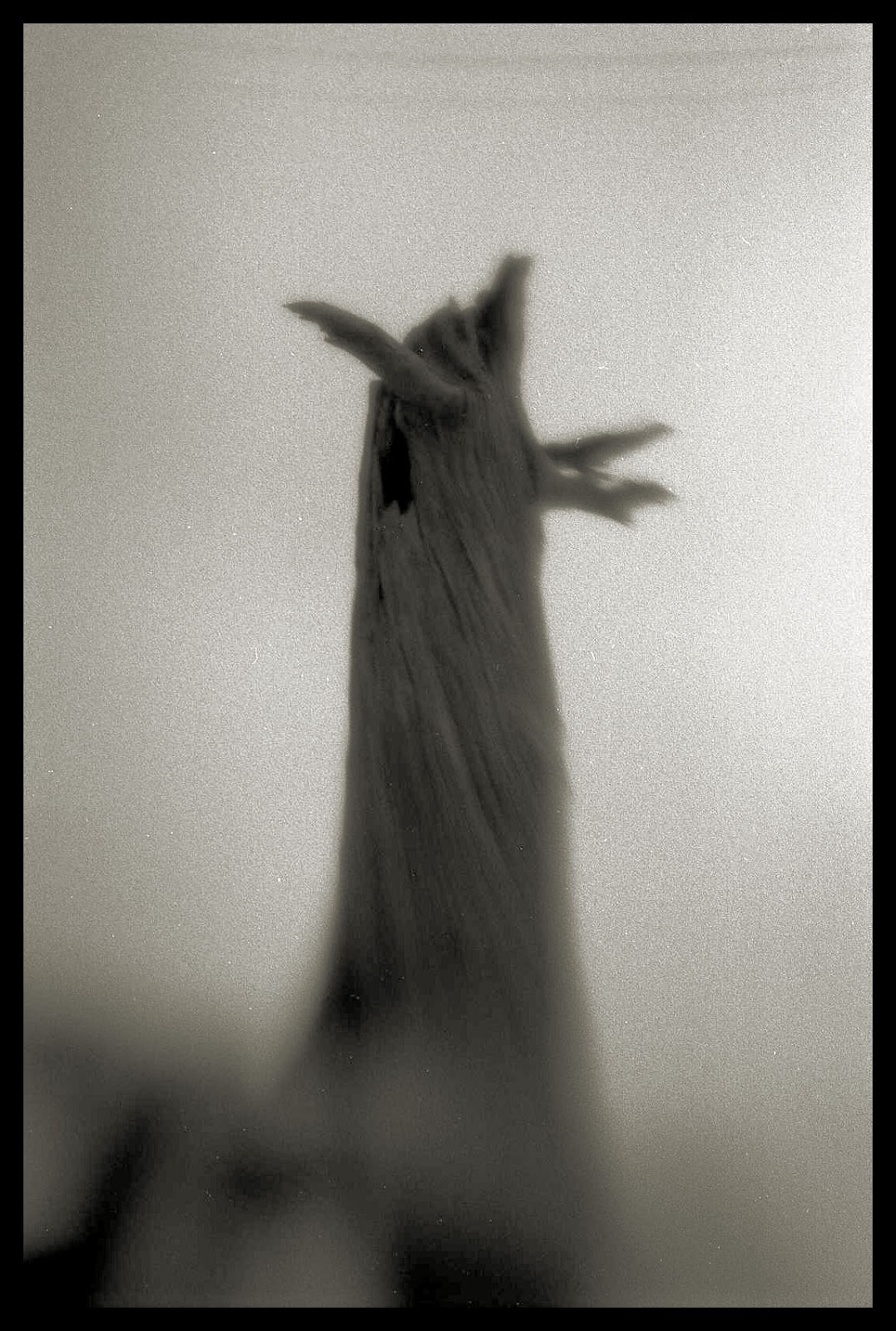
Ann Arbor, MI. 2001. Kodak HIE film. I so loved that film.


The longer you are creative in any endeavor, the more wisdom (maybe) you accumulate. In photography, you not only gain experience, but you also accumulate a body of work, which is more than just stacks of negatives and prints (or hard drives full of files).  Your interests may change over the years - what was once a driving force for your type of photography may have petered out, and maybe you veered into a different direction altogether.  Or maybe, if you are like me, you have had many interests, and there is no single subject of your photography, but many.  For example, I’ve had a thing for photographing post offices, especially those in small towns, or places with odd names. But that does not make me a chronicler of post offices.  However, I have a lot of photographs of them.  In my travels, I often photograph every-day mundane things like those ice boxes outside of gas stations, or one of the few remaining pay phones, or oddball signs, or whatever catches my eye.  On their own, each photograph may not amount to much.  However, after a few decades, these accumulations start to have some weight to them.  As Garry Winogrand said, “everything is photographable.”  And to that, I agree.  I’ve photographed a lot over the past 25+ years, and some of those photographs are better than others.  Some have been exhibited. Some have appeared in publications, and quite a few have been in my photozines.  I have had some exhibitions that were based on a preconceived project - that is, I photographed purposefully for a particular goal.  A few of my zines were also produced in that fashion - a means to an end. The zine on Kudzu was exactly that.  It’s not that I had a trove of Kudzu photographs to choose from and thought “I ought to put these together for a zine.”  In that case, I had a clear goal, and in the space of a few months, made the photographs for it.  I also invited other photographers I knew to participate, so it wasn’t an open-ended project.


However, sometimes there are enough examples of a subject that I can put them together as a project.  I have found that I have often photographed certain types of scenes when traveling, one of them being picnic tables and shelters at highway rest areas.  In the back of my mind there’s always the “maybe I’ll have enough for a project someday.”  Now, on their own as individual images, they might appear as mundane.  But put 30 of them together, and I have a coherent project.  Add in some history of them, some observations, and voila! a book.  That’s how I work.  


Some post offices - from my album on Flickr


Photography is different from writing, different from painting, different from sculpture, different from all the arts, in that an image can capture a fleeting moment.  That image can be incorporated into a larger, coherent body of work if you have taken enough images to coalesce into something.  So many things change over time, yet that singular image is proof that at some point in time, at some place, that thing, that place, that person, that belief  existed.  I guess my point is that you never know how important an image might be at the moment that you make it. As someone that photographs a lot of things, I know that some of the places that I photographed  a few years ago no longer exist.  Some of the places have irrevocably changed.  People that I photographed years ago are no longer with the living, but they still exist in a photograph.


A good example of photographing change over time are the photographs by Nicholas Nixon of the Brown sisters. In a series of photographs from 1975-1999, he captured the beauty, grace, and maturing of four sisters each year.  That’s quite a wonderful book, and as I age, I appreciate how much effort it is to take on a long-term project.  I’ll be turning 70 in December, and I have a lot that I want to accomplish in the years ahead.  Fortunately for me, I have a lot to draw from as far as accumulations of “projects.”   I use Flickr a lot - I can organize my images better, and as I accrue additional photographs, it's easy to add them to an album. For me, it's worth the money to have as much of my work in there as I want.


some rest areas - soon to be a small zine.


My advice for anyone starting out in photography is first of all -- observe.  Look.  What things do you see that resonate with you?  I know some photographers start out with “I want to be a X photographer,” where X= whatever genre fits.  Others sort of find their metier after a few years of photography. Some photographers are all over the place (that would be me), but strong in a certain genre.  The more you photograph, the better you’ll be, and the experience and accumulation of images will be a benefit if you keep at it.


Another project in the works


I’ll be traveling to Tucson in about a week to help my daughter move back East, and having her close-by in NC will be absolutely great.  While I’ll be driving a U-Haul truck, I’ll still be able to stop and take some photos, and fill in some gaps in my “projects” yet to come.  If you have never been to Route 66, this is the centennial year of the road.  A lot of what was there 50 years ago is either in ruins or gone, but enough remains to make it worthwhile to see for yourself.  However, it does not matter what route you take, but the time that you spend on it with a camera and an open mind will be a gift to yourself.


I’ll be back with some new posts in September.

Saturday, September 07, 2019

Trees...

I have always  been fascinated with trees -- their form, the shadows that result from them, and the fantastic moods that they can create, along with whatever weather is impacting them. Of course, as we now head towards autumn later this month -- the autumnal equinox, many trees are starting to exhibit that change towards the fall colors that we so love to see.   I grew up in the Adirondacks of New York, and even as a child, I loved the big sugar maples along our driveway blazing forth with brilliant oranges and reds.  In the northeast, fall was a glorious time of year with crisp mornings and slightly warm afternoons, until heavy frosts took their toll and the leaves dropped like snowflakes.  When my wife and I moved to Michigan in 1981, fall color was a bit of a disappointment in the lower part of the state, as the predominant oak-hickory forest was more subtle in its colors.  One really needs to travel north in Michigan to see the wonderful climax of color that's found in aspen-birch-maple forests.  Now, we are living in the mountains of Western North Carolina, and this will be our first fall and winter in the South.  I know that we will get some good color here in late October, and I look forward to shooting it and traveling around the nearby Appalachians.

"A woodland in full color is awesome as a forest fire, in magnitude at least, but a single tree is like a dancing tongue of flame to warm the heart." -- Hal Borland


However, trees are more than just color. Think of the myriad of forms and the different times of the year that a deciduous tree can look so different, and the arrangement of branches makes a species identifiable in the field.  When I was a forestry student, we had to identify at least 75 species of trees and shrubs by their leaves, fruit, buds, bark, etc., and of course also know their Latin names.  That course was a lot of fun, and also quite challenging.  I have never regretted any of those hands-on field classes in botany and zoology. All have been a part of my world since, and while I may not always know what a plant or an insect is, I know how to find out.   My point is, that you have two eyes, yet many people don't know how to look.  As a photographer, you should be seeing more than just the forest -- you also need to pick out the trees.  Seeing and understanding what you are seeing makes for a better image.  Deciphering the scene before you press the shutter button can result in a more  meaningful image.  I'm not saying I do that all the time, but when I do, I know that I am more in control of the final result on film or the sensor.


Sometimes, the shapes of the trees just resonate with me, and it's just using my intuition and imagination that propels me through the creative process.  I immerse myself in the little world of that place and time, and sometimes, I come away with some great images.  But it's not all about the image -- being in the woods -- in the moment -- with nature, is a refreshing connection with the earth.  I always felt some connection, and it's taken me years to appreciate just how essential that connection is to well-being and to creativity.

"To really feel a forest canopy one must use different senses, and often the most useful one is the sense of imagination." -- Joan Maloof 


Lately, I have been more captivated with trees and their shapes, and here in North Carolina, the trees in the mountains can exhibit some fantastic shapes.  I hope to get a portfolio together in the next year or two and see where that obsession goes.

"I often lay on that bench looking up into the tree, past the trunk and up into the branches. It was particularly fine at night with the stars above the tree." -- Georgia O'Keeffe


Here is a small selection of my images that showcase trees.  I hope that you enjoy them.


Sunday, January 17, 2016

Going Back in Time

A few weeks ago, while I was off on holiday break, I had some time to go through some of the "shoeboxes" of film shot back in 2000-2002.  Four boxes of 4x6 (mostly) color prints and negatives that for the most part, have sat there, and have not been scanned or shared.  As I went through them, I realized how much better a photographer I am now than back then.  Some sets of tossed in the trash as there were no images really worth saving.  In 1999-2000, I was starting anew with a passion for photography, learning as much as I could, using better cameras, and hopefully better technique.  I shot a lot on color print film, and did not start developing my own b&w until 2001.  Even so, I shot a lot of images that are just crappy by my current standards.  Lack of good focus, subject position, bad lighting, uninteresting images, etc.  I am sure at the time, I thought some of them were okay. However, I was learning by shooting.  Color film was fairly inexpensive and so was processing at the local stores.   One thing is for sure, some of the images were better after I scanned them in and adjusted them to my preferences.  Overall though, I was learning to "see," to compose, and eventually, after many years I am a much more sophisticated photographer.  Compare this to being a musician, and it's similar.  Same for any art form.  We improve by doing. Until we actually practice, we don't improve.  Whether its shooting every day, drawing every day, playing every day, we improve over time.  We develop a more sophisticated ear, a better vision of our end product, and our imagination is able to produce something because we have taken control of the tools, improved our education about our craft, and have made our tools an extension of our talent.

Of course, one can say that it's easier with digital.  It's just easier to take shitty banal images and fill up a hard drive with them.  The envelopes of 4x6 prints remind me of where I was, and how much better I am now.  I have a better grasp of aesthetics, moods, composition, and so much more than I did 15 years ago.  I should be happy with that, but I know that I can still be better.  That's part of being an artist of any sort. Complacency leads to mediocrity. Always test yourself in some way-- find new challenges, new projects, new techniques.  THE CAMERA DOES NOT MATTER.  It's the gray matter between your ears that will make you a better photographer.  The limitations that you set for yourself are your barriers.  I know this to be true, and not some phrase plucked from the internet.

What do you want to do with your photography?  Why are you not doing it?  List the things that keep you back, and address them.  Fear is the biggest reason for many of us.  Fear of how people will react, fear of the unknown, fear of failure.  You have to learn by doing.  Do it until you get over your fears, and you will see improvement.

I'm 59 now, and  I wish I had worked harder on photography while in my 20s-30s, I had to eventually get serious about photography in my 40s.  In knowing what I know now, I missed a lot of opportunities to document changes that have taken place.  My interpretation of changes, anyways.

Back to the boxes of photographs.  I'll winnow those down, keeping the images that depict family, friends, significant events or places.  A lot of the nature images are crappy stuff.  They served the purpose of learning what I needed to, and if they are not good enough to keep, into the trash they go.

Taken in 2002, with a Contax G1 on Ilford XP-2. My daughter with her Nikon FG and 80-300 zoom.   She was between middle and high school.  This one is a keeper, of course.