Thursday, March 08, 2018

Agfa Cinerex - Another Oddball Film

I purchased a couple of rolls of Agfa Cinerex IC1N film from Ultrafine last year, and finally finished up a roll in my Nikon FE a few weeks ago. I had forgotten to put a slip of paper in the film reminder slot on the back,so all I knew was that I was shooting an ISO 50 film.  I hate it when I do that, but in this case, my subject was a good test for the film.

First of all, what is Agfa Cinerex?  It's a fine-grained orthochromatic film (not red-sensitive) that was used in the medical industry as a cineradiography film.  There is no antihalation layer on the polyester base, so it's a good idea to load it in subdued light to avoid light-piping (which definitely shows on the sprocket area of the roll that I shot). It seems to have first become available online around 2012, as entries regarding the film appeared on Rangefinder Forum and APUG that year.  At that time, someone was selling 300 ft. rolls of it.

There is a dearth of information online from the manufacturer. I'll say one thing about Kodak -- they published technical data for their films and made the pdfs available online.  Thankfully, Ultrafine Online has some basic developing information available, and the links to the forums are helpful. 

When I loaded the film back in September, I did a few shots around town and forgot to indicate the film on the camera. I picked up the Nikon FE last month, and shot some beautiful fog shots to finsih the roll.  I shot more fog on a roll of Svema FN-64, and I will compare them sometime.

I developed the Cinerex film in XTOL 1:1 for 11 minutes at 20C, with my standard fixing time of 8 minutes.  The film dried quickly, and I scanned the negatives on my Epson V700.  There is a slight curl to the film, but it sat nicely in the 35mm filmstrip holders. 
See the light piping? Load in subdued light!

It's an odd film, of course, and probably not well-suited for low-contrast images such as the fog scenes.  However, with sunny conditions, and even low-light, it performed pretty well. Lots of good contrasty results in full sun.  The fog scenes are very grainy, and yet are very interesting.  That's probably pushing the film to accomplish what other films do better, so my next roll will be shot in strong light, and maybe even with LED lighting, just to see what I get.

Until recently, you could buy this unusual film in 36-exposure rolls from Ultrafine Online (also known as Photo Warehouse), but they are no longer selling it in 100-ft bulk rolls, and the individual rolls are listed as "out of Stock". That's too bad, because it's an interesting film. However, like I always say, "If you are late to the party, don't complain about not getting cake."


These all look pretty darn good 

As you might have guessed from many of my posts, I enjoy trying out strange films, especially if they are black and white.   While any film emulsion can be used for some sort of still photography, the challenge is often to see what a film is capable of doing well.  Sometimes the limiting factor is the low ISO of some cinema-specific films -- i.e., those used for making titles and special effects, or for copying to make positive masters.  With some films, it might be the spectral sensitivity that is a factor.  In some instances, we just have to wing it when it comes to the developing of the film.  With a large film user community, we end up having some good data on developing these films, and with sites like the Massive Development Chart, we have an easily-accessed knowledge base.  The gang at the Film Photography Project also have been providing us with some oddball films from Eastern Europe.  If you have been experimenting with any of these films, remember to share your successful results with the larger community.


After adjusting brightness and contrast post-scan 

Almost looks like a pen and ink image.


Monday, March 05, 2018

A Photographic Gem in Pittsburgh


Back in mid-February I had the opportunity to visit Pittsburgh, PA for a few days, and I arranged to visit a photography museum that most of you have probably never heard of - the Photo Antiquities Museum of Photographic History (PAMoPH).  I found it by accident while researching the area on Google Maps a month or so prior to the visit.   I am so glad that I found this place, as it happens that I had about 25 4x5 glass plates of the Pittsburgh area that were taken about 100 years ago, and they needed a proper home.  The Photo Antiquities Museum was the perfect place for them, and the museum was definitely interested in my donation. 


Bruce Klein, our host
We arrived at the museum, located at 531 East Ohio Street, and buzzed the doorbell.   Bruce Klein, our guide, and curator, met us at the door, and escorted us upstairs to the museum.  Two more people joined our guided tour, and Bruce is an excellent photo-historian. He explained the different photo processes in terms that anyone could understand, and I was impressed with the displays and amount of photo materials that were on exhibit.  The PAMoPH has about 2500 square feet is packed with images, tools, cameras and ephemera that are sure to interest anyone with an interest in the history of photography.    I was most interested in the cameras and ephemera from Kodak and Polaroid, and there was enough there to keep me busy for a few hours, if I could have stayed.   


First of all, museums devoted to the techniques and tools of photography are few.  I know only of Eastman House in Rochester, NY and the Argus Museum in Ann Arbor, MI,  where anything significant about the history of photography and the hardware can be seen.  While in a relatively small space, the PAMoPH is full of historical gems, from Daguerreotypes to ambrotypes, albumin prints and lantern slides.  The exhibit cases are well-lit, enabling one to see the various images and cameras, etc.  There is also an exhibit downstairs that is titled Lincoln In Pittsburgh, which runs through the summer.  The museum is really strong in Civil War era photography and photos on glass, and the Pittsburgh area (which is why I donated the plates to them).

How a view camera works.
The PAMoPH is open Mondays and Wednesdays through Saturday, 10:00 am to 4:00 pm, and admission is $10.  You can call ahead to arrange a tour at 412-231-7881.    The museum is fund-raising to renovate another building with 25,000 sq. ft. of space which will allow them to expand their education and outreach, as well as improve the visitor experience.  I will definitely visit again the next time I am in Pittsburgh.  Thanks to Bruce Klein for his wonderful tour of the museum.


loads of vintage Kodaks in all colors!
Lots to see and digest
Not many Argus cameras!


Friday, February 23, 2018

Ferrania's P30 Film - A One Roll Review

I love shooting b&w film.  There are so many choices out there, and the various emulsions, whether old or new are worth exploring if you want to try them (and today, Kodak Alaris announced Tmax P3200 will be reintroduced!).

I was one of the early Film Ferrania Kickstarter backers, and while I do hope they are able to bring their color E-6 film into production, I am far more likely to be shooting b&w film. Last year, Ferrania brought back an old emulsion, which they called P30 Alpha, and touted it as a traditional b&w film with high silver content, with an ISO of 80.  I didn't get any of the earlier rolls, but what I did see online piqued my curiosity.  So this year, when they let backers know that the P30 film was available for $5/roll, I jumped and purchased five, which arrived quite quickly.  Even with the $8 shipping, I think it is a bargain for five 36-exposure rolls.

I brought one roll in my bag when I went to Toronto a few weeks ago, and shot it with my Minolta XG-M, one of my favorite and most reliable Minolta SLRs.  Most of it was shot while I was in the Distillery District with Bill Smith and Nancy Bueler -- my Toronto photo friends that took their time to show me around town. 

After I returned home, it was the first roll I developed, as I was curious to see if the hype about this film was valid.  I shot the film at ISO 80, and developed it in D-76 straight, for 7 minutes, as directed in the instructions.  As soon as I took the film off the reel and hung it to dry, I was pleased with what I was seeing.   It had been a snowy overcast day, and there was a lot of contrast in the scenes.  I scanned in the negatives on my Epson V700 scanner at 2400 dpi, and my initial response is WOW! I think this film has great tonal response, great mid-tones, very fine grain, and I am very pleased with the results.  I have yet to make traditional prints from the negatives, but the scans needed very little tweaking.   The film lies flat in the negative holder without any cupping like we see in Kodak's Tri-X. 

Here are some sample images from the roll.  I was not disappointed in any of them.  I am blown away when I look at the detail in the first image.  The Ferrania P30 film is a keeper, and I hope that they keep producing it. 


Monday, February 19, 2018

The Halina 35 - Plastic Fantastic

Over the past 18 years, I have used my share of "toy cameras."   Usually, I expect the results to be typical for cameras deserving of that classification.   A few months ago, I was given a Halina 35 camera.  If you do any searches, you'll see all sorts of Halina-branded cameras, most of which were manufactured in Hong Kong by Haking Co.  I have previously owned a Halina TLR, which was similar to one of the Ricohflex models. It was charming, but not exactly in the league with a Ricohflex.  The Halina 35 appeared in the early 1980s as a premium camera, often under other names, and with slight cosmetic changes.  Don't confuse this with the metal-bodied Halina 35mm cameras.  The model that I have is typical of a simple "optical lens" premium camera with few controls.  It looks better than it ought to, and I figured that I would test it with a roll of Kodak Vision 100T film from the Film Photography Podcast.   The shutter speed is about 1/100th sec, and with aperture control for sunny to cloudy and flash, I figured that would work out okay.  I shot the roll back in late summer-early fall, and it wasn't until last week that I finally processed the film at home with a home-brew ECN-2 kit that I got from August Kelm. 

The Halina 35 is a simple camera, and I certainly expected my images to look like something from a Time  camera -- soft, and lacking in contrast.  However, after looking at the scans from the negatives, I am fairly impressed with the results.  I did have a few frames with double exposures, and I am not sure if it was my fault or the camera.  I'll try a roll of b&w and see if the problem is with the camera.

Here are some of the best images from the camera that I shot on the Kodak Vision 100T film.
double-exposure

light-pole flyers

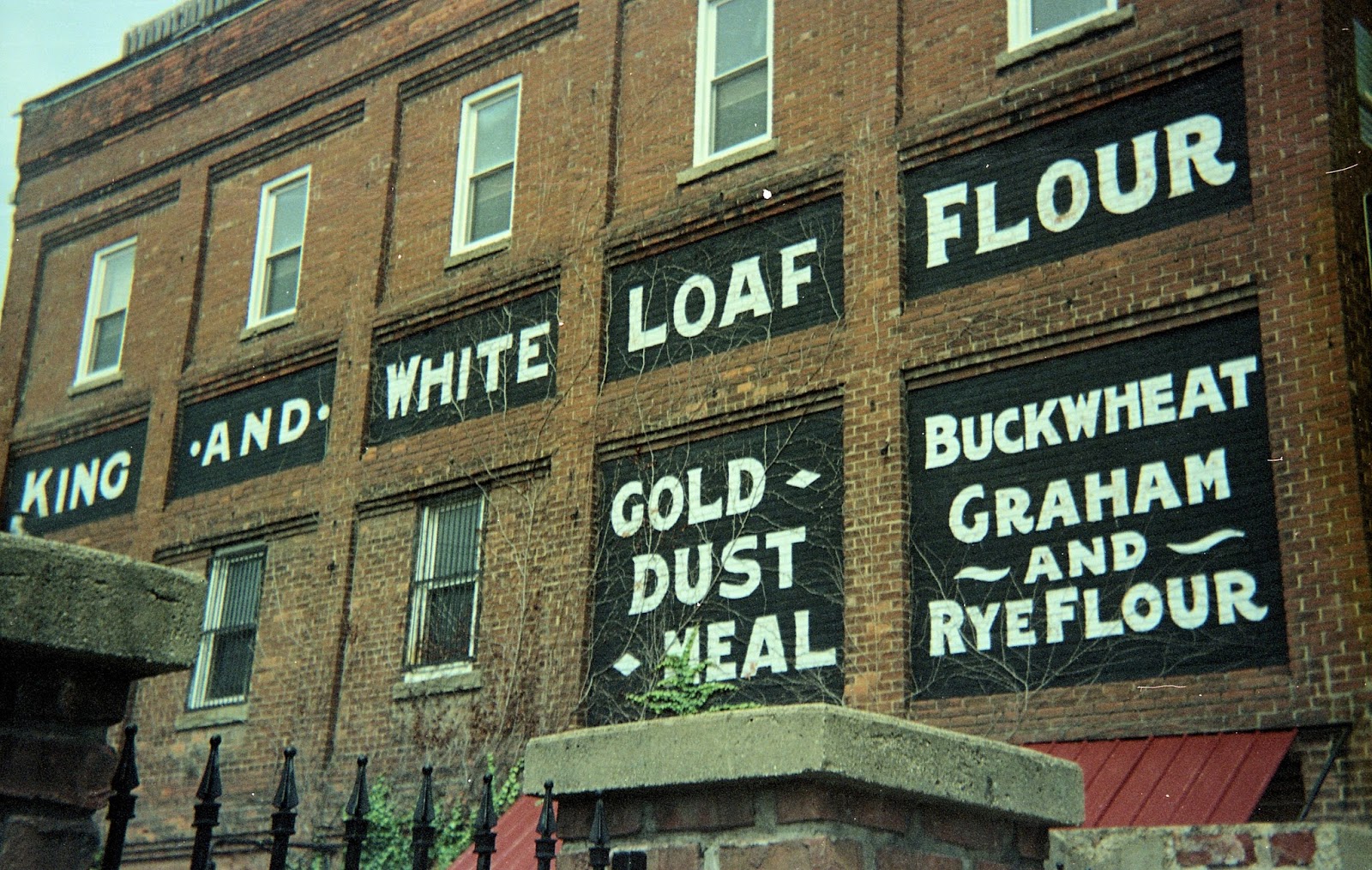
bricks with words

new hotel downtown

old Muskegon train station

old Muskegon train station

farm stuff

Not too bad for a "crappy camera."


Tuesday, February 13, 2018

On The Road, and In The Bag

Some film to develop!
Now that I am retired, it seems that I have been traveling more often, and while they are short trips, they have been by car, which means that I can pack whatever I want.  It used to be that I would pack many cameras, and then decide which ones to use while I was on the road.  No more of that.  It's easy to over-pack camera gear. I made the mistake in 2003 of having way too many cameras on a trip to New Mexico.   It's one thing to bring some equipment that I didn't use because the conditions were wrong, such as a Lomo Sprocket Rocket and overcast rainy days.  So, what I am doing now is deciding in advance what my goals are and assembling gear around that.

Last week I went to Toronto for 3 nights, and had arranged to meet up with Bill Smith and Nancy Beuler, both locals that are doing film photography, and who I have been friends with on FB and Flickr.  Of course, it's winter, so I was not going to be bringing any cameras that are fiddly to use. I decided to make it a Minolta event, and brought a Maxxum 5 (lightweight and AF), and a Minolta XG-M (aperture-priority manual), and a Minolta Hi-Matic G (point and shoot).  I brought a Maxxum QTsi as a backup, and a Yashica A TLR.  I also brought a tiny Canon Powershot SD1400, because nothing like having a tiny digi on hand anyway.

It turns out that we had snowy and cold conditions on the first day, and cold and sunny on the second day.  We took street cars, walked a lot, and also took the subway.  I wasn't agonizing over which cameras to use, and while the Yashica A only took 3 photos, I am glad that I brought it.  I had a lot of fun, and while the conditions were not always the best, I think I came away with some good photographs.  I'll post them after I develop the film. Toronto is a very accessible city, and has great public transportation.  The streetcars are an efficient way to get about town, as is the very nice subway.  I know that I'll return when it is warmer, as there are many places to see and night photography awaits.

I am going to Pittsburgh next weekend, and I am bringing just one camera bag with my Nikon F3HP and a couple of lenses, and my Olympus Trip35.  They are  well-tested cameras that I can depend on to give me great results.  At the last minute I may throw in a Holga.

Onward!