Tuesday, October 17, 2023

Kodak 2238 and a Rollei 35 TE


I first reviewed Kodak 2238 in 2017, and shot it under winter conditions, where the contrast was already quite high.  Also known as Kodak Panchromatic Separation Film for use in the cine world, it’s a low ISO film that’s rated at 12-25 ISO, and does not require a special low-contrast developer to get a proper negative.  That’s what I like about it, since D-76 and D-96 are my favorite developers.  But the other thing I like about 2238 is it’s ultra-fine grain - nearly grainless, and the way it renders landscape scenes.  I loaded a roll into my Rollei 35 TE, which I’ve owned for well over 20 years.  The Tessar lens in that Rollei 35TE is sharp as can be, perfectly suited for a high-definition film like 2238.

Since 2238 is shot at ISO 25, I limited use to daylight photographs, as my Rollei 35 TE shutter no longer operates at speeds below 1/15 sec.  That’s due to the way these cameras are typically stored - with the shutter cocked and the lens retracted into the body.  Long-term storage like that causes the loss of the slow shutter speeds.  

I shot most of the roll of 2238 on a trip to Ludington State Park, Michigan, in mid-September.  It’s a great little camera to keep in my camera shoulder bag, as it takes up very little space, and I have always had great results from it.  While it does need a battery for the meter, I rarely use the meter, and just go with an external meter of sunny-16 estimates.    

Ludington State Park is on the Lake Michigan shoreline about half-way up the west coast of Michigan’s Lower Peninsula. There are lots of sand dunes, inter-dunal ponds and wetlands, as well as Big Sable Point light house at the northern end of the park.  So, it has great lakeshore access as well as a nice road/trail that runs N to the lighthouse.  I mostly shot that day with my Nikon F3HP, but the trusty little Rollei 35 came out towards the end of my day of shooting. 

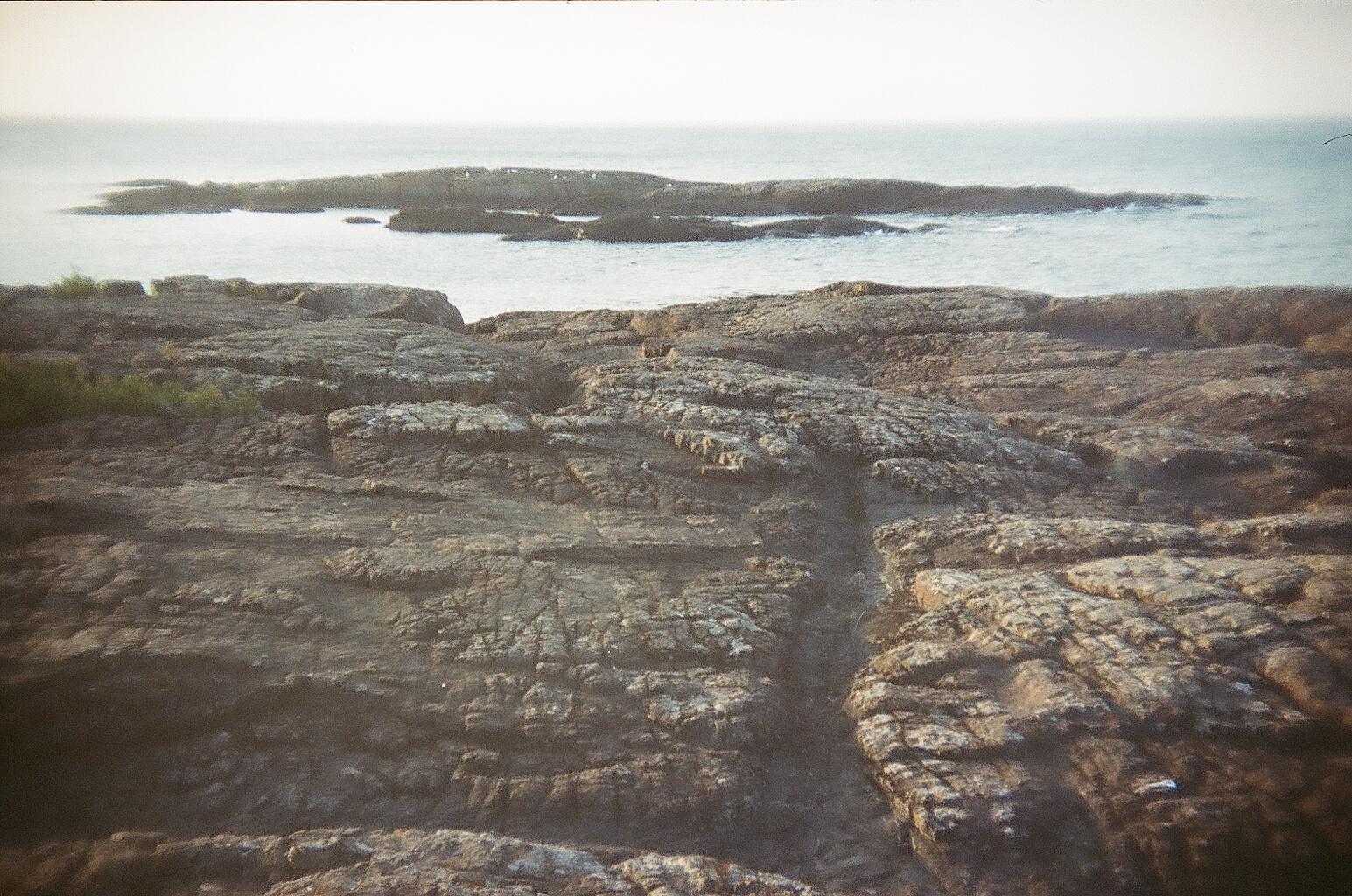
The film was developed in FPP D-96 for 12 minutes, and the results were what I expected.  It turns out that the roll of 2238 had been loaded nearly a year prior, when I was in Lexington, VA.  That’s what happens when there’s a small camera in my bag — it sometimes can take a year to shoot with it.  Here are a few shots from that roll, all scanned on my Epson V700.


my favorite of the series


I encourage you to try some of these oddball films like Kodak 2238.  They are not what I’d call general-use films, since they are very slow.  But, for detail-rich landscapes, architecture, and a different take on portraiture, they can yield great results depending on the lens and the lighting.  Another good choice for slow films is Rollei RPX 25, which is readily available and can be easily developed.  

Sunday, October 15, 2023

PANOZINE - for Panoramas


I’ve been thinking for a long time about publishing a zine dedicated solely to panoramic film images.  The first iteration in a way, was the Monochrome Mania issue No. 9 featuring the works of 4 photographers using the Ansco Pix Panorama camera.  Instead of being a typical portrait 8.5 x 11” format, I switched the layout to landscape format, so that the page was 11” long and 8.5” high.  It worked well, but there was a lot of white space, which in the presentation of Monochrome Mania, is quite okay.  However, I didn’t feel that it was the best way to convey the panoramic idea on the page.  It would have been even better to have a page 11 or 14” long and about half the height.  I started looking at the page layout offerings of my printer (Mixam) and found that they have a 4 1/4 by 11” print size.  That could work.  So, after developing the negatives from my Sprocket Rocket from my mid-September trip to Michigan, I immediately started working on the first issue in the new format, and PANOZINE was born.


I feel pretty lucky to be able to afford to have a zine printed and then be able to sell it, and with Monochrome Mania already established as a three-issues/year zine, I have a ready audience for any new venture.  At least I hope so. My plan is to sporadically publish PANOZINE, with each issue featuring the results from a particular camera.  I also would like to be able to print in color, as well as feature other photographers.  I’m not yet sure how I’ll do that, as I don’t want a situation where I get a hundred submissions from random people for a single issue.  Given that panos are not something that everyone does, and fewer do well, I think the opportunity to present other photographers’ work could be quite interesting.  I can envision issues either featuring a certain camera or a theme as being something that could work.   I will probably do what I did for the Ansco Pix MM issue, and invite photographers that have already produced quality panoramic images.


This first issue of PANOZINE features images from my Lomography Sprocket Rocket, a camera that certainly has a distinct look, and provides pretty good results within in its capabilities.   My camera has a bit of history, as I bought it from Trish Korous in Chicago, back in early 2017.  I have been using the camera every so often, and when I see my negatives, I usually wonder why I don’t shoot with it more than I do.  Anyhow, after my September Michigan trip, I realized that I had enough shots with it to put together at least a proof-of-concept zine with the name I had stored away in my head - PANOZINE, which of course, sounds a bit like some Italian dish.  


My run of this initial issue is 60 copies, as I am not quite sure how the sales will be. If you are interested in a copy, it’s 32 pages with covers, in b&w, and the cost is $7.00 + your state tax and $1.50 for shipping via first class mail.  I am selling only in the USA at this point. You can order it from my Etsy store.


So, perhaps you’ll see color and more pages in future issues, but I guess that depends on how well this first attempt sells.  I do have high hopes for this venture, though. It’s certainly been a really fun zine to put together, with minimal text and one photograph/page.  If you have purchased a copy and are reading this, I would definitely appreciate any feedback.

Thursday, October 05, 2023

The Simple Plastic Camera

 Over the course of a couple of decades of photography, I’ve often extolled the virtues of simple plastic cameras, and with two issues of Monochrome Mania that dealt with medium-format and 35mm simple cameras, I guess I have promoted them as much as anyone can. That doesn’t mean that they are the best cameras, by any stretch of the imagination. But what they do well, is to offer a different image than something from a much better set of optics that are found in your "real cameras."  I’ll never forgo using my Nikons or Spotmatics, Leica M2, or my Yashicamat, Pentax 6x7, etc. in favor of a simple plastic camera. However, that does not mean that I won’t carry one in a camera bag along with the pro gear. Michael Kenna, a fantastic photographer that has mostly used Hasselblads, published a wonderful book of Holga-based photographs which I wrote about several years ago.  It’s often dependent on a situation where one can use a simple plastic camera (toy camera, crappy camera, etc.) in a way that complements your other cameras. In fact, there have been times when a Holga image from my travels captured a place and time far better than any more complex camera could have. Part of that is knowing the best situation for simple cameras, and knowing that the exposure falls within the capabilities of the camera. 


In the past few years, we have been inundated with new plastic 35mm cameras that are reusable, and generally have the same specifications - a 35 mm focal length lens with an aperture of f/8 or f/11, and a single shutter speed of about 1/100 sec.  All have a flash, and that’s pretty much it for control.  We all know that those small acrylic lenses are actually pretty good, because the single-use cameras have been using them for years. I’m not saying they are better than my 35mm f/2 Nikkor, which they are not.  But they have a specific character that I find endearing - sharp at the center, but no so much at the edges.  These cameras also weigh nearly nothing and are compact.  So, adding one of them into your camera bag or jacket pocket isn’t a big deal. 


I recently finished up a roll of film in my Dubble SHOW camera.  It had been bouncing around from bag to bag for over a year, and it had a roll of Fujifilm Superia 200 loaded the whole time.  It’s obvious that I didn’t shoot with it a lot, but when I had the film developed I was surprised at how long it had been loaded with the same roll of film. I had shot the last half of the roll when I was in downtown Asheville, and had already shot the film that was in my Leica M2 and Spotmatic, and rather than reload them, I just shot with the Dubble camera on my way back to my car.  I’d forgotten even what film stock was in it.  I was quite pleased to see the negatives, and the Superia 200 has a very good latitude of exposure.  What pleased me the most though, was that the scanned images had saturated tones and just enough loss of detail, that they demonstrated that sharpness does not matter nearly as much as composition and subject matter.


It’s certainly possible that one could use one of these little plastic cameras for a lot pf photographic projects and come away with some memorable images. Yeah, I know it’s not the camera, but the photographer, but if you work within the parameters of the camera’s best scenario of exposure, you will come away with better images.  A lot of people trying film for the first time will pick one of these simple cameras and then wonder why their photos look like crap.  Most of the time, it’s because they don’t understand exposure or understand light.  These cameras will do fine if in perfect (for them) conditions, and loaded with any film of ISO 200-400.  After all, they are basically nothing more than 35mm box cameras.


But whoa, if these cameras are just cheap little plastic box cameras, why am I recommending one?  As I said in the beginning, put one in your bag with your better gear.  You may find that perfect moment when using one makes sense.  It’s not about the megapixels, it’s not about perfect sharpness and great detail - it’s about emotion, sense of place, and the unsharpness of memory. I’ve used toy cameras for 20+ years, and whether it’s a 35mm Holga, a Vivitar T101, a Reto Ultrawide and Slim, or the latest Kodak/Harman/Ansco/Reto /Dubble 35mm camera, you’ll find that having one (or even two)  in your camera bag will afford you the opportunity to exercise some creativity and even freedom to try something different. If you are curious about what 35mm simple plastic cameras are available, get a copy of Monochrome Mania Number 7 - The Magic and Allure of Toy Cameras, Vol. 2 - 35mm. It’s a steal at $10.


Someone’s going to ask - "How do I know what are the right conditions?"  Learn about exposure as it relates to ISO - film sensitivity to light, aperture, and shutter speed.  If your plastic camera is the Harman simple use camera or the Dubblefilm SHOW - it has a 32mm f/8 lens with a 1/100 sec shutter speed. On a day in full sun with ISO 100 film, it will slightly overexpose the film (should be f/11 or f/16) with that combination.  Overexposing a bit is not a problem with b&w and color negative films.  On on cloudy bright day, it should still be good.  Not so good in shade or overcast conditions, though.  Under overcast conditions, ISO 400 film would be a better choice.  Indoors, you’d need to use the built-in flash for subjects no farther than 12 feet away.   The specifications for the other cameras introduced in the past few years are going to be similar.  In most cases, if you use a 200 ISO black and white or color film, you will be pleased with the results with outdoor photographs on sunny to partly cloudy days.  


I highly recommend David Mihaly’s "The Old Camera Guy" YouTube videos where he uses simple plastic cameras.  They’ll give you a good idea of the type of results you can expect.  Unless your camera has a Bulb mode for long exposures, stay away from any film that has an ISO lower than 100. ISO 200 film is the sweet spot for most of these cameras.


Photography should be fun, and while one should be attentive to the proper techniques for the best results, sometimes it doesn’t hurt to take a chance and let that imprecise 35mm plastic camera do its magic.  


Saturday, September 23, 2023

One Roll Review - Svema MZ3

image courtesy of the Film Photography Project

It’s been a few years since I have shot with this film that’s available from the Film Photography Project store. I kept putting off shooting with it until I had a little project.  I decided to put a roll in my camera bag for my trip up to Ludington, MI last week. I knew that I’d have the opportunity to photograph in the dunes near Lake Michigan, so what better use for this ultra-low ISO film?

What is MZ3?

Like several other film stocks available from the FPP store, Svema is the manufacturer of MZ3. It’s an extremely fine-grained blue-sensitive (orthochromatic) film with an ISO of 3. It lacks an anti-halation layer, and the polyester film base is subject to light-piping. Light piping is when the light hitting the exposed film leader is carried by the film base farther into the canister. Usually, it mostly results in some exposure around the sprocket holes, but in severe cases, it can fog the first few frames. Therefore, MZ3 is one of those films that should be loaded either indoors or in the shade, and ought to be stored in opaque film canisters until used. Those new aluminum film cans that I see with some third-party film reloads would be ideal.

Since the MZ3 film is so slow, it’s going to be ideal for landscape, architecture, etc. However, with a fast lens of f/2, one could shoot handheld wide-open on a sunny day. Using sunny-16 as a guide, f/16 in full sun would be about 1/3 of a sec exposure.  The equivalent at f/4 would be 1/30 to 1/60 sec. Years ago, I shot MZ3 with a ND filter to get really long exposures at a busy area in Ann Arbor. Tripod-mounted, of course. 

I loaded the MZ3 into my trusty Nikon F3HP, which I consider to be one of Nikon’s best film SLRs. For me, it’s a great photographic tool that’s never let me down. I used manual exposure and an external light meter to make the photographs on this roll. I also used a tripod, since I was generally shooting at f/16. The ISO dial on the F3 only goes down to ISO 12, and at that setting, the exposure compensation dial only allows about +1.3 stops. So, manual exposure it was. If memory serves correct, most of my shots were around 1/8 sec.

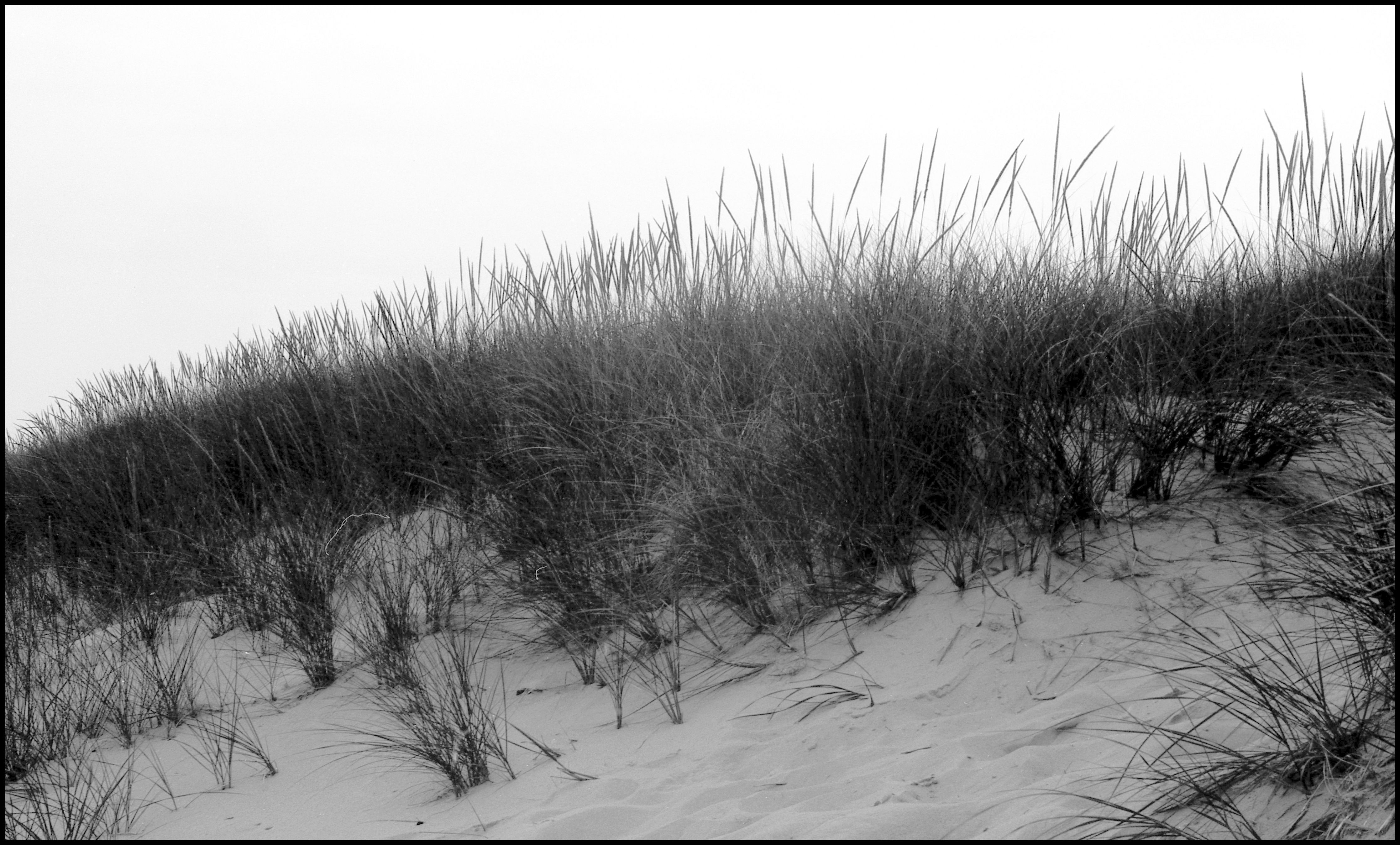
After I returned home, I developed the MZ3 in HC110 dilution H for 9 minutes and 15 seconds. That gave me quite good tonality. Since this is a blue sensitive film, greens are quite dark, providing a lot of contrast between the sand and the vegetation.

light piping along the film rebate at the beginning of the roll

Here are some examples from that roll. Overall, I quite like the results, though some images needed more post-processing than I expected. That’s the fun aspect of these low-ISO oddball films - they are not going to be boring, that’s for sure. I highly recommend that you try this film - and since it does not require special developers to achieve good results, it’s a good choice for a really low-iso film experience.  The MZ3 definitely gave me a look quite different from a 100 ISO panchromatic film.


Thursday, September 07, 2023

Photographic Echoes

Did you ever visit a place, take some photos, and then only later realize the significance of that place in regards to another photographer’s body of work?  It’s not like going to, say, Yosemite, fully aware of Ansel Adams’ photographic legacy.  Nor is it like going to New York City, that has been the subject of many photographers.  How about a “small town”?  

First, a little back story.  I have been slowly working on a project about US-23, aka “The Dixie Highway” that stretches from the tip of the lower peninsula of Michigan, through Ohio, Kentucky, Virginia, Tennessee, North Carolina, Georgia, and ends in Jacksonville, FL.  I’ve done a fair amount of photography along the way, especially in Michigan and Ohio.  I’ve yet to finish the route from NC to FL. Yet, US-23 runs not far past my house in NC, where it shares the road with I-26 and US-19, so I’m always aware of that unfinished journey.
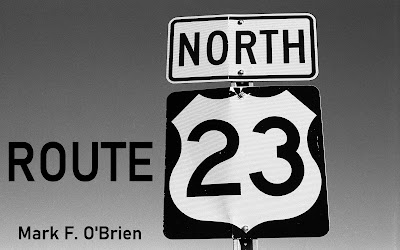
Hopefully, a project that I'll finish

This past April, I was traveling from a photo gathering in Cleveland back to my home in Weaverville, so I took US-23south, and stopped in Portsmouth, Ohio, which I had been through before.  This time, I stopped to walk around and do some photography - with some examples, as seen below.  It’s obvious that Portsmouth was once a more robust place that had fallen on hard times, but is rebounding now, typical of a lot of previous industrial towns along the Ohio River and in the so-called rust belt.  I’ve been through a few of them, and while some will probably not escape more decline, others will persevere and improve.  Portsmouth seems to be in the “improving” stage, and is also positioned in a place where hiking, boating, and other outdoor activities will attract people.  


As I walked around with my camera, it was obvious that towns like Portsmouth have a lot of history, and my feeble attempt with a camera for a few hours was not going to be enough to reveal much of it.  If anything, the flood wall with the murals on the city side was ample evidence of a storied past.  Just as the flood wall is also evidence of the existential threat of the mighty Ohio, it’s also a reminder that people have overcome many obstacles to create a community.

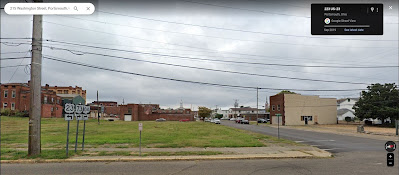
Something nagged at me though, as if I had read something about Portsmouth or a town along the Ohio River before.  Last week, I realized what that was.  Mary Ellen Mark’s photographs in Life Magazine in September, 1989. “Growing Up at 215 Washington Street, Portsmouth, Ohio.”  I had taken photos of that article with my cell phone when I was visiting my wife’s family in Amenia, NY in 2016.  The text, written by Peter Meyer, is direct, unflinching, and a damning indictment of a country that was ruined by Reaganomics during the 1980s.   It’s always the kids that suffer.   The fact that it was someplace in the middle of the country, and a white family possibly made it connect more to the readers.  Had it been a Black family, would there have been anything other than the usual put-downs by the readers?  This excerpt encapsulates the point of the story:

“The children of 215 Washington Street—Chuck, Mike, Jenifer and Tiffany; Carrie, Mike, Jeff and Jamie—are not alone. At last count 13 million American children were growing up poor—one in every five. Since 1969 child poverty rates have risen from 14 to 20 percent, adding three million more youngsters—enough to populate a city the size of Chicago. From the children at 215, we can get an idea of what it is like to grow up poor in America in 1989. Like most American poor children, they are white, they do not live in a metropolitan area, their parents don't own a house, and their family's income is less than what the federal government says is necessary to survive.”

The 1989 article in Life

1989 Life article

The old tenement 215 Washington Street is now gone, and that series of lots, once nothing but grass, is now seeing rebuilding going on.  I checked through Google maps for previous years, and I suspect that the crappy old apartment building was torn down in the 1990s.  I found this really good article from Ohio Humanities dated 2022, that has some good commentary about that 1989 Life article.  Amanda Page offers up her recollection, and it’s a very important follow up.


2022 Google Maps View of 215 Washington St

2019 View of 215 Washington St


Mary Ellen Mark was an astute photographer, and she exposed the plights of the poor and disenfranchised, especially women.  Her photographs for this article are echoes of Walker Evans’ images of the sharecroppers and their families in Hale Co., Alabama.  So, I guess this story has several echoes, not just one.


After reading that story again, I have to wonder how those kids turned out.   1989 wasn’t that long ago.  Just 34 years.