Showing posts with label Eastman 5231. Show all posts

Tuesday, June 14, 2022

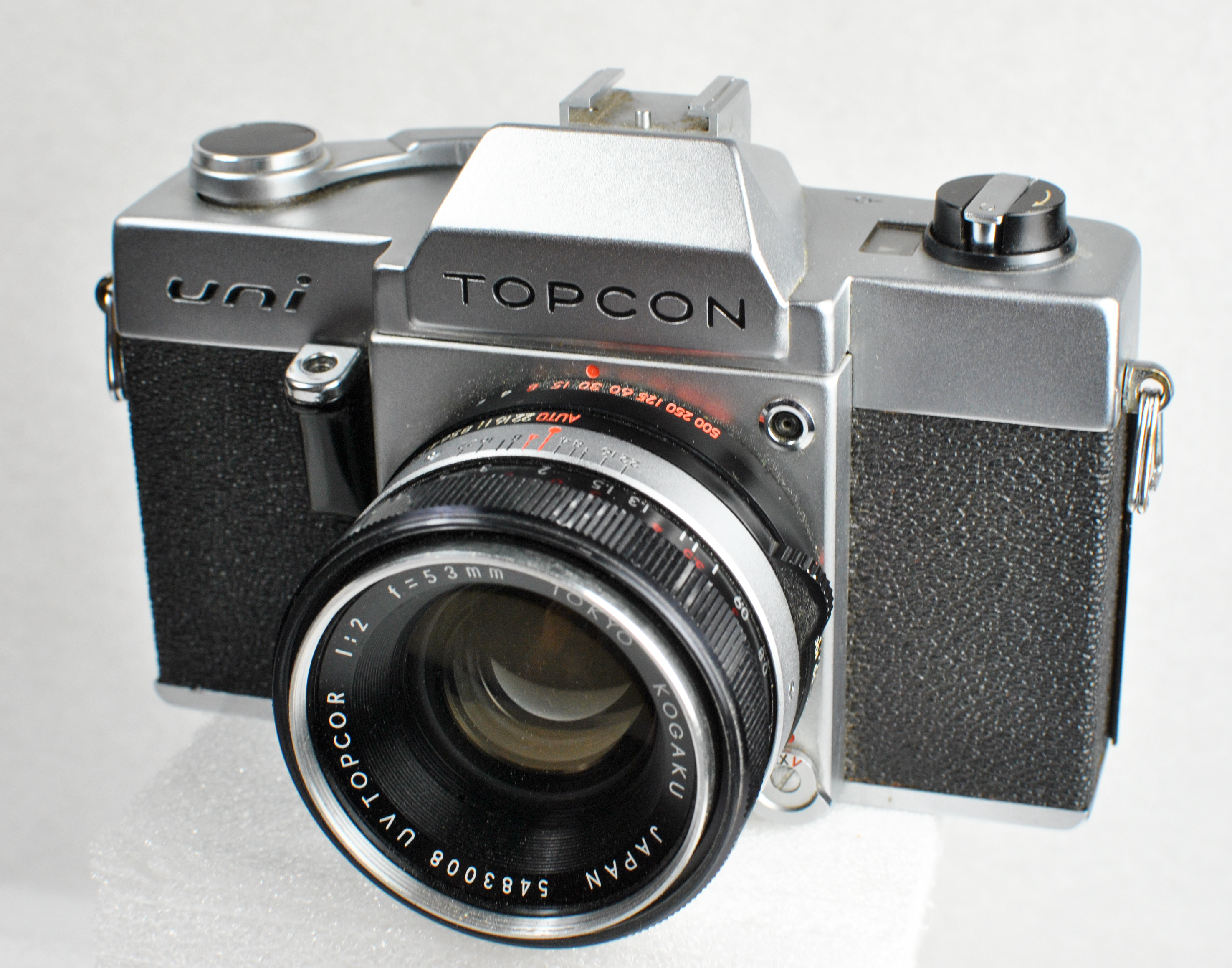
Some Fun with the Topcon Uni SLR


A little over a month ago, a Topcon Uni landed in my hands,  and I thought that I should at least give it a try.  About a decade ago, I owned one that had some exposure problems, and mentioned it in my
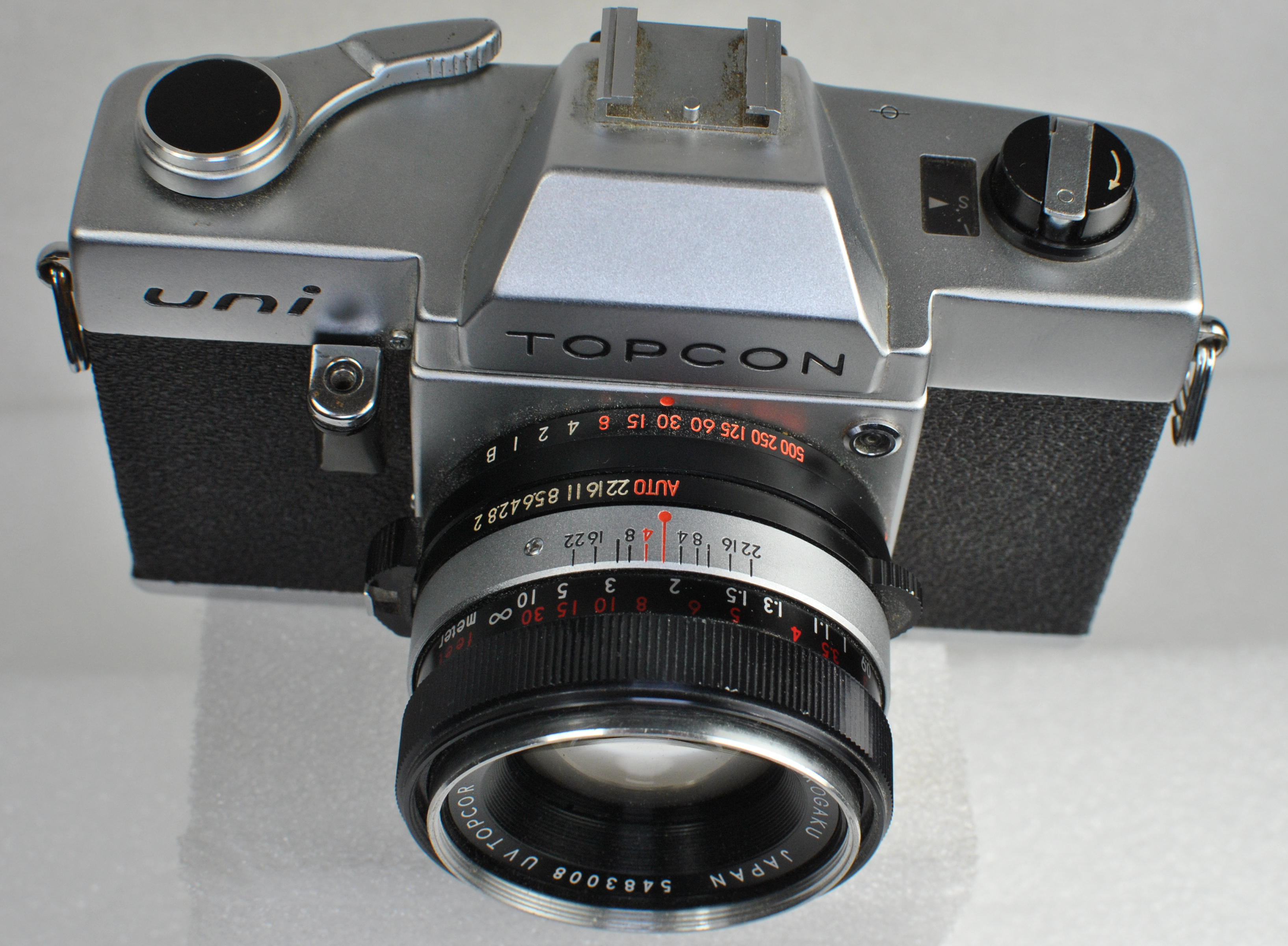
previous RCB post about leaf-shutter SLRs.  Generally, I am not a fan of leaf-shutter SLRs because just about every single one that I have tried has not aged well, due to the shutters not holding up over the last 50+ years.  Don't even get me started about the Zeiss Ikon Contaflex series of leaf-shutter SLRs.  So many bad vibes with those!  Topcon, the brand from Tokyo Kokagu, was generally considered to be a very good SLR, and despite the likes of Asahi Kokagu and Nippon Kokagu, the Topcon RE Super was the first TTL SLR in 1963, beating both Nikon and Pentax to that achievement.  The Topcon line of SLRS had excellent lenses, and to this day, a Topcon Super D is still a nice camera to use, and finding one cheaply on eBay is pretty difficult.  However, one knock against Topcon was the use of an Exakta lens mount that due to its small throat diameter, prevented faster lenses such as those made by Pentax, Nikon, Canon, and Minolta.  As the company reached the mid-70s, it could not compete with the other major camera companies, and stopped sales of 35mm cameras in 1980.  Cameras such as the Topcon Uni, Unirex and Unirex EE did not use the Exakta lens mount, but what has been termed the Topcon UV lens Mount.  These lenses for this mount do not contain an aperture control, which is instead dialed in on the body of the camera.  The cameras are lens-shutter cameras, with a Seikosha shutter behind the lens.


While the Topcon Uni is certainly not a top-of-the-line SLR, it was certainly good enough to suit the intended audience of the casual photographer back in the mid-late 1960s looking for an SLR with some automation (shutter priority) and ease of use.  

Features:

  • Seikosha Shutter with B, 1- 1/500 sec speeds
  • Shutter Priority and Manual exposure
  • PC flash socket, cold shoe on top of camera
  • self-timer
  • ASA (ISO) settings from 25-400
  • 1.35V PX-625 Mercury cell for meter
  • front-mounted shutter release
  • tripod socket

In use, the Topcon Uni may feel like a different experience from your normal focal-plane shutter SLR.  In a focal-plane shutter, the mirror flips up and the shutter curtain does its thing, and the mirror returns for the next exposure.  All the while, the aperture typically opens to the desired value as the press the shutter and the shutter curtain is opened.  With the Topcon Uni, it's a bit different. The aperture and shutter are wide open when the camera is not making an exposure, but the mirror prevents any light from reaching the film.  As you press the shutter button, the shutter closes, and as the mirror flips up, the aperture opens/closes to the desired value, the shutter opens and closes, and then the mirror flips back down, whereupon the shutter and aperture return to the open position.  A lot happens, making this complex dance between the shutter, aperture, and mirror prone to  problems down the road.  On top of that, the CdS TTL meter sets the aperture from the chosen shutter speed.  It's also just a bit noisy and not as smooth-sounding as a typical SLR, such as a Spotmatic.  

I took the Topcon Uni on a short drive and photographed with it in Burnsville, NC. It's the seat for Yancey Co., and at 2825 ft, is located in a valley surrounded by the Black Mountains to the E and the Blue Ridge to the S and W. The highest peak East of the Rockies is Mt. Mitchell, just a few miles away from Burnsville.  It's a nice town with cafes, restaurants, some wilderness outfitters, and a local brewery.  There is a closed theater, the Yancey, which deserves to be open once again, but I don't know if it will ever reopen.  The town is named for Otway Burns, a naval hero in the war of 1812, and a statue honoring him is at the town square.  The oldest building in town, the Nu-Wray Inn dates to the 1830s, The Inn is being refurbished and should open in the near future.  There are a number of shops in the center of town that are worth a visit if you are there.

The Yancey theater.  Image from Canon EOS M5

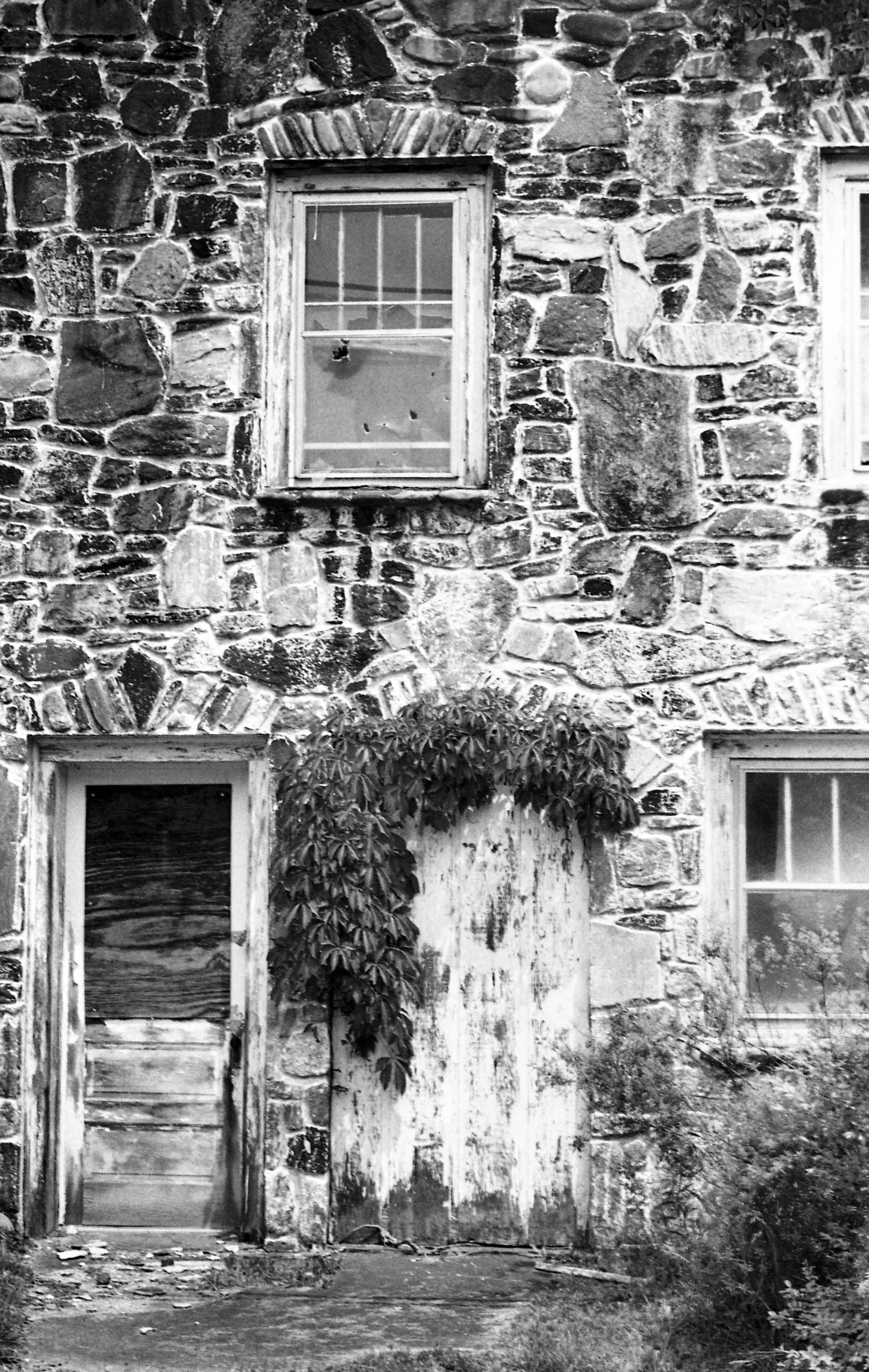
I loaded a roll of Eastman 5231 (a cinema version of Plus-X), which has become one of my favorite films.  Although I placed a PX-625A cell in the camera, I didn't trust the metering, and mostly shot in manual mode, using my intuition (informed sunny-16).  The 53mm f/2 UV Topcor lens prformed well, and overall, I was pretty happy with the photos that I took.  Development was in D-96 for 7 minutes.  Using the camera is pretty simple, and after I shot the roll of film, I realized that if I'd set the ASA to 1 stop lower than the actual film speed, the additional voltage in the P-625A would then give me a fairly accurate reading for the actual film speed.  I should have realized this upfront.  

There's a lot of information on Topcon cameras, and the Camera-wiki is a fantastic resource if you need to find more information in one place.  There's a wonderful post about Topcon on 678 Vintage Cameras. Getting a manual from the Butkus site is recommended, and so is making a donation for the manual.  It's a lot of work to maintain the site and scan the manuals.  And they are free.

Some results from my day in and around Burnsville, NC.

I shoot a info page on my computer screen.

Yancey Co. Building

Yancey County Public Library

the Nu-Wray Inn

Otway Burns at center

Rock and wood, of which there is a lot of in the Blue Ridge Mts.

Main Street tables

This old building always pulls me with a camera


Not sure about "Munch Box"

Chestnut Grove Baptist Church, near Little Switzerland

Hard to beat the views along the Blue Ridge Parkway!


Sunday, March 06, 2022

A Tale of Three Films

I typically have a variety of film types in my camera bags, so that when I pick one up, it's ready to go.  The types of films I include in the bag usually reflects the cameras inside and the type of photography that I use them for.  For example, my small bag with the Leica M2 has b&w ISO 100 & 400 film, whereas my canvas shoulder bag often has the camera of the week that I am using, along with the right lenses, as well as a couple of toy cameras, etc.  Therefore, it has a variety of film types from color to low-ISO b&w.  

On Feb. 25, we had friends visiting and I thought we might to go the NC Aboretum, so I grabbed the canvas shoulder bag.  I had to make a stop at the local post office first, and when I got back into the car I decided that we would go N instead, to Rocky Fork State Park in Tennessee.  It turned out to be the right choice, as everyone really enjoyed Rocky Fork, and the volume of water roaring through the creek was quite amazing.  

My canvas messenger bag 

Unfortunately, the Nikon FM2N SLR that I had in the bag was loaded with Fomapan 400.   It was also a sunny day, which is not ideal for photographing waterfalls. Oh well, I had to make do, so I put on a 2X Neutral Density filter and a polarizer, so that I could take longer exposures in the semi-sunny conditions along  Rocky Fork.  Once I finished the Fomapan 400, I decided to use a slow film, so I pulled out a roll of Adox CMS 20 II, and loaded it. That was a mistake, in hindsight, as you'll see from the images.  After that roll was done, I used a roll of Eastman 5231 - an expired cine film that's a lot like Plus-X.  It's rated at ISO 80, so with a polarizer, I was still getting some good 1/2 second exposures.  Of course, I wouldn't know any of this until after I developed the film, and that's one of the things that I like about film - be prepared to fail, or succeed spectacularly.

Rocky Fork State Park is a stream with a pretty exciting course through rocky terrain, and having been there a number of times, I know what sections are the most photogenic later in the year. But after some recent rains, just about any part of this stream with cascades of plunge pools, and white water is going to be photogenic. My trusty 22-year old Bogen/Manfrotto tripod has certainly been to its share of riparian scenes, and yes, if you want to shoot water scenes with long exposures, hand-held is not gonna do it, no matter what camera system you are using.  I started with the 24mm Nikkor on the FM2N, and then went to the 50mm. While I used the ND filter and the polarizer with the Fomapan 400, I just used the Polarizer with the Adox and Eastman films.

The Fomapan 400 was developed in HC-110 B for 7 min, the Adox CMS20 II was developed in D76 1:3, for 10.5 minutes, and the Eastman 5231 was developed in D96 for 6.5 minutes.  The Fomapan 400 looks like it always does - grainy, but otherwise, okay.  The Adox CMS 20 was NOT the right film for this, though, and probably the D76 1:3, while one of the suggested developers  in the Massive Development Chart, it would probably have been better going with a Technidol-style developer, as the Adox film is very contrasty, and did not have much latitude. The clear polyester base really shows the lack of grain, but also the high contrast. I'll try this film again, but in a situation where the lighting is even, and also rate it at ISO 12 instead of 20.  The real champion that day was the Eastman 5231 film.  I have a large supply, thanks to my friend Bill Pivetta, and I look forward to shooting more of it in the future.  At Rocky Fork, it was the perfect film with great latitude, low grain, and in the mixed lighting (sun and shadows), it showed how great it really is.  

This is not just a tale of three different films, it's a microcosm of the film world. Yes, I could have just shot Rocky Fork with my Nikon Df and not have to worry about film, and making adjustments as I worked the creek.  But you know what? By using film, I was learning something new, and creating a body of work that I can derive great satisfaction from.  It's not that the Adox film was a failure, it was just the wrong film for the conditions, and I learned from that.  The Fomapan was grainy, yet, I liked the effects that I got from it.  The Eastman 5231 is butter,  Smooth, creamy, and it really did well in the shadows and highlights. I don't want it to sound like I am knocking digital, but I could churn out a 100 digital images of Rocky Fork without even breaking a sweat and would have learned nothing new. Sometimes the journey IS the reward. 

Herewith are samples from the three films.

Fomapan 400-


Adox CMS 20 II-


Eastman 5231--


As you can see from the above, I did get some nice images from all three films.  However, the Eastman 5231 really performed the best when considering the overall exposure.  The shadow detail in the Adox is pretty bad, and the Fomapan 400 certainly did fine with the shadows, but one may not like the grain.  It's all a matter of taste and expectations.