Thursday, January 19, 2023

Don’t Over-think!

For the past few weeks, I have been scanning in 35mm slides from the 1970s.  These are not found images from the antique store, but from my camera, from 1975-1980.  One of my goals this year is to scan all my slides (or at least the best ones) from my early days of photography, and in the process, remove the slides from the clear plastic sleeves in binders, and transfer to metal storage boxes.   My scanner, my trusty Epson V700, does an excellent job with scanning in these colorful little windows to the past, and much more efficiently than using a digital camera to transfer the analog into  a digital image.  Trust me on this, as I have been scanning slides and negatives in various formats for as many years as we have had scanners available.  I also have all the equipment I need to copy via a DSLR. The workflow and the results via the Epson V700 are superior.    

The simple SLR that started me on my journey


Okay, let’s put the scanning aside, and have a conversation about the photographs, which is the real subject here.    My first 35mm camera was an Ihagee Exa 1a. Why?   As a gift for a teen interested in photography, it was possibly the cheapest new SLR available in 1974 from a NYC camera store, and I was thrilled with receiving it.    The downside with my Exa 1a is that it had a waist-level viewfinder, no meter, and a limited range of shutter speeds (1/30, 1/60, 1/125 and 1/175 sec. ).    In addition, the Meyer-Optic Domiplan 50mm f/2.8 lens is not what I would call a "great lens."  It was obviously good enough for a teenager learning about photography.    My only photography guide was the Kodak Pocket Exposure Guide, which I still have.    I did not have an external meter.  So, as I learned to photograph with this camera, I relied on that Kodak Pocket Exposure Guide for my settings.    I shot b&w film, color print film, and transparencies.    

fits in a back pocket


As I think back, I had to wonder why I shot slides so often after 1975, and my wife reminded me that it was probably the cost.    Believe me, the 70s were the last time a person with a low-income could live pretty well,  and I was a student with not much money.    As it turns out, it was cheaper to shoot slide film back then, as the film and processing was less expensive than color prints. I checked with a 1979 issue of Popular Photography, and the price to process and mount a 20 exposure roll of Ektachrome was less than $2.00, and the price of a roll of Ektachrome was probably around the same price. Some places offered a 20-exposure roll Ektachrome 64 for $3.65, including processing; about the same price as Kodachrome 64.  Since I was not in tune with the best offerings via mail (hey, no Internet then!!), I am pretty sure I purchased my film at the local drug store, Woolworth’s or K-Mart, and sent it out for processing.  In today’s dollars, that $3.65 translates to just less than $15.00, which would be pretty damn cheap now for a roll of film and processing!    

Feb. 1975. The view from the house I grew up in, Parishville, NY
Ektachrome.


In hindsight, I am happy that I chose to shoot the majority of my images on slides -- the colors have kept pretty well from those 1970s images, and because I didn’t have a lot of extra money, I didn’t shoot like I do now. However, it is also true that I was not a trained photographer with a plan.  In looking in these scanned images, I also realized one other thing - I did pretty damn well with the limited equipment that I owned, and my exposures were pretty much on target most of the time.  That means I used sunny-16 and intuition for all of my shots.    

That brings up the title for this entry - "Don’t Over-think." If I could use a really simple SLR nearly 50 years ago, with slide film, no meter, and 50mm f/2.8 lens, how is it that today, so many people are obsessed with the smallest details in exposures? I see newcomers to photography, especially film, needlessly obsessing over how much to adjust for a given exposure. While my Kodak Pocket Exposure Guide gave me the fundamentals, there is no absolute in photography.  Discerning the nuances in light and exposure, especially in landscapes, comes down to experience, but there is always the element of "luck."  Maybe I was just lucky many times, and certainly cannot attribute my results to experience.  The thing is, I didn’t over-think what I was doing. I believe that over-thinking is what kills creativity and the moment. As I look over these images from 1975-1979, I certainly find ones that could have used more exposure -- and the Exa 1a had a limited number of shutter speeds, including B, and I did not own a tripod.  Perhaps if I’d been given a camera like a Praktica SLR with a prism and a full range of shutter speeds, I would have been even more on target, but there’s no way to know that now.  

Feb. 1976, Syracuse Univ. dorms. A typical winter scene in
Syracuse, but with less snow. Kodachrome 64.


Maine, summer of 1976. Kodachrome 25


Amenia, NY, Jan. 1977. Ektachrome


Ice storm, Syracuse, NY. It was so bad we could skate on the
sidewalks. Feb. 1976, Kodachrome 64

When I replaced that Exa 1a with a Pentax MG in the early 1980s, I finally had a camera with an exposure meter -- but guess what?  Relying on that aperture-priority only camera also gave me some bad exposures, because I relied on the camera to get it right, instead of my intuition. Overall, it was a trade-off. Today, I am a much better photographer, and know when to adjust for a given lighting situation.  But still, in those spartan days of photography, my youth and  inexperience also allowed me to take a chance without worrying about failure. Sometimes I got it perfectly right, and sometimes I didn’t. For example, the photo taken at the SUNY ESF Woodsmen’s event in the fall of 1975 shows me that I wasn’t afraid to get close to the action - the couple on the 2-person crosscut saw with the wood chips flying towards the camera is captured pretty well. I’ll show some other examples with commentary, as well, but those old slides are also peeks back into the 70s of my college years.

SUNY College of Environmental Science & Forestry fall Woodsmen's
BBQ in Tully, NY.  Oct. 1975, Ektachrome.


October 1975, Chittenango falls, NY. Kodachrome 64


Syracuse Univ. football game at the old Archbold Stadium,
October 1975, Kodachrome 64.


So, my advice for those folks getting into photography is to shoot what you know - and learn from it. You don’t have to travel to exotic places for great photographs - everyday activities and your immediate surroundings will mean much more the farther removed you are from them. As I look over these old shots, I realize that I was living in the moment, and photographing what was important to me at the time. I didn’t do it for posterity - though now those images have value in seeing people and places at another time, I did it for me.    


Speaking of in the moment... Fall 1976, Syracuse, NY, Ektachrome

Overthinking your photography is a cruel blow to serendipity.    Be in the moment, trust your instincts, and don’t fret if your camera is one-stop off, or you don’t have the best lens money can buy, None of that matters.  People obsess over details that don’t matter in the long run.   If you have a photography exhibit, nobody will care what lens and camera you used, what film (if it was film), filter, or other attribute used to make the photograph. It’s all about the image. 

Algonquin Mountain summit, Adirondacks, NY
Summer 1977, Ektachrome

In high school, I wanted to be an entomologist, and that’s what I ended up becoming, and doing for 40 years. Nobody told me that I could have been a photographer - and had I taken photography seriously as a profession (which I never thought of), the 1970s would have been the most perfect time to be an aspiring photographer.    So, it was never my dream to be a photographer - I just enjoyed it. I look back at those images from the 70s and I am amazed that I did as well as I did with so little knowledge.    

That's me, summer of 1977, in the Adirondacks.
My camera, taken by my buddy, Dave Rosher. Ektachrome.


January 1977, Twin Lakes, CT. Ektachrome.

So, perhaps the lesson here is that not only should you not over-think it, but shoot for yourself.    Don't worry about what others might think.  All too often I see posts by people on places like Reddit (r/photography) who are unsure if they are good enough, or are afraid to take up photography because they lack knowledge.    You can’t get better without actually using your camera. Today’s digital and analog wonders will outperform what I used in the 70s by a huge margin. You already have tools at your disposal that will make a perfect exposure 90% of the time.  The part that makes the difference is YOU. Get out there and shoot everything that interests you, and over time you will discover what really motivates your photography, and what you enjoy the most. That’s the direction you’ll go. 


Sunday, January 15, 2023

Taking A Chance on a Yashica Electro 35 GTN


I recently received a Yashica Electro 35 GTN in a box of old cameras.    My usual reaction to the Electro 35 series has been "meh." Going back over 20 years, I have seen far more non-working Electro 35 models than working ones. Part of that’s due to requiring the old 5.6V mercury batteries, sometimes bad electronics, and the PAD of death problem . In addition, I find that while I like aperture-priority, I also like to know what shutter speed the camera is using, and none of the Electro 35 series tell you the shutter speed. 


This example of the GTN was lacking the Yashica badge - hence the missing square near the CdS meter opening.  The front upper edge of the filter ring is also bent, making a filter or lens hood unusable.    Taking a chance that the camera might be operable,  I ordered a battery adapter from the Yashica Guy on Etsy, and it came with the 4LR44 battery.    After that, I saw that the battery test button wasn’t working, but I decided to give it a try with a roll of Kentmere 100 film.  The camera’s shutter speeds obviously changed under different lighting conditions/apertures, so I figured that once I developed the film I would definitely know if it was working appropriately.    


Battery adapter from the Yashica Guy

As you can see below, the film was exposed perfectly!    So, I have since reloaded the camera with Kentmere 400, and will see how that works.


The Yashica Electro 35 GTN is the same camera as the GSN, but is black instead of chrome.  The 45mm f/1.7 Yashinon DX lens is certainly a very good lens, and in low light, the wide aperture is a bonus, considering that a lot of cameras from that era have an f/2.8 maximum aperture.   The camera can use films from ISO 25 to 1000, which covers most films that you can buy. It has a hot shoe so that you can attach a flash.  The shutter settings are B, Auto, and flash, and apertures range from f/1.7 to f/16.    The focus patch on the viewfinder is easily seen.  Overall, the Yashica Electro 35 GTN is certainly a pretty nice carry-around aperture-priority rangefinder camera. However, I wish that the ability to go completely manual with adjustable shutter speeds was an option. But, that doesn't stop it from being a great camera.

I also have a nice Yashica Electro 35CC which is more compact than the large GTN/GSN models, and has a 35mm  f/1.8 lens, and I have used it quite a bit with excellent results.  Because the CdS light sensor on the 35 CC is within the front of the lens ring, I can use filters, and the camera will auto-adjust the exposure.  Comparing the two cameras, if I only could keep one, it would be the 35CC, which I have reviewed here.    

The GSN is the chrome version of the GTN

Finally, if you are interested in using any Yashica Electro 35, the GTN/GSN models are going to be the most likely candidates, as they can use a modern 6v battery with the adapter.    The big thing to watch, as I have previously stated, is whether the camera works properly after 50+ years.    I have seen some pristine-looking Yashica Electro 35s that just did not work, and I have seen some rather ratty-looking ones that work well.   There is no way to know until you test the camera.  So, if you are buying one from a seller, don’t pay a lot unless the camera is guaranteed to work properly.    While they only have aperture-priority exposure, the lens quality and ease of use makes them perfect for on-the-go photography.   

 I am not the world authority on the Yashica Electro 35 series, so take a look at the following links to learn more.  When these cameras were first introduced in 1966, they were considered quite advanced, due to the automated exposure system.   A later model, such as the Yashica MG-1, has a cheaper f/2.8 45mm lens and was introduced in 1975. Nonetheless, when working properly, the Yashica Electro 35 series delivers excellent results.

A few tips:

  • Without a battery, the default shutter speed is 1/500 sec. 
  • If you set the control to flash, the shutter speed is 1/30 sec.
  • Make sure that you clean the battery compartment before testing.
  • You can just pop in a roll of 400 ISO film w/out the battery and shoot at sunny-16
  • Download a manual from butkus.org
  • Use a lens hood (55mm filter diam) to avoid flare on a sunny day
  • If you use a filter, you’ll have to adjust the ISO setting by 1 or 2 stops to compensate, as the electric eye is not on the lens bezel.
Some Recommended Links:

Friday, December 30, 2022

2022 In Review

I haven’t done an end of year review in quite a while, and since I now keep pretty active journals, my task is easier.  Typically, a lot of folks like to review what happened in the photography world at large, but I’m going to confine my review to my own activities, which as things go, are relatively tame.  But bear with me, and hopefully, you’ll find some nuggets of wisdom.  As I went through my four journals spanning 2022, it’s gratifying to see that I have kept writing them.  I know that some people have one journal for an entire year, but I prefer them segmented, since losing one does not negate everything I have penned in. It also makes it easier to carry one along.  I’m a fan of the journals made by Denik.com, as I like the simple styling and 5x8” size.   Having the journal really helps me with recalling my activities and thoughts, and I wish that I’d been as compulsive about writing in one 20-30 years ago.  

In my entry for 1/1/2022, I hoped to finish the toy camera (35mm) issue of Monochrome Mania, and produce 3 issues, including one on panoramas. Explore more of NC and take meaningful images.  All checked in as done!  

2022 was the year that I discovered the writings of William Least Heat-Moon. Reading Blue Highways for the first time was revelatory - and I wish that I’d known of that book when it first came out in the early 1980s.  There are passages in Blue Highways that brought tears - not of sadness but of joy.  His descriptive prose really resonated with me, and since that book, I’ve managed to read his other tomes - Prairie Erth, Riverhorse, Roads to Quoz, Writing Blue Highways, and Here, There, Elsewhere.  If you are at all interested in traveling and stories about the land and people, I highly recommend Blue Highways and Riverhorse as places to start with his books.  

This year, I made a lot of images with Pentax Spotmatics, aside from my Takumar Trek in late June.  There is just something about these cameras and their lenses that compels me to use them.  As M-42 mount cameras, they have their quirks, but the ease of use, smooth operation, and simplicity make Spotmatics quintessential photographic tools that keep on working for me.  In fact, I don’t think Pentax ever made better cameras than the Spotmatic F.  I’ve seen so many failing K-mount Pentax SLRs - mostly in the electronics, that I rank them low in durability.  If there is one Spotmatic I’d like to find and try out, it would be the Spotmatic ES.  Finding a working one seems to be the quest!  I have also been trying to find some nice pre-Spotmatic models, such as the Pentax HIII or SV.  They are meterless, yet very good, if I can get one that works as it should. 
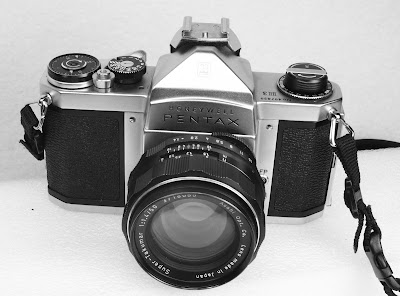
The Heiland Pentax HIII- I've bought 2 of these on ebay, and neither
 one works properly -- maybe a CLA for one will do it. It is after all,
over 50 years old.

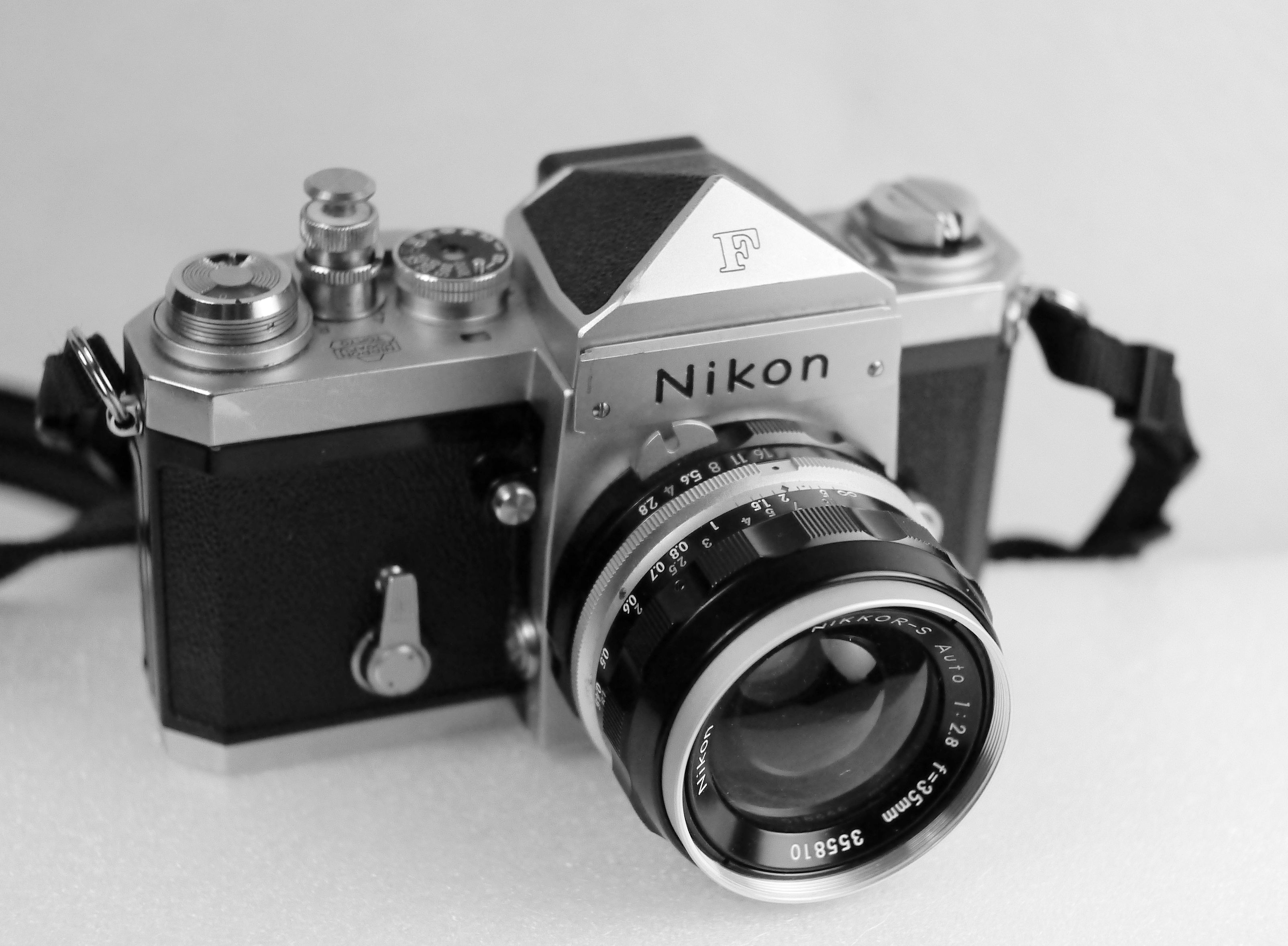
I stabilized my Nikon "arsenal" this year, paring it down to cameras that I use, and not ones sitting on a shelf.  The bodies that I have owned the longest are the FM2N and the F3HP, both gifted to me in mint condition in 2008.  I’ve been using the F3 a lot more of late, particularly because of the viewfinder, and it’s one smooth camera.  But my other bodies are: plain prism Nikon F from 1967, Nikon FE2, FM3A, FE10 (keep it in the car), FE black body, FA, N80, F100, F4, and F60.  Aside from the F, I have eliminated all non-AI bodies and most non-AI lenses from my collection.  As much as I love those Nikkormats, I can get along just fine without them.  The plain prism Nikon F is a thing of beauty and simplicity, and I’ve kept the 45mm f/2.8 Nikkor, 20mm f/3.5 Nikkor, 35mm f/2.8 Nikkor, and 50mm f/2 Nikkor just for that body.  With the 45mm pancake lens, it’s quite trim!

A true gem of a camera.

I tried out a few interesting cameras this year.  The Kodak Signet 40 was a real surprise, as it performed quite well and has earned a place in my heart.  I used a Contax IIa for the first time, and loved its precise rangefinder focus as well as the images I got from it.   I have my Leica M2, and Canon 7, so the Contax had a short stay -- but it is a wonderful camera, if you can find one.  I also tried out a Contaflex Super B SLR, and it was the first fully working example of a Contaflex that I’d used. However nice they are, I am still not a fan of lens-shutter SLRs.  Zeiss Ikon produced so many different cameras, that to be an expert on the brand would take many years.

The M5 has been a great addition.

This year, I also purchased a Canon EOS M5 mirrorless camera to replace the aging Nikon V1 that I bought a decade earlier.  I had briefly entertained a Nikon Z body, but the price on the M5 was really great (again, from KEH), and manual lenses for it from 7 Artisans, TT Artisans, etc., are really cheap and I love the results.  The M5 is certainly a very capable camera, and while it does not replace my usual gear, it’s a nice adjunct, and travels well.  

This was the first year that I wrote reviews here on Random Camera Blog based on items sent to me by manufacturers/distributors.  Usually, I buy the items, but if anyone wants to send me something to review, I’m happy to do so!

One of the things that makes me happy is finding a computer program that allows me to write without having to worry about menus, and can take up most of the space on my screen -- I don’t need to be distracted when I’m in writing mode.  Word Grinder on Linux and Windows is one such program, and I use it a lot to write these blog posts. However, more recently, I acquired a used 2008 MacBook for $50, and found this program called Bean - which is absolutely the best writing app I have used.  I love the larger font size, and using the MacBook has made me realize why I was such a big Mac fan/user for so many years.  I may just have to buy a newer MacBook Air in the coming year.  Speaking of acquisitions, I have high praise for the Canon Pixma Pro 200 printer that I purchased in 2021.  I have been making wonderful 12x18in. prints that I never would have made in the darkroom.  Printing panoramas has opened up a new creative path that I never would have attempted in my old wet darkroom. The ink economy of this printer amazes me, and even if I don’t use it for a month or two, it starts up and prints without a fuss.

This year had me visiting the Film Photography Project in early May for 4 days to help with the unpacking, sorting, and examination of donations for the FPP school donation program.  The mountains of boxes gradually diminished while I was there, but as soon as I leave, I know that they’ll build back up again.  John Fedele is a great help, and I wish that I lived a bit closer to NJ to help out more often.  Being a small part of the FPP has been rewarding, and has really made me a lot of friends in the film community.

John Fedele, shot with the Contax IIa.

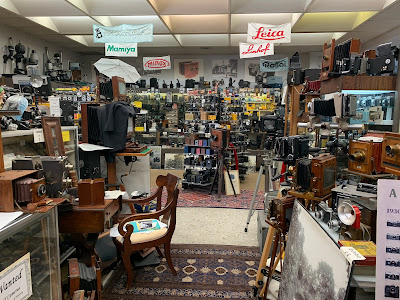
Camera Heritage Museum, Staunton, VA

On the way to NJ, I stopped in Staunton, VA, in the heart of the Shenandoah Valley, and visited the Camera Heritage Museum, which I have already written about.  It’s an overwhelming place, and like all of these small camera museums, are pretty much the work of one person over many decades of collecting.  I think of the late Jack Naylor in Boston who amassed an amazing and quite valuable collection of photographica, and after his death in 2007, much of it was auctioned off for about 2 million dollars.  His collection’s scope was world-wide, and contained many unique items.   A collection is not a museum - it requires people to curate, conserve, preserve, and properly exhibit with interpretive displays, as well as make it available to researchers.  It also requires money to guarantee that it runs in perpetuity (or at least close to it), so that the collections are not dispersed to the winds after the principal collector(s) have passed away.  That’s why museums should be in the public trust - for example, the Smithsonian. So, while I appreciate these private photography museums, the long-term outlook for them is not great.  I suppose the model to be used might be like that of the Argus Museum in Ann Arbor, MI which started out as a private collection (which I evaluated), and subsequently was given to the county historical society, and is now in good shape to continue into the future.  
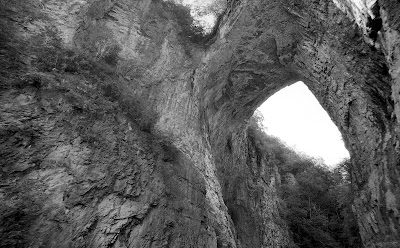
Natural Bridge, VA.  Nikon F3HP, Kentmere 400


The Shenandoah Valley was again a target in September, when I spent a few days in Lexington, VA.  I had wanted to explore more of it, being a fan of Sally Mann’s work, and the visit gave me the opportunity to absorb the history and beauty of Rockbridge County.  A return visit is definitely in the works in the coming year.  If you do nothing else there, visit Natural Bridge State Park - as the limestone arch is really impressive - and yes, it IS a bridge which US-11 travels over.  It’s also the reason Rockbridge County has that name.
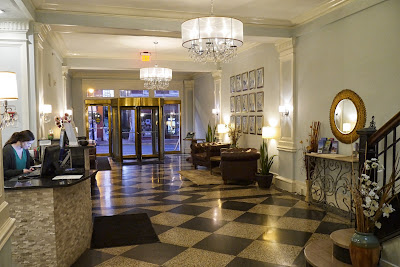
The Gin Hotel, formerly the Robert E. Lee, Lexington, VA


Proposed Cover for a a photo book

My Takumar Trek in June, has already been written up here, and I continue to plan for another trek along US-23 to finish up the southern leg, which ends up in Jacksonville, FL.  I need only to finish the NC, GA, and FL segment to have traveled and photographed along its length.  It was also in late June that I participated in Photostock, held this year in Cross Village, MI - about 30 minutes from Mackinac City. If you have never been to a Photostock meetup, I highly suggest it.  When I lived in Michigan, it was a leisurely drive from my home in Ann Arbor to Harbor Springs, and they were always a great time, invigorating, and got the creative juices flowing.  There are so many talented photographers at Photostock, and egos are checked at the door.  It’s a wonderful time to learn new things, meet old friends, and make new ones.
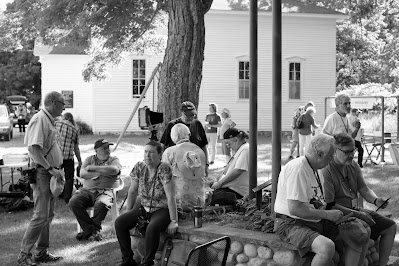
A scene from Photostock 2022

One of the things that I wanted to do this year was to try out a 6x9 Fujica camera. Those “Texas Leicas” used to sell for $250 before the prices started to rise up.  I wish that I’d bought one a decade ago.  However, I found a nice Fujica GL690 body at KEH for around $400.  Without a lens.  One of my Instagram contacts offered me a free lens for it, but it needed repair.  Well, I got the lens and then spent about $200 to have it repaired.  So, once that all worked out, I started using the Fujica GL690, and am quite happy with the results. It does take some time to get used to using a large rangefinder camera and get comfortable with it.  None of those cameras have internal meters, so basically it’s a pretty simple camera - but with really large negatives at the same 2:3 perspective as a 35mm frame.  I made a 12x18 print from it and it just blows me away.  So, 2023 will see it getting a lot more use.  
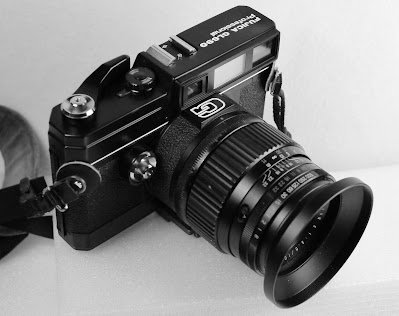
This camera will see a lot of use in 2023

In late August, I contracted COVID from someone that was visiting us for a weekend. That was a week of my life that I will never get back, and thankfully, I had already had my vaccine and boosters.  I just cannot imagine how awful it is for an unvaccinated person. It really was more like 2 weeks until I felt perfectly normal again.

I have been doing a lot of scanning of old negatives and slides this year. I had not scanned in any of the negatives from my 2003 trip to NM, and I found so many wonderful images among the new scans.  I think that the more removed we are from the event, the more meaningful the images.  What I did realize, though, is that while I started a journal for the trip, I stopped after 3 days.  It’s takes some discipline to write everything down each day, and I failed that -- so nearly 20 years later, I had to extrapolate the timeline of the photographs from the trip after day 3.  Lesson learned.   Eventually, all of my old slides will be scanned in, dating from the mid-70s to the 2000s, removed from their clear storage pages, and transferred to metal slide-storage boxes.  Each box will have a thumb drive of the scans.   They’ll probably all be trashed someday, but I will leave that decision to whomever survives me.

In mid-October, Bill Pivetta and I drove out to Durham, NC to see the Vivian Maier exhibit that was part of the Click! Photofest in Raleigh-Durham.  That nearly month-long event is rather amorphous, as exhibitions and events take place in many locations.  I’d certainly like to do more at the festival, but I would need to stay a few nights in the area to make it really worthwhile.  It was a nice introduction to Durham, and the Vivian Maier exhibit was certainly worth the 4 hr drive each way!  
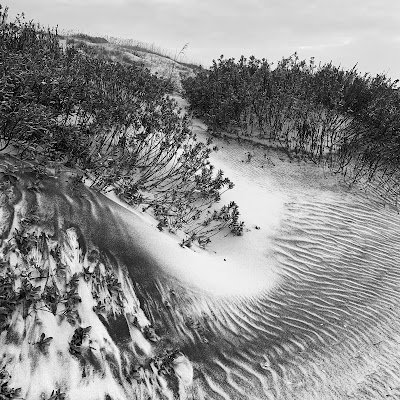
Cape Hatteras National Seashore, Outer banks

In early November, Adrienne, Beverley, and I went to Manteo, NC and the Outer Banks for 4 nights.  It was a great time to visit, and the weather was really fantastic, except for the last full day, when there were winds with gusts up to 50 mph -- it was a perfect time to see the Atlantic with some fury to it.  The only thing was the salt spray on my gear.  I made sure to use a UV filter on the front of my lenses, and after we returned, I wiped my F3 down with a wet cloth and removed any lingering deposits.  It’s a 7-8 hr drive from our place in the mountains to the Outer Banks, so not exactly a weekend trip, but I’d like to go again and stay somewhere near Ocracoke to do more photography.  I think the Holga and the Horizon 202 would get some use there.
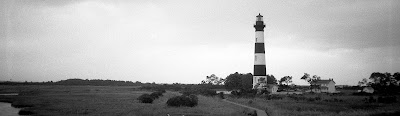
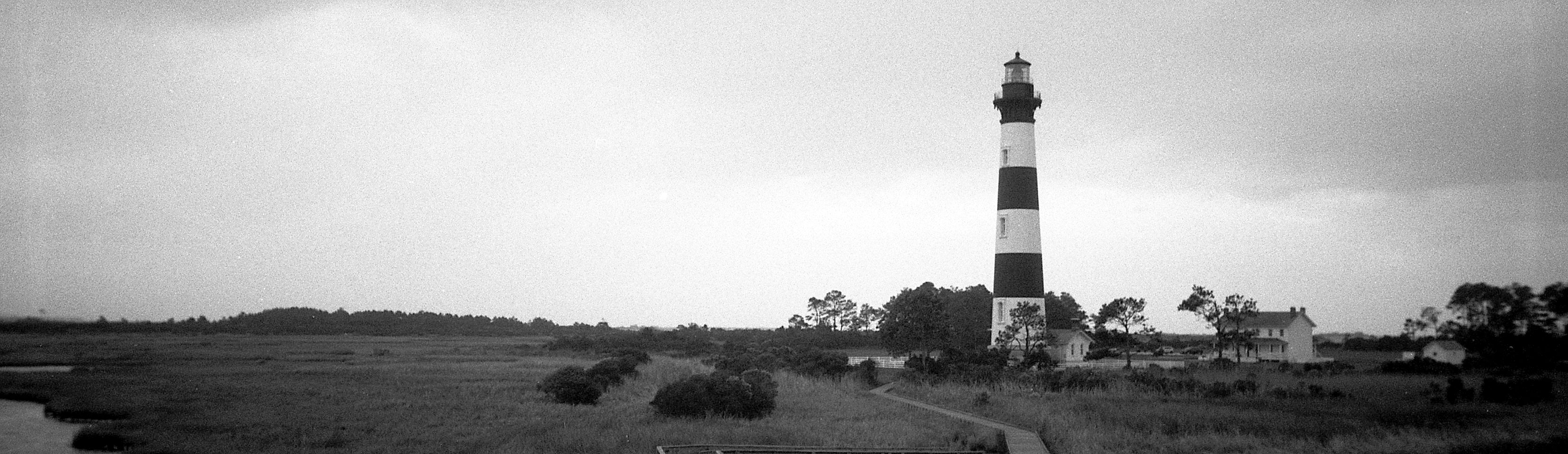
Bodie Island Lighthouse, Ansco Pix Panorama

After going through a lot of film this year, it’s obvious that my most-used films were: Kentmere 400, Kentmere 100, Ilford HP-5, and Eastman 5231.  Anything else was a few rolls, at best.  I shot very little color film, but I do have a pretty good stockpile of C-41 film in my fridge. It’s no secret that I’m a monochrome maniac, and speaking of that, the final issue for 2022 of Monochrome Mania is all about images from the Ansco Pix Panorama.  Having three other very talented photographers - Derek Keaton, Eben Ostby, and Liz Potter made it a first venture into a collaborative issue of my zine, which I hope to repeat for late 2023.  Three issues per year for 3 years straight is making me quite pleased. Issue 10 is already in the works, and will probably be available in February.

Podcasts are what I like to listen to while developing film - and my favorite podcast (that’s not the one I’m in) is still All Through A Lens.  Eric and Vania do an amazing job putting together well-researched and informative - and entertaining episodes that really keep my attention.  If you have not listened to All Through A Lens, I highly recommend that you do. My second favorite podcast is I Dream of Cameras, and Jeff and Gabe really hit my camera gear buttons in their lively presentations.  If there are any two people that I’d want to meet at a camera swap, it would be them.  

Best wishes to you all for the coming year.  May you find creativity, joy, good fortune, and good health.  
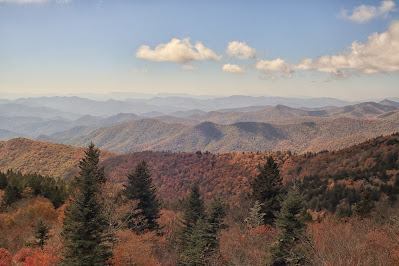
From the Blue Ridge Parkway, Canon EOS M5


Monday, December 26, 2022

Solving a Found Film Mystery

Christmas in Detroit, 1948.  Shot with a Kodak Bantam Special on
Kodachrome, ASA10.  I am pretty sure that a flash was used here.

In 2018, I ended up with a small box of found film that my now-deceased friend, Marc Akeman had picked up at a Detroit area estate sale a few years earlier. Marc was always adept at finding estate sales and auctions and buying box lots of photographic items that eventually ended up in his basement. After his death in 2018, I spent some time organizing his photo gear estate for his family, and it wasn't until then that I realized he had hoarder tendencies.  I imagine that he intended to do something with all of the found negatives, slides, and prints that were still in the boxes he purchased them in, but he never had the chance.  I sorted out out a few things from one of the boxes - Kodachrome slides, black and white negatives, and some rolled up developed films, since it was obvious that they had a Detroit mailing address, and were from before 1950.  I'm always keen to see old Kodachromes, and I could see that there were quite a few boxes in the lot.

Of course, in my own life, I was preparing for a move to North Carolina, leaving Ann Arbor behind after 38 years, since my wife and I had retired from the Univ. Michigan.  Those finds via Marc went into a small box labeled "Found Film" and it was not until recently that I started going through a few of them.  Aside from one roll of medium format black and white negatives definitely of the NSFW genre, the remaining images are of post-war middle class Detroit family life, 1947-49.  

Same Christmas tree as above

I scanned in a Kodachrome slide for a Christmas-theme Instagram post, and realized that it was shot on 828, or Bantam film.  I was curious if the photographer had used a Kodak Bantam Special for the Kodachromes (Bantam film gives only 8 exposures on a roll), as the images were far better than a cheap bantam camera. Tonight, I was going through the earlier b&w scans, and voila! There were several black and white shots of his Kodak Bantam Special in a chair.  So, I found the camera that the photographer used.  I don't know what he used for the medium format, but they are 6x9 cm, so very likely a folding Kodak of some sort.

Still-life with Bantam Special.

I'm posting several of these b&w images along with the Kodachrome slide.  I'll eventually scan the other slides, but I may end up using a DSLR since the slide carroer for the Epson V700 crops out part of the image. The Bantam slides are larger than standard 35mm, even though they are in 2x2 slide holders.  All of the b&w images are from medium-format negatives.

Photographer's father?  Detroit News, Jan 17, 1949


Musical family


Finally, here is a wonderful example of the Kodak Bantam Special, photographed by me.
It's really too bad Kodak didn't make this a 35mm camera. It's design, by Walter Dorwin Teague, is an Art Deco wonder, and if you can respool 35mm with an 828 backing paper, you can still make use of it.


Friday, December 16, 2022

Kodak's Signet 40 camera


I’ll be honest up front - In my opinion, most of Kodak’s 1950s 35mm cameras not named Retina are fairly basic cameras with Bakelite and aluminum bodies.  While the Pony 135 and its variants were aimed at the occasional photographer, and at a lower price point, the Retinas were high-end cameras  demanding a higher price (see my previous post on Kodak’s Retinas).  The middle ground in post-war America was taken by the Kodak Signet series, with more user-friendly features, good optics, and attractive looks.  If your main US-based competition in mid-50s America is Argus, then it should have been a no-brainer for a large company like Kodak to challenge the popular Argus C-3 which has the ergonomics of a brick, or the more friendly-looking Argus C-4.  The Signet 35 first appeared in 1953, and while an attractive camera, it also looks a like the Kodak Chevron, a medium-format 6x6 rangefinder camera.   The Signet 35 advanced the film with a winding knob, much like the Pony models, and the Argus C-4.  The Signet 40 was introduced the year I was born - 1956, and is a more streamlined camera - with almost Art Moderne-like styling (think of diners).  


The Signet 40 features a 46mm f/3.5 Ektanon lens (3 elements), Kodak Synchro 400 shutter, with B, and 1/5-1/400 sec speeds.  The aperture range is f/3.5-f/22.  Focus is from 2 feet to infinity. The triangular rangefinder spot is bright, and there is no protruding eyepiece to scratch your glasses.  The camera back is hinged, and film insertion and operations go very smoothly.  There is a film reminder dial on the top deck, but since there is no meter in this camera, you must use a separate light meter.  There is no accessory shoe on the top, but there are side attachment points for a Kodak flashbulb holder. This was the mid-1950s, and it would be a while before manufacturers adopted universal flash attachments, such as the PC (Prontor-Compur) flash connector, and the ISO-standard hot shoe, not to mention Xenon-strobe flash units (X-synch).  


My Signet 40 came from FPP listener Tom Frost in Vermont, who sent me the camera after I made disparaging remarks about the Signet series, and figured that I should actually try one.  In my experience, I had rarely come across Signets that were working. In fact, I found a comment of mine on Flickr from 2010 stating that I had seen very few working Signets!  It could have been for a variety of reasons that the cameras I saw had problems - design/construction flaws, hard use, and age may have been factors.  Rick Oleson, a long-time camera tinkerer and photographer, found that it was the rapid-wind lever that is suspect over time, as it may free-wheel if you advance the film too fast.  So, my advice is to wind the film slowly with the  lever.  

The Signet 40 that I received looked like a brand-new camera.  Tom had beautifully restored the camera to its like-new appearance and functionality.  It was in its leather case, and since the body has strap lugs (yay!), it does not need to reside in the case to go shooting with it.  As a mid-century US-made camera, the Signet 40 is classy-looking, and has a very different appearance from the Argus rangefinders where all the linkages are external.  You still need to cock the shutter tensioning when ready to take a photo.  You can take double-exposures if you release the shutter lock on the front of the bottom plate of the Signet 40 body.  The Signet 40 isn’t just a step above the Pony series, it’s a step above the Argus cameras of the same vintage.  So, what did this camera sell for in its day?  It sold from 1956-59 for $65.  In today’s dollars that would be $711.  It was definitely more expensive than an Argus C-3 but cheaper than the C-4, which sold for $84 with a clip-on meter.  Obviously, the Signet series was aimed at middle-class Americans that could afford it.  To compare to the Pony 135 series, it was $30 more expensive than a Pony 135 of the same vintage.  


There are several other very good reviews on the Signets:


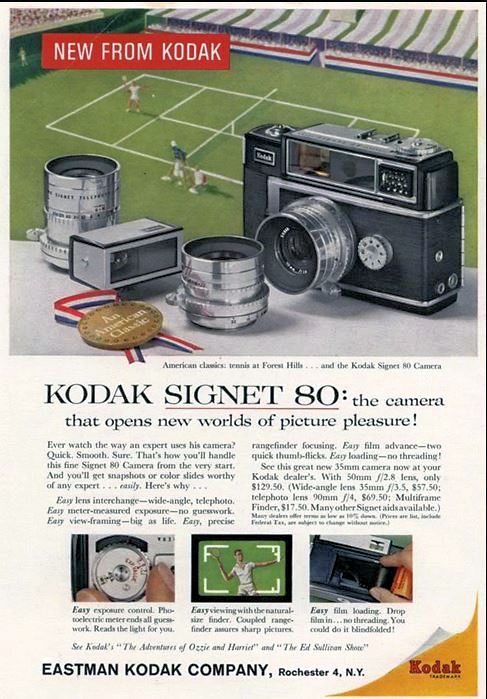
As for later models of Signets, such as the Signet 30, Signet 50, and Signet 80, they adopted the top-mounted accessory shoe, a single-stoke film advance lever, and in the Signet 50 and 80 models, a light meter, and in the 80, interchangeable lenses.  None of the latter models had the clean styling of the Signet 40, instead adopting a more bulky look with stepped up viewfinders, expanded front sections, etc.  Aesthetically, the Signet 40 has a more polished and minimalist look than the Signet 35 that preceded it.  

The Signet 80 looks more like an Argus!

After Kodak released the Kodapak 126 cartridge and Instamatics in 1963, Kodak’s 35mm cameras were either Retinas and Retinettes, made in Stuttgart Germany, or the US-made Automatic 35 and Motormatic 35 camera series, and were around the $100 mark. By the late 1960s, Kodak's 35mm cameras were gone, and by the late 1980s Kodak once again marketed 35mm cameras.  Of course, within a decade of releasing the Signet 40, the onslaught of excellent 35mm cameras from Japan had started, and the US camera manufacturers and many German ones were headed to extinction.  

My experience with the Signet 40 has been very good.  It’s definitely a more refined camera than the Argus offerings, and not as overbuilt as those Zeiss Ikon models such as the Symbolica or the Balda  Baldessa 1a (a review will be forthcoming for that one, too).   It still has the less-advanced method of manual shutter cocking, but that can be an asset if you want multiple exposures.  In use, the Signet 40 handles well, and I found a lens shade that mates with the filter ring (series V) perfectly.  I have shot several rolls of film with it so far, and will continue to bring it along on various trips.  It remains one of the most attractive of Kodak's cameras.

Some examples from the camera

Fuji Superia 200


Kodak 2238 at  ISO 25