Showing posts with label point and shoot. Show all posts

Tuesday, January 28, 2025

Workhorse - The Konica Genba Kantoku HG28


Back in December, I received a box of goodies from a friend.  Inside, was this unusual-looking point and shoot that really caught me eye.  At first, it looked like an all-weather/partially waterproof camera.  But that Konica label had me thinking, "Where have I seen this before?"  Some sleuthing online brought me the information that I needed, and I now have a camera that is relatively rare in North America.   In the late 1980s to mid-90s, Konica produced a series of cameras designed to survive the rigors of industrial work sites.  Weather-sealed, with a glass cover over the lens, and using DX-coded 35mm film, the rugged Site Supervisor cameras are basically point and shoots that due to their construction, are larger and heavier than your typical single-focal length point and shoot.  This model has a 28mm f/3.5 lens with a normal and a cropped panorama setting.  The official name for these are "Genba Kantoku" cameras, for use on construction projects.  They are also known as the Foreman or Work Camera. 

Simple and effective layout.


 As  far as I know, the different models of Genba Kantoku cameras have one of two standards of shutter speeds, either the 1/5 - 1/500 sec, or 1/4 to 1/280 sec range.  I’m not sure what my version has.  They all have built-in flash, focus from .5m or .9m to infinity, and a mode button that cycles through options for flash/no flash/closeup/ far-away/self-timer, etc.  The film advance and rewind are automatic, and you must use film cassettes with DX coding, or else the camera will default to ISO 25.  A small LCD panel on the top provides you with frame number and the shooting option.  The camera uses a 2CR5 battery.  These cameras are made to withstand the abuse one might give them on a construction site - and I have to say that I am impressed with the solid construction.

Note the large recessed knob on the side to open the back


I put in a roll of Fujicolor 200 and shot it within a week or two.  I definitely was pleased to have a 28mm wide-angle with the panoramic mode.  The camera is very quiet, and focuses quickly.  I also like the somewhat cartoonish workman character on the top of the camera.  This is a camera you can take anywhere, and not worry about it being fragile.  I think that if you are riding a bicycle or a motorcycle, this would be the perfect camera that would resist the bumps along the way, and is also weather-sealed.  Probably also a good choice for canoe tips, too.  There are few controls to worry about, and they are weather-sealed switches on the top right.  The pano/normal switch is next to the eyepiece.  The camera weighs just under a pound, which is quite manageable.

The panorama/normal toggle is next to the eyepiece


I sent my film into the Reformed Film Lab in Florida, and I was pleased with my developed film.  This camera is really nice to use, and the scans below give you an idea of what to expect.  These were all scanned in my Epson V700 flatbed scanner.

pano mode


normal mode


There are other versions of this camera, some with a 35mm f/3.5 lens, one with a 28-56mm zoom, and in the 2000s, there were several digital versions that appear to be more complex to use than the film versions.  None of them appear to have been sold in the USA.  

If you search eBay, you’ll find Konica Genba Kantoku or Konica Work Site cameras from sellers in Japan.  Expect to pay between $50-$250 for one.  Certainly cheaper than a Konica Hexar, and probably more reliable.  What’s not to like about a weather-proof, shock-proof, dust-proof street camera that has a 28mm lens?   I think it’s well-suited to be one of those cameras that you can keep in your car for serendipitous moments, or just carry-around and shoot to your heart’s desire.  For me, though, the great thing about this camera is the panorama mode, a 13x36mm frame that looks gorgeous.    I look forward to shooting a lot more with it as this year progresses.  Thanks, Kim in Kansas, for sending it to me!


Sunday, January 09, 2022

Minolta Hi-Matic G2 Review

The Minolta Hi-Matic G2 was the next-to-last of the Hi-Matic line, appearing in 1982.  It's a zone-focus camera that is fully automatic, and while it has the Hi-Matic name, it has a largely plastic body, and yet retains a classic appearance. It's similar in controls and appearance to the Hi-Matic G, which was released in 1974.


I don't mind fully automatic cameras, so long as I feel comfortable with them and have some idea about what settings the camera has chosen for me.  The Hi-Matic G2 has shutter speeds from 1/60 - 1/250 sec. (and I am not sure if its 2 shutter speeds or if there are others between 1/60 and 1/250), and the 38mm lens has apertures from f/2.8 to f/22. Like almost every other small camera of its type, the CdS light sensor resides just inside the front of the lens bezel, and turning the ring around the lens adjusts the ISO setting from 25-400. The zone focus has 4 icons, with the closest focus at 1 meter. It no longer says "Rokkor" lens on the front, just "Minolta Lens."  It accepts 46mm screw-on filters, and since the light meter sensor will be behind the filter, it will automatically compensate the exposure.  Next to the Auto setting on the lens, are a series of setting with guide numbers that are to be used with a flash.  The flash will sync at any shutter speed. Other than the focus scale, ISO setting, and guide number setting, there are no user-adjustable controls (see below).  This is truly an automatic exposure camera.  Although the camera does have a tripod mount, there is no B setting or way to attach a remote shutter release to the camera. It slips easily into a jacket pocket, though.


Power-wise, the camera originally called for a  Mercury PX-675 cell, but using a modern alkaline 1.5V equivalent does not seem to be a problem, as the exposures I had looked just fine.  

 In use, the camera is very compact and is really easy to shoot with.  I suppose one might call it a good snapshot or street camera, and they would be right.  You can make the Hi-Matic G2 an even more versatile camera if you wish to turn the Guide Number markings into something like a limited manual exposure.  By turning the camera from AUTO to the Guide numbers, the shutter speed stays at 1/60 sec, and the guide numbers set the aperture at f/2.8 (GN10), f/4 (GN14) f/5.6 (GN20), f/8 (GN28), and f/11 (GN40). Without a battery, the default shutter speed is 1/60 sec, so you could make it work pretty well with no battery and ISO 50-100 film, and adjust the aperture by the guide numbers.

Since there is no on/off switch, keep the lens cap on when storing the camera so that 1.5v cell doesn't discharge.  

Overall, I was happy with the images that I got from the Hi-Matic G2.  It's one of those cameras that has an appeal to people that value well-designed, easy-to-use cameras that can be ready to shoot with in an instant.  The only drawback for me, is the relative lack of control over the exposure settings, but the camera did okay with the conditions that I used it in.


Images

The color shots are from a roll of Fujifilm Superia 200, shot in 2021, and the b&w shots are from Fomapan 100, which I shot in January 2022.


Waynesville, NC

Waynesville, NC

camera geekery

Long's Chapel, Weaverville, NC

fence and barn, Buncombe Co., NC

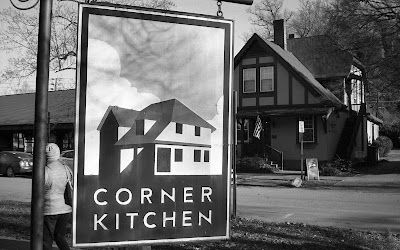
Great place to eat, Biltmore Village

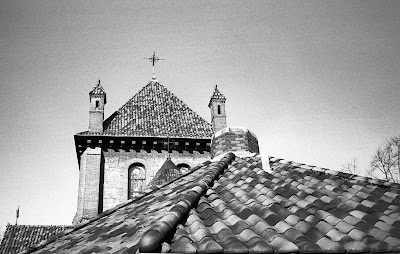
All Souls Cathedral, Biltmore Village

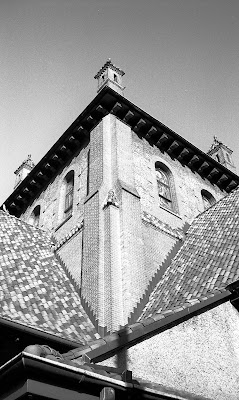
All Souls Cathedral, Biltmore Village

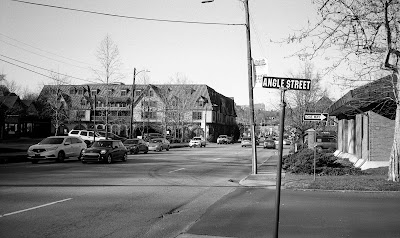
Angle Street, Biltmore Village

Sale, Biltmore Village


It's certainly an easy to carry-around zone-focus camera that might be just the thing for many photographers that want something better than a Harman 35 simple-use camera.


Friday, June 11, 2021

The Camera in the Console

The original Olympus Infinity Stylus

Several weeks ago, I was doing some clean-up inside my Ford Escape, and pulled out the old Olympus Stylus that had been sitting in the bottom of the center console storage compartment.  I don't recall how long I had kept it there, but it had a fully shot roll of Ilford HP-5+ in it.  It is the first version of the Stylus, as it has the 35mm f/3.5 lens, and it certainly is a good picture-taker.  I suppose that I had put it in the console so that I would always have a film camera available if I needed it.  That's not a bad idea, of course, and I was smart to use a b&w film to reduce the effects of the ravages of heat in the car.

So, yesterday I developed the roll of HP-5+ that was in the camera, and it must have been in the car at least 3 years.  There were lots of photos from Ann Arbor, a couple from a trip to NJ to record FPP segments, a stop for ice cream in Perry, MI, and some from places I can't quite figure out. The idea of a small camera that's available on a whim is a good idea, but I think I should have kept a small notebook to record where I took the photos.  Of course, maybe if it hadn't been in the car for 3 or 4 years, it would not have been so difficult to remember!

There is something to be said for the developing of a roll of film that's been forgotten about. Often times, we get surprises and find little vignettes that we had forgotten about but were important enough to photograph at the time. Of course, in my case, I photograph so much that's its almost like breathing.  

One of the big advantages of using a smart phone to shoot serendipitous images, is the fact that it records the location data and date of each image file. That's been very useful for me over the years, as I have had to recall where I was at a given time.  While the Olympus infinity doesn't have that capability, it does a good job of recording a scene onto a piece of film.  Of course, looking at the film later, leaves me with questions, and maybe that's a good thing. We need to use our brains to figure out puzzles, and as we age, it gets even more important.  

Here are a few images from the roll of film. The HP-5+ was developed in HC110-B for 6 minutes.


The Huron River in Ann Arbor, March, 2018.

This used to be a fire dept. substation in 1950. On Platt Rd near 
near Packard, in Ann Arbor.

Unicorn Sprinkles, Perry, MI.

King Cone, Perry, MI

From the car, St., Charles, MI

I had a lot of these that I shot while in traffic.

I think this barn is near Sharon Hollow, MI.

Funny, if you look at my post previous to this one, you'll see
 the finished product. Circle K gas station on Stadium  Blvd,
Ann Arbor,

I must have liked the "Hug A Beaver Today" sticker.

Well, there you have it. By the time I finished writing this post, I had figured out not only where most of the shots were taken, but where I was sitting in the car when I took them. I just am unsure of the exact dates, but they seem to all have been taken in 2018-2019.


Thursday, January 23, 2020

The Samsung Evoca 90w Neo

EVOCA by Samsung


To be honest, I didn't realize that Samsung made 35mm cameras until this one showed up in a box full of point and shoots.  Samsung did, in fact produce some very good compact P&S 35mm cameras, as well as an APS P&S.  The camera's clean design, short zoom range, Schnieder lens, and LCD rear display intrigued me enough to try it out. 

The Samsung Evoca line

From what I have found so far, Samsung sold 35mm point and shoots from at least 1990 into the early 2000s.  Shutterbug's June 1, 2002 archived page has an article by Peter K. Burian reporting on P&S cameras from the PMA show.    There were several model lines by Samsung -- Maxima, Pronta, and  Evoca. The Evoca line was apparently their top line for "photo enthusiasts": 

"Samsung's Evoca line now includes a model with a zoom lens that includes a true wide angle 28mm focal length. The Evoca 90W Neo QD is a fully automatic model with a 28-90mm f/4.5-11 Schneider-Kreuznach lens and diopter correction eyepiece. In spite of the moderate price ($210) this camera is said to be housed in a titanium body. Features include continuous autofocus, two Program modes, Panorama Frame mode, and a remote control unit, plus an advanced flash unit."

It's quite possible that the Evoca cameras were the outcome of the purchase of Rollei by Samsung in 1995.  It's been suggested that the Prego cameras were the inspiration for the Evoca line, and I have to say that the lens choice may have been the result.  I have found the Prego cameras to be delicate things.  The Evoca 90 W Neo is not fragile. 

There are several Evoca models -

  • 70 SE, 35-70mm  Schneider-Kreuznach zoom (highly touted in 12/1999 Popular Photography as a travel camera)
  • 70 S, 35-70mm Samsung SHD lens ($129 in May 1999 Popular Photography)
  • 90w Neo, 28-90mm Schneider-Kreuznach Varioplan Zoom (Reviewed here)
  • Zoom 115,  38-115mm, (also called Fino outside of USA)
  • 140 S QD,  38-140mm f/4.6-12.2 Schneider-Kreuznach zoom 
  • 170 Neo QD, 38-170mm Schneider-Kreuznach zoom, passive (not active) multi-point autofocus, Panorama Frame mode, and backlight compensation control 

The Samsung Evoca 90w Neo
At first glance, one might think this was an early digital P&S, especially since there is a small rear LCD panel which occupies the left side.   However, this 2002 camera appeared at a time when a digital P&S could not compare in image quality to 35mm.  It was however, the end of the premium compact 35mm cameras, as consumers started buying the premise that digital was the new “best thing.
rear of camera 
zoom at 90mm


The 90 Neo is a bit unusual in that its zoom range is from 28-90mm.  There are not many short-range P&S zooms with such a good lens as the Schneider- Kreuznach Varioplan.  In use, I found myself shooting mostly at the wide end, as 28mm is a good focal length for a lot of street photography. 

Camera specifications

  • Lens- 28-90mm Schneider-Kruzenenach Varioplan, f/4.5-11.  
  • Focus – 2 ft – infinity
  • Shutter speeds – B, 1/3 – 1/400 sec
  • ISO - (via DX coding) 50-3200
  • Viewfinder – Real image, 80% coverage, adjustable diopter
  • Focus – automatic, can be preset for infinity
  • Film Advance – Automatic, power rewind
  • Exposure Modes – Automatic, Bulb, Program
  • Flash – Built-in, range 2 ft – 34 ft at ISO 400, 28mm, 8 sec recycle time, red-eye reduction
  • Tripod socket – yes
  • Remote control – optional
  • Self-timer – 10 sec
  • LED Info – focus, flash ready
  • LCD Display - battery condition, date / time, film advance mode, flash mode, frame counter, program, red-eye reduction, remote control indicator, self-timer mode, zoom; 
  • Features - auto power off, autofocus lock, captions imprint, panorama mode 
  • Power – 1 CR123A 3V battery
  • Weight – 8.1 ounces
  • Dimensions – 4.6 x 1.7 x 2.6 inches


Overall, a pretty good array of features that should appeal to the compact p&s crowd.  In fact, it compares very favorably with the Yashica T4 Zoom (made by Kyocera).   In hindsight, had Samsung just issued this with a 28mm f/3.5 single focal length, I think it would have been a highly desirable camera with the street shooting crowd, and would be commanding Contax T3 prices today.  Alas, the zooms were the thing in the late 1990s, but the Evoca 90w certainly is a very good camera if you can find one. 

I loaded the camera with a roll of Kodak T-max 100 film and took it with me to Columbia, SC.  It was easy to use, and of course, easy to goof up things without a manual.  In the course of using it, I somehow selected "print" with the multiple controls on the rear of the camera, and ended up having the date imprinted on most of the negatives (without having set the date and time, no less).  Subsequently, I loaded a roll of T-max P3200, and made sure that I had everything set properly. 

Conclusions -

The Samsung Evoca 90w Neo is a great little camera.  The zoom is fast and quiet, and I liked being able to preset the camera for infinity focus and no flash.  To me, the 28mm focal length was my preferred setting.  I also liked the Panorama masking mode.  The images at 28mm had a definite panoramic look when the Panorama mode was selected via an easily-found switch on the back.  The adjustable diopter in the viewfinder was a nice feature, too.  The body of the camera feels comfortable in the hand, with nothing protruding when the camera is shut off.  It is easy to use, and apart from my mistake with the date stamp, the camera modes are easily adjusted via the mode dial on the back.  Note, I am not a fan of date-stamping an image. It has no place in serious photography, and it certainly does not indicate that one can verify when an image was made.  According to my images, I was there in 2015.

This seems to be one of the less-seen models on eBay.  The 70SE 115, as well as the 170 are typically in the $5 to $60 range, but the 90 does not show up.  Given that it was sold at the end of the compact 35mm P&S era, probably not as many were sold as the earlier models.  I would say that if you were to find one, $50 would be a good price. 

IMAGES

P3200, selfie

P3200, All Souls Cathedral, Biltmore Village, NC

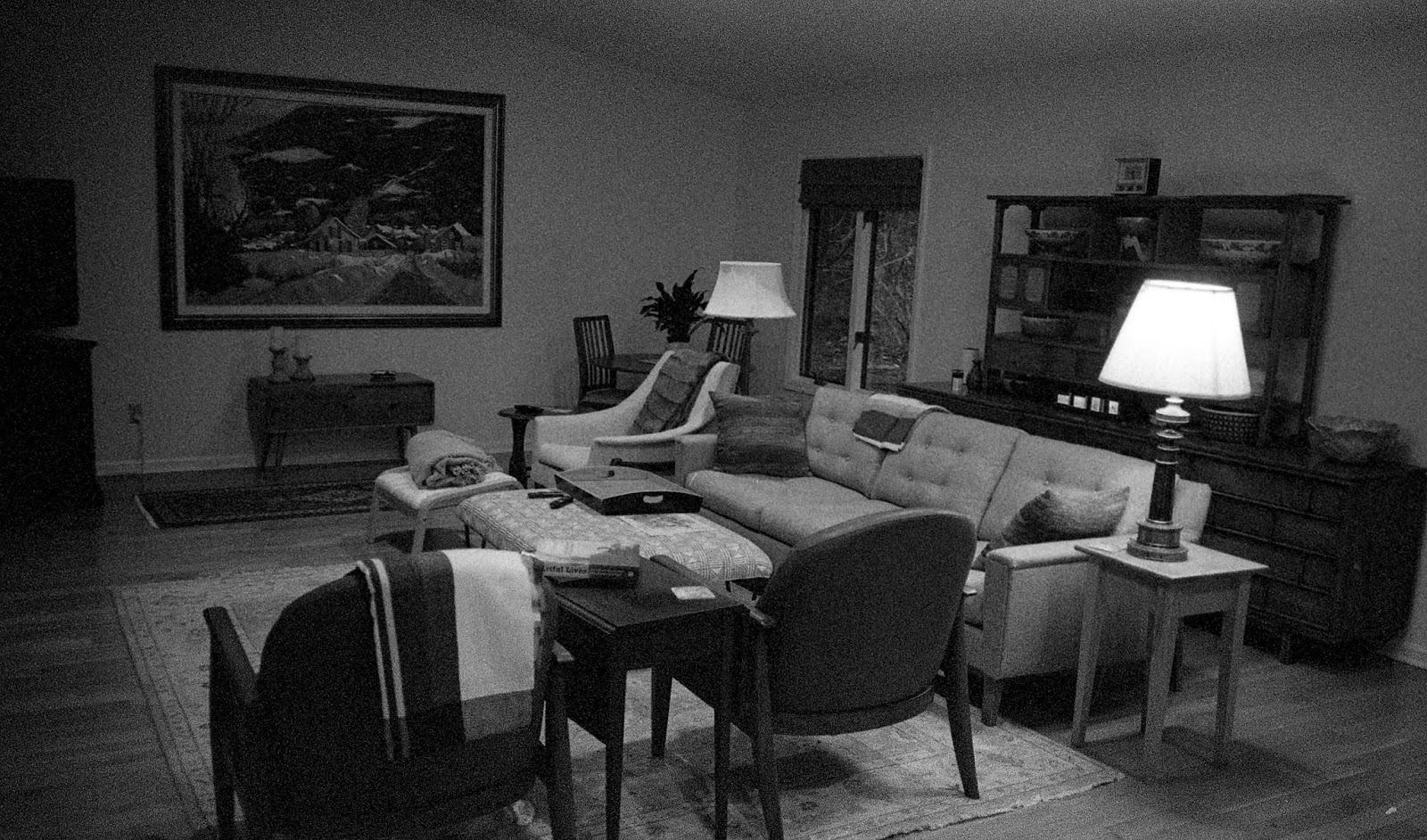
P3200 living room light

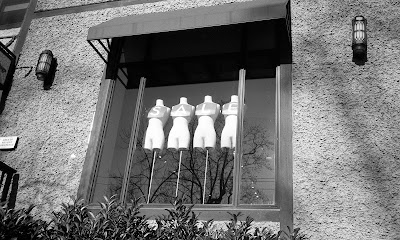
P3200, Biltmore Village, NC

P3200, Biltmore Village

Columbia, SC State House steps, Tmax 100

Tmax 100, Panorama mode, Columbia SC

Tmax100, ca. 90mm, Columbia, SC

Tmax100, ca. 35mm, Columbia, SC

Tmax100, 28mm, panorama mode, Columbia, SC

Tmax 100, Columbia, SC

Tmax 100, Columbia, SC