Showing posts with label Contax G1. Show all posts

Sunday, September 11, 2022

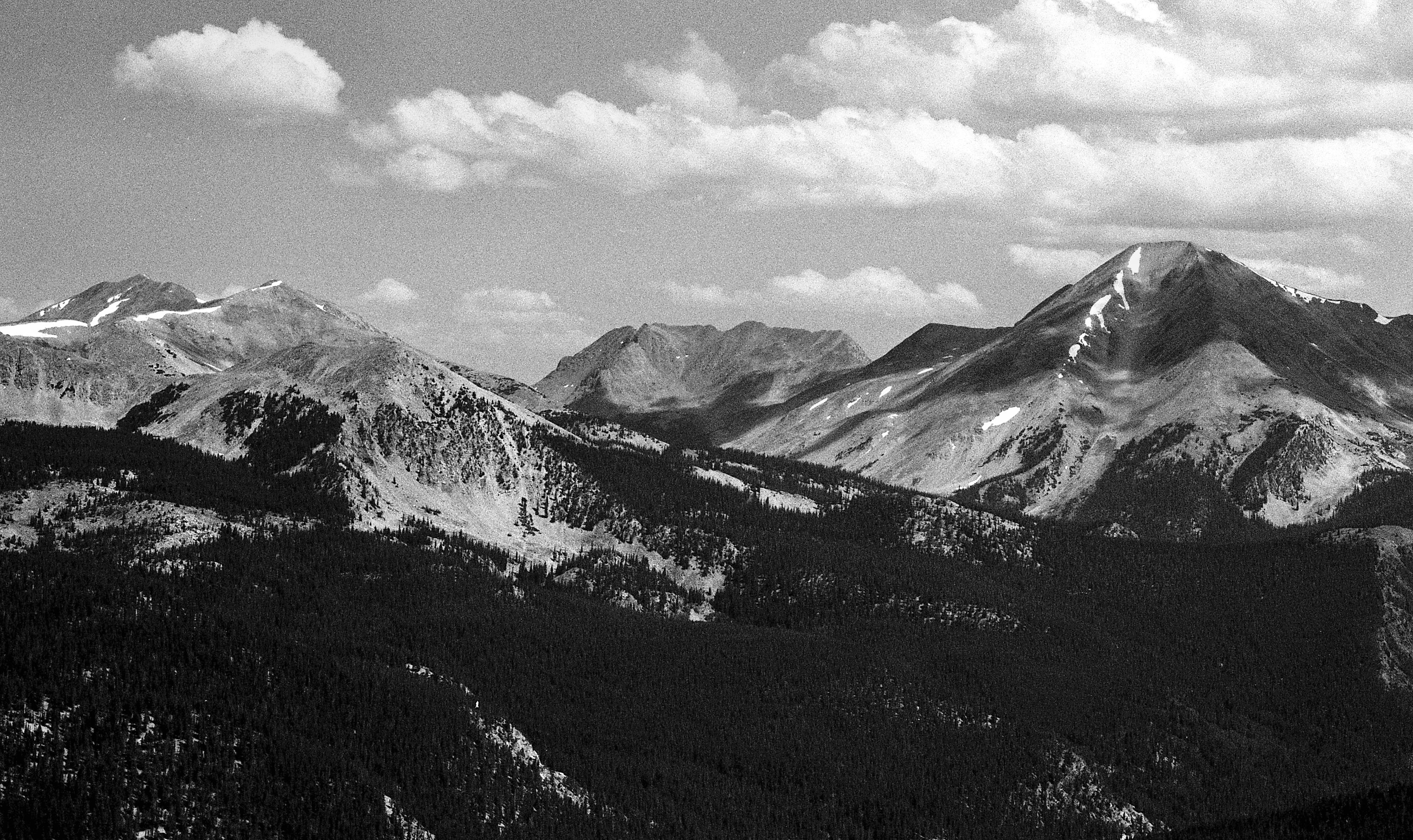
Looking Back - The Land of Enchantment - 2003

Abiqui near Ghost Ranch, Argus C3, Ilford Pan-F film

Same scene, Nikon FA, 28mm, Fuji Astia


A few weeks ago, I contracted COVID from a visiting friend. It's as if a couple of weeks went missing, in terms of doing anything.  I was really miserable for several days, and even though I was testing negative after a little over a week, my body was still recovering.  It was during that time that I decided that I needed to do something productive, even if I wasn't up to going out and about.  I'd been going through some of my file boxes of older prints and negatives from 2000-2002, winnowing out the crappy stuff and just keeping what I felt was worthwhile. During that process, I realized that hardly anything from my 2003 trip to New Mexico had ever been printed, and none it had been scanned - other than a random photo or two.  I have three 3-ring binders of images from that trip - two are just 35mm slides, and one was only negatives, mostly black and white.  Nineteen years is quite a long stretch of time, and I figured it was a good time to scan in those long-neglected images and re-discover what I photographed on that trip. The other aspect worth mentioning is that as I have presented before - viewing images far removed from the immediacy of an event means that there is less emotional attachment to them, and one can view more objectively as to their merit.  In other words, the images stand on their own if they are good.  

White Sands National Monument. Nikon FM2N, Aga APX 25, red filter


The trip was a family vacation with my wife Adrienne, and our daughter Marjorie, who had also gotten the photography bug from me, and between the two of us, there were perhaps over a dozen cameras.  Somewhere, I have a photo of a table with all the Nikon gear that I had planned to bring, but without seeing it I know that I packed: Nikon FA (used mostly for E-6), Nikon FM2N (black and white), Nikon N60 (C-41), Rollei 35TE, Contax G1, Holga, Kiev 60, Pentax 6x7, Argus C-3, Argus C-4, and a single-use camera.  Of course, there were lenses, filters, tripod, etc.  I know that Marjorie brought her Kiev 80 (Hasselblad 1000 clone), and at least one Nikon SLR and an Argus or two. In hindsight, I should have only brought one medium format camera - and it appears that I used the Kiev 60 quite a bit. We left Michigan on July 9 and returned around July 19.  For some stupid reason, I stopped entering anything into a daily journal of the trip on July 12. So, anything that happened after that-- exact locations, etc., are now just extrapolations from the photographs. Lesson learned - always keep a journal when traveling!  I am very good about that now, but obviously, wasn't then.   Just as a way to try and piece things together, I typed up the notes that I made in 2003, and realized how much is lost when things are not written down.  Nearly 20 years later, there are things that I remember from that trip - all of which are triggered by seeing the images.  Memories are faulty, which is why journals are important.

near Carlsbad, New Mexico, Kiev 60, Ilford SFX 200


Kiev 60, Ilford Delta 100

As I started scanning in the black and white negatives on my Epson V700, I started to appreciate that I actually did do some pretty good photography on that trip. I'd always considered the two binders of slides to be representative of what I saw, and where we visited, but after seeing the monochrome images, I find that those images are far more impactful in terms of mood, landscape complexity, and more meaningful. I'll post some examples here, of course, to illustrate some points.  One of the reasons that I may not have printed many of these images - other than proof sheets of the negatives - was possibly because of the frame spacing issues with the Kiev 60, and also because at that time, my darkroom skills were still fairly limited.  After all, I had only acquired the darkroom in Dec. 2002, as it was included in the house that we purchased.  So, as time went on, the 2003 negatives were hidden away as I did new work. Anyhow, one of the great things about scanning in those negatives is that post-scan editing allowed me to fix problematic frames that I never would have been happy with in the darkroom.  The Kiev 60 frame-spacing issues were never the same from roll to roll. Some rolls were just fine, others had frames nearly overlapping, or at best with about 1 mm of space between them.  I eventually sold the Kiev 60 - and while the exposures I made with it were very good, I didn't like the unpredictability of the frame spacing.  As 6x6 SLRs go, the Praktisix, Pentacon Six, and the Kiev 60 are all quite similar with the same problems. That's really too bad, because the images from them are quite good.

Bisti Badlands, Kiev 60, Kodak Tri-X

Bisti Badlands, Kiev 60, Kodak Tri-X

We put a lot of miles on our 1999 Plymouth Voyager van on that trip, and we traveled quite a bit each day - made possible by the fact that we mostly took interstates and major highways to reach our destinations.  However, when we took secondary roads, that's where the fun was. Some of my favorite photos are of lesser-known sights.  New Mexico is a fascinating state to explore - the people, the places, and the history, as well as the varied topography and geology present innumerable photographic opportunities, and on that trip, we barely scratched the surface. We entered New Mexico at Clovis, and stayed the first night at the Frontier Motel near Roswell.  After that, the only motel I know that we stayed at was the Travel Lodge motel in Santa Fe.  Not keeping a journal was an error I hope never to repeat.

The Frontier Motel in 2003. Nikon N60, 
Kodak Gold 200.

Our visit to Carlsbad Caverns was made even more dramatic by the temperature differential - it was 105°F outside, but mid-50s and high humidity inside the caverns. I actually shot one roll of film inside the caverns - in well-lit examples of the formations. For that I used the Nikon N60 and Agfa Vista 800 color film. I am amazed at how well they came out.  We stayed late to watch the free-tail bats emerge from the mouth of the cavern, and it was quite the experience - thousands and thousands of bats -looking somewhat like a cloud of butterflies.

Inside Carlsbad Caverns - Nikon N60, Agfa Vista 800 film.

We visited Sitting Bull Falls in the Guadeloupe Mountains, and were not disappointed.  The falls was an oasis amidst the Chihuahuan Desert landscape.  While not a roaring waterfall like one might see in the East, the falls cool spray of water created a microclimate of lush vegetation and I'm sure a lot of local wildlife was attracted to the oasis.  At the time, I was really entranced by the Libellula saturata dragonflies that were abundant there. 


Sitting Bull Falls, Nikon FA, Fuji Sensia

Libellula saturata, Nikon FA, Fuji Sensia 

We stopped in the town of Artesia - an area defined by its heavy agricultural use, as well as oil and gas wells. Downtown Artesia features a beautiful city park with fountains, all with historical scenes in ceramics and murals that depict Artesia's history.  

Part of the Heritage Walkway, Artesia. Nikon FA, Fuji Sensia


We drove westward on US 82, went through the amazing mountain village of Cloudcroft, and then after leaving the tunnel through the mountain - came into a completely different desert basin with Alamogordo in the distance. From Alamogordo, we drove N on US-54, and spent some time at Three Rivers Petroglyphs BLM site - incredibly fascinating with its many ancient petroglyphs on the basalt rocks.  The age of these glyphs are thought to be at least 1,000 years old.  

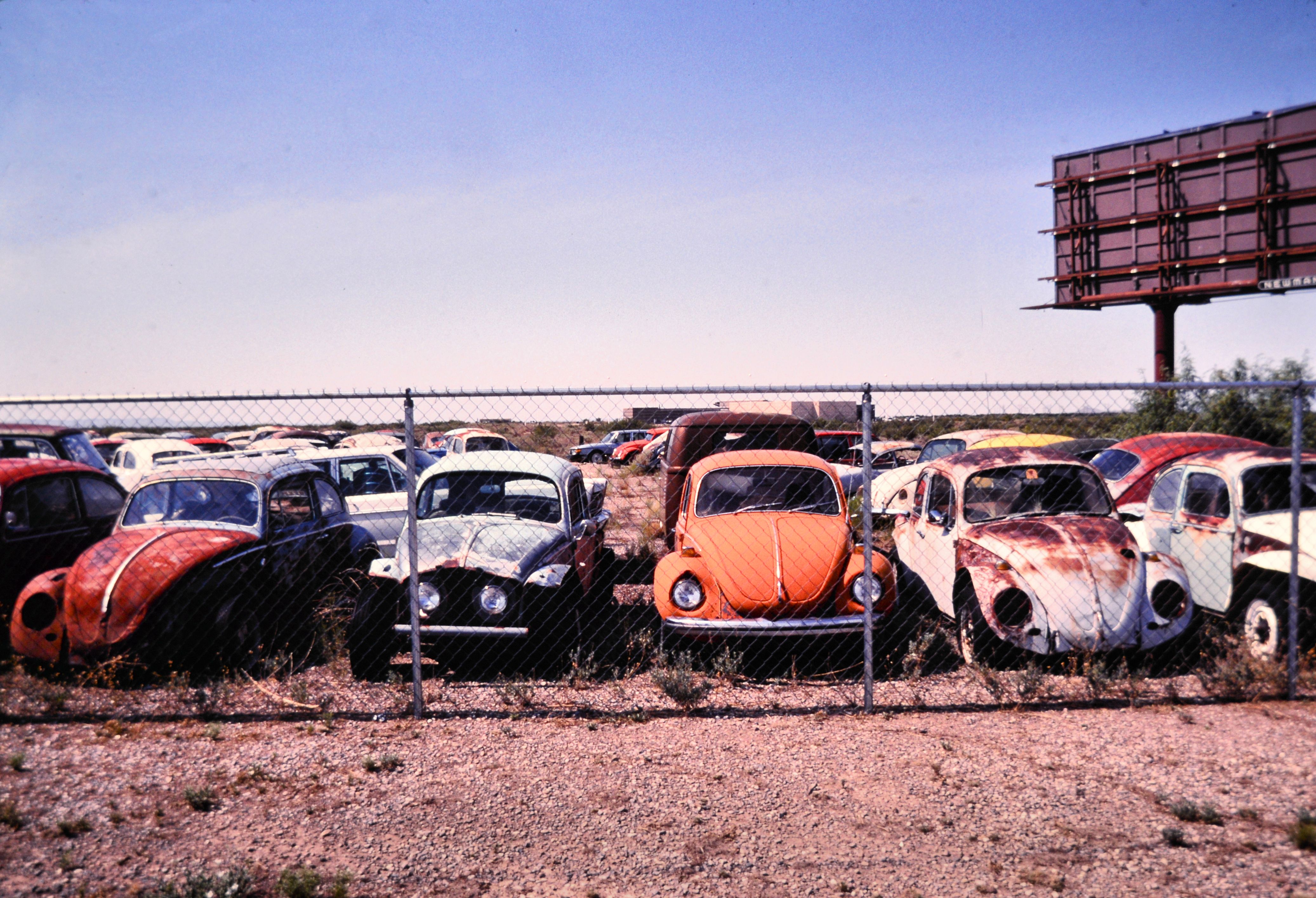
Beetle Yard, Alamogordo, Nikon FA, Kodachrome 64

Bighorn sheep with 3 arrows, Petroglyph. Nikon FM2N,
Ilford Delta 100 film.

From there, we briefly explored the Valley of Fire near Carrizozo - called the Valley of Fire due to the lava flows that were deposited there at a time when indigenous people would have probably seen it happen - about 7000-10000 years ago.  The black flows look quite similar to what one would find on Hawaii. Of course, beyond the black rocks of the Valley of Fire is the Tularosa Valley with the White Sands Missile Range, and White Sands National Monument - which we spent a morning exploring.  I shot a lot of images there with the Kiev 60, and came away with a few really good shots.   It's definitely a place where one should get there either early in the morning or late in the day to take advantage of the lower sun angle over the gypsum dunes.

White Sands NM, Nikon FA, Chromex film

Petroglyphs, Nikon FA, Kodachrome 64

Valley of Fire, Nikon FA, Kodachrome 64

Valley of Fire, Nikon FA, Kodachrome 64

We spent several nights in Santa Fe, making day trips around the area.  Santa Fe remains one of my favorite places due to the adobe architecture, the arts, and the general laid-back atmosphere there.  One of the reasons for going to Santa Fe was a photography-themed month that featured work by many notable photographers.  The Stieglitz exhibit at the Georgia O'keeffe Museum was wonderful, and while I know we visited other galleries there, I don't recall a single one now - and of course, I didn't write it down!  During our stay, we visited Bandelier National Monument, Taos, Ranchos De Taos, Rio Grande Gorge, Abiquiu, and the Ghost Ranch perimeter.  

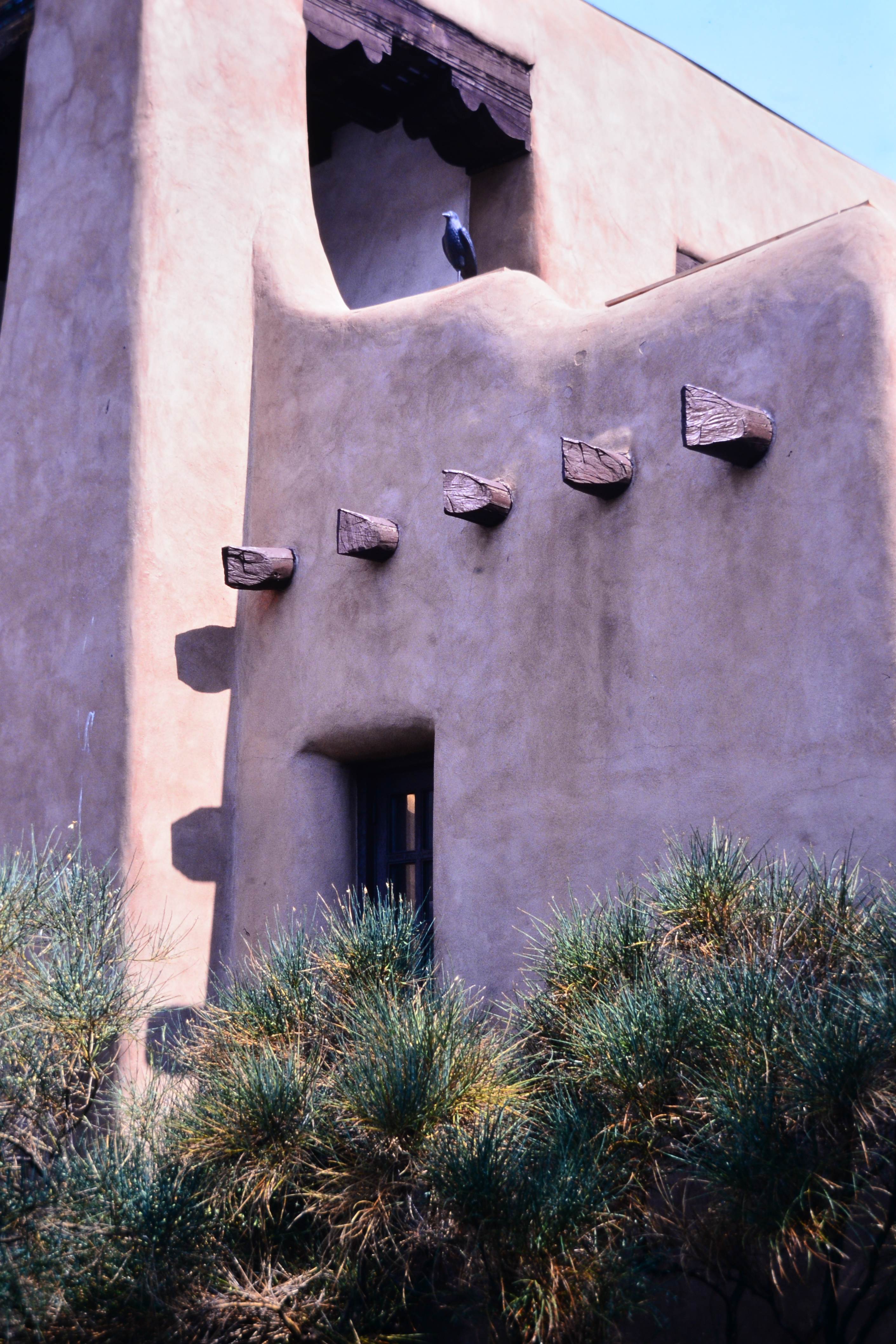
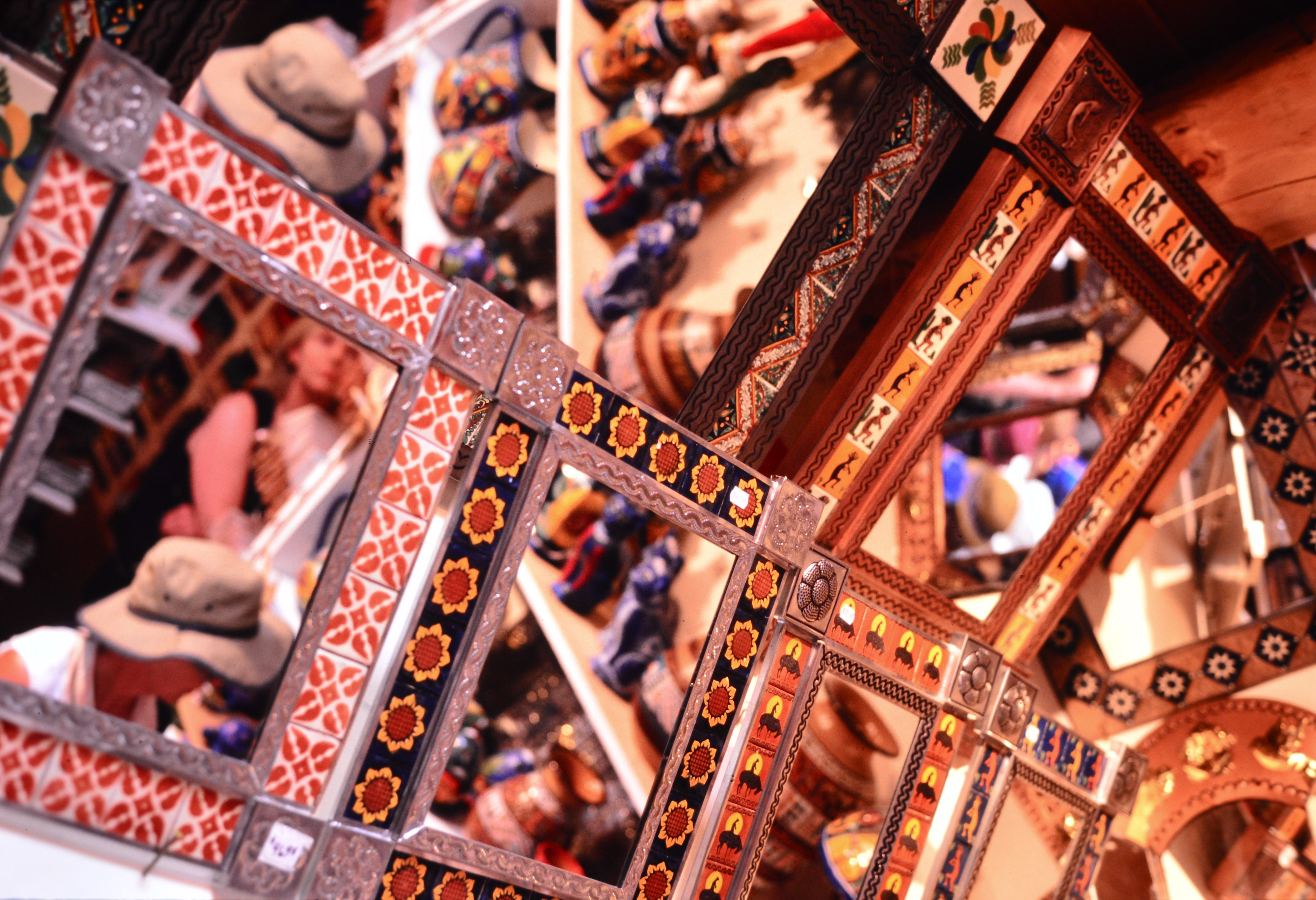
Santa Fe, Contax G1, Fuji Sensia

San Miguel Mission, Contax G1, Fuji Sensia

Santa Fe, Contax G1, Fuji Sensia

Santa Fe, Contax G1, Fuji Sensia

Santa Fe, Contax G1, Fuji Sensia


A harmonious McD's in Taos, NM. Nikon FA, Kodachrome 64.


the Rio Grande Gorge, Nikon FA, Kodachrome 64.

After we left the Santa Fe area, we traveled NW to the Bisti Wilderness Area.  I'd seen some photos of the Bisti Badlands in an issue of Outdoor Photography, and they were as intriguing and and wonderful as I had hoped. They really looked other-worldly, and would make a great spot for a science-fiction setting.  We didn't see another soul while walking/driving around there, which gave it an even more desolate feeling.  We then drove to the Four Corners monument - which is where CO, UT, AZ and NM meet.  I had been there once before in 1980, and in the 20+ years since, the visitor center and other amenities had sprung up.  The area is within the Navajo Reservation and I think the tribe runs the visitor center.  Since Marjorie had her Kiev 80 with her, people asked her to take their photographs with their cameras - this is well before the iPhone changed how many people took photographs. I, on the other hand, just had a Nikon around my neck, so I guess I didn't look professional enough!   

Bisti Badlands, Nikon FA, Fuji Sensia

Bisti Badlands, Nikon FA, Fuji Sensia


From the four corners, I think we went past Shiprock, to Farmington, and then into Colorado, where we drove on the "Million Dollar" highway from Durango to Silverton.  We eventually went through Monarch Pass, where we took the cable car to the top.  From there, it was a quick trip through Rocky Mountain National Park.  What impressed me most was the afternoon thunder storms - and I did get some good lightning shots with my Rollei 35, until I could hear the car antenna buzzing, at which point I quickly loaded my gear into the van and hoped that we wouldn't get a strike.  

Rollei 35 TE, Kodachrome 64.


We made our way up to Nebraska, to visit Carhenge in Alliance, and drove through the Sand Hills region and after that, it was a dash home on interstate 80.  People talk about "flyover country" and we certainly drove through it.  All the places we went had their own kind of beauty, and whether it was the rolling sand hills of Nebraska, the prairies, the Rockies, the Chihuahuan Desert, or the gypsum flats of New Mexico, there is something to be seen and appreciated. Simply flying in to a city and making day trips to the highlight places does not give you a sense of scale or the same sense of place.  To drive there is to have a much richer experience.  The journey is the reward, said Steve Jobs. He was right.

Carhenge, Alliance, NE. Kiev 60, Ilford HP-5


Carhenge, Nikon FA, Fuji Astia

Carhenge, Nikon FA, Fuji Astia


I just finished digitizing the slides that I shot on that trip, and used my Nikon Df with a Nikon PB-4 bellows and slide copying adapter. The lens, the old 45mm GN F-mount did a great job with the slides.  I'd say that for every sheet of 20 slides, the average number selected to be scanned was 4 per page. Of the slide films used, Kodachome 64, Fujifilm Astia 100 and Sensia 100 were well-represented. 

Somewhere near Carlsbad, NM. Argus C-4, Kodachrome 64.

We have since been through NM several times, and I'd like to go again next year and spend a week on the east side of the state, starting with Las Cruces and working my way north until the Gallup area.  New Mexico is an enchanting place, and to go with my Fujica GL690 and my Horizon 202 would be a lot of fun.  Secondary roads all the way!


Rollei 35TE, Ilford HP-5

Rockies, Nikon FM2N, Ilford Delta 100

 Looking back through the photographs - of which there are hundreds, I have to say that the little Rollei 35TE performed very well.  Of all of the cameras that I used on that trip, the only ones that I still have are the Rolle 35TE, Nikon FM2N, and Pentax 6x7 (though a different body since then), and of course, the Holga,  Argus C4, and C-3.  


Friday, March 06, 2020

Cameras I Have Known

I was going through some of my older photos last night, and realized that I had enough material for a new post. The title, "Cameras I have known" is a lot better than "cameras I have owned" because some cameras have only been in my hands for a short while as they were parts of estates that I was selling.  Those estate sale cameras were interesting, varied, and it was a lot of fun to have met their acquaintance. Parting with some cameras brings backs memories of how I acquired them, and in some cases, the stories about how they came my way are more interesting than the camera.

RARITIES

The Argoflex II

Back in the early 2000s, I visited a camera collector that was selling off a lot of cameras that he was no longer interested in.  I think I bought about a half-dozen cameras, and paid somewhere around $70.  It was early in my infatuation with Argus cameras, and one of the cameras I bought was an Argoflex TLR.  At the time, I did not realize what a rare thing I had purchased.  Upon some research and incredulous moments, I found that that I had one of a handful of examples of the Argoflex II twin-lens reflex.  In addition, it was different from other known Argoflex II models. First of all, you may wonder what was so darn special about the Argoflex II?
My Argoflex II

The only known examples of the Argoflex II

The Argoflex II was supposed to be introduced in 1947, and it was meant to be an upgraded version of the Argoflex, with a metal body, and most notably, an automatic film wind that stopped at the proper space for each frame, just like a Rolleiflex would, even though the red window remained on the back of the camera.  According to Henry J. Gambino, author of "Argomania," only about 300 cameras were produced, and the film wind did not work properly, so they were recalled and destroyed. It turns out that a handful survived, and of that handful, the one I owned had a different script logo on the front - perhaps it was the protoype.  The camera was designed by Harley Earl, and it's certainly possible that the camera came from someplace in Detroit, perhaps Earl's studio?  In any case, I had a unique model, which I soon had people offereing to purchase it from me.  In 2011, I was trying to get enough cash for a down-payment on a house for my daughter, and serendipitously received an offer to purchase the Argoflex II for a sum that was over $1000.  The timing was perfect, and I carefully packed that unique camera and it was on its way to a new home.  I don't regret selling it, as I had it for as long as I really wanted, and who know if the value would have gone down later on?


The Black Argus C-4

My Argus C-4

This is another rare Argus camera, which has only a handful of known examples.  The body has a black anodized finish instead of the typical chrome. Chrome Argus C-4s are relatively plentiful, and of the few known black examples, it was rumored that they may have been made to attract a military contract (they were made from 1951-57, so maybe for the Korean War?), or perhaps they made some all-black models to make the camera look more appealing and stand out. For whatever reason, only a few were made, and of course, they are extremely collectible.  How I got mine was just dumb luck of the most amazing sort.  A woman had dropped off a box of cameras for the Ann Arbor Crappy Camera Club, and Mike Myers, the club president brought the box to our meeting.  It was a matter of anytone reaching in and taking a camera.  I reached in and saw a black camera, and took it, and then... could not believe that what I was holding was one of the most sought-after American-made cameras.  A black Argus C-4.  I was dumbstruck.  While the camera could have used a CLA to make it operable, it was too rare to take out and about, anyways.  Again, in 2011 I sold it to the same collector that bought the Argoflex II, and received a very nice price for it.  How odd it was for me to have such amazing Argus luck -- twice!


Now, the rest of the cameras that follow, are not necessarily rare, but they remain wonderful cameras, and some fall into "why did I sell it?" category. Others are ones that I had a brief fling with before they went on the market - also called testing before selling, as they were part of camera estates that I have sold over the past 15 years.

The Kodak Medalist II

My Kodak Medalist II came from the George O'Neal estate.  His family asked me to sell off his extensive camera collection after his death, and among the cameras that George owned was this Medalist II with all of the extra backs and accessories. George did collect a lot of Kodaks, and some Argus cameras.  Among his rarities was one of the earliest roll-film Kodak box cameras, the No. 2 Kodak Camera from the late 1890s, as well as a Number 1 Panoram Kodak camera (1900-1901).
My Kodak Medalist II

The Medalist II was produced post-WWII, and what is immediately obvious is the large helicoid tube on the front for focusing.  The camera is a rangefinder, and takes 620 film (more about that later).  The lens is a 5-element 100mm f/3.5 Ektar lens with a Kodak Supermatic shutter.  Parallax-correction and double-exposure prevention were additional features.  While there was only the one lens, one could use the camera for close-up work with the close-up extension backs that were sold separately. That was definitely an odd way to accomplish close-ups, but they allowed one to use 2.25 x 3.25" sheet film, so I suspect that it was mostly for studio work.

Matthaei Botanical gardens, Medalist II

Using the Medalist II meant that I had to re-roll 120 onto 620 spools because the metal body was precisely machined for Kodak's 620 film spools.  Since I wear glasses, the tiny rangefinder focus window was really a pain to use, though the helical was easy to focus.  The camera is a wonderful piece of machinery, though as I realized, we were never meant to last in our relationship.  The large negative size was great, but the camera's ergonomics and peculiarities just meant that I rarely used it.  I briefly considered sending it off to get the camera modified to take 120 spools, but the money was better spent on a camera that replaced it... a Hasselblad 500c.  So, I sold the Medalist and its accessories.  It falls in the "sorta regretted" column, because it is a such a notable camera from Kodak.


Rolleiflex Automat

My Rolleiflex Automat 3.5

In 2002, I was at a camera swap in SE Michigan, and saw one vendor hauling in boxes of cameras. He had not priced anything yet, and I saw this Rolleiflex among the many cameras he had just loaded onto the table.  I picked up the camera, which looked a bit beat-up on the outside. On close inspection, the glass was clear, the shutter speeds worked, and the interior was very clean. He said it hadn't been tested yet, but I could have it for $75.  SOLD!  I loved that camera, and I still don't know WHY I sold it in 2014.  At the time, I had just acquired a Mamiya C330 and lenses, I already had a Yashica A TLR, and a Hasselblad.  I probably should have sold the Yashica A (which I still use!).  If you have ever used a Rolleiflex, you know how smooth they are to operate.  I took quite a few rolls of film through that camera, and I now have a YashicaMat 124 that works pretty similarly to the Rollei Automat, except that it has a meter, which I find to be useful.  So, the moral of the story is...keep the Rolleiflex.


The Hasselblad 500c

My Hasselblad 500c and the basic kit

I suppose this is the camera that many, many photographers think of when you say "medium format."  I really did enjoy shooting with the 500c, and I had several lenses for it, including the 50mm Distagon. I purchased it all when film camera prices were at the nadir because of the DSLR onslaught. People were trading them into camera dealers to buy the latest DSLRs that were popular in the mid-2000s.  Now, of course, those prices have risen a great deal due to more interest in shooting film.  My biggest problem with the Hasselblad was that it was a pain in the ass to use in cold weather.  Every control is around the lens, meaning gloves made it harder to use, etc.   Now that I live in NC, I wish I still had it at times.  I sold it all after I bought the Mamiya C330, and figured that I had too many square-format cameras.  The Mamiya C330 TLR certainly is a different camera than the 'blad, but the lenses sure are cheaper, too.  The loaned Bronica SQ-B that I used a few years ago, was possibly the perfect 'blad replacement. Alas, I have not yet purchased a Bronica.


The Contax G1


My mentor, Bill Brudon, gifted me a used Contax G1 with the 45mm lens in 2002. The only thing wrong with the camera was a slight bleed in the LCD panel on the top.  At the time, I was really not a rangefinder fan, as I was more into SLRs and doing close-up and macro-photography.  On top of that, the Contax G1 was a pretty posh camera, and extra lenses were beyond my means.  I took some pretty nice photos with it, and the only flaw, really, was the slow AF of the camera.  I know that I sold it sometime in the late 2000s.  I now realize that it was a foolish thing to sell it, but oh, well.


Hasselblad SWC


A handful of beauty

Understandably, you may wonder why I didn't keep this absolute gem of a camera.  Alas, it was part of a large camera estate that I sold in 2014.  I shot it enough to test it and make sure everything worked as it should.  I know that it sold for a pretty hefty price, like it should have.  It's one of those cameras that you have to hold in your hand to appreciate the beauty and the genius of the camera.  The 35mm Zeiss Biogon has a 90°angle of view, and because the lens is so close to the film plane, there is no mirror box on the camera.  Very simple to operate with superb results.  However, it's a niche camera, but if that's your niche, this is the camera.


Plaubel Makina 67 and 67W


I used both of these cameras to test them out for an estate that I was selling in 2014.  Made in Japan, these rangefinder cameras have Nikkor lenses, and are the most compact and lightest 6x7cm cameras that I know of.  The lenses are on a short bellows and sliding tongs lock the lens into place. The 67 has an 80mm lens, and the 67W has a 55mm Nikkor lens.  While not a common camera, they seemed to be well-built, and certainly easier to travel with than a Pentax 6x7 or a Mamiya RB 67.  Had I not set my eyes on a Leica M2 in the estate, the Plaubel Makina 67W might have been my next choice.  I am pretty sure, though, that the M2 is getting more use by me than one of these interesting 6x7 camera would be getting.


Great Wall DF-2


simply cheesy

Great results, though!
This Chinese-made camera, based upon the KW Pilot 6 medium-format SLR, is not even in the same class as any of the cameras listed above. However, its quirky design and less than stellar optics certainly make the camera memorable.  I also found that I made some remarkably beautiful images with it. I had it for just a few years, and stupidly sold it in 2013.  I have no idea why I did that. I'd buy another if the price was right, I suppose.

Zeiss Magnar Kamera


Of all the cameras that I have sold over the years for various estates, this ranks right up there with the very rare and very odd.  Made by Zeiss, it's called the Magnar Kamera, and has an 800mm lens on a sliding brass tube.  Very few were made.  The front lens bezel is 105mm across.  Max aperture is f/10. Focal plane shutter.  I am trying to imagine shooting with this beast, and I just can't.  It was certainly fun playing with it, and I doubt many people have ever seen one in person. It was made in 1906, and like so many European cameras, it took a 9x12 cm plate.


Envoy Wide Angle


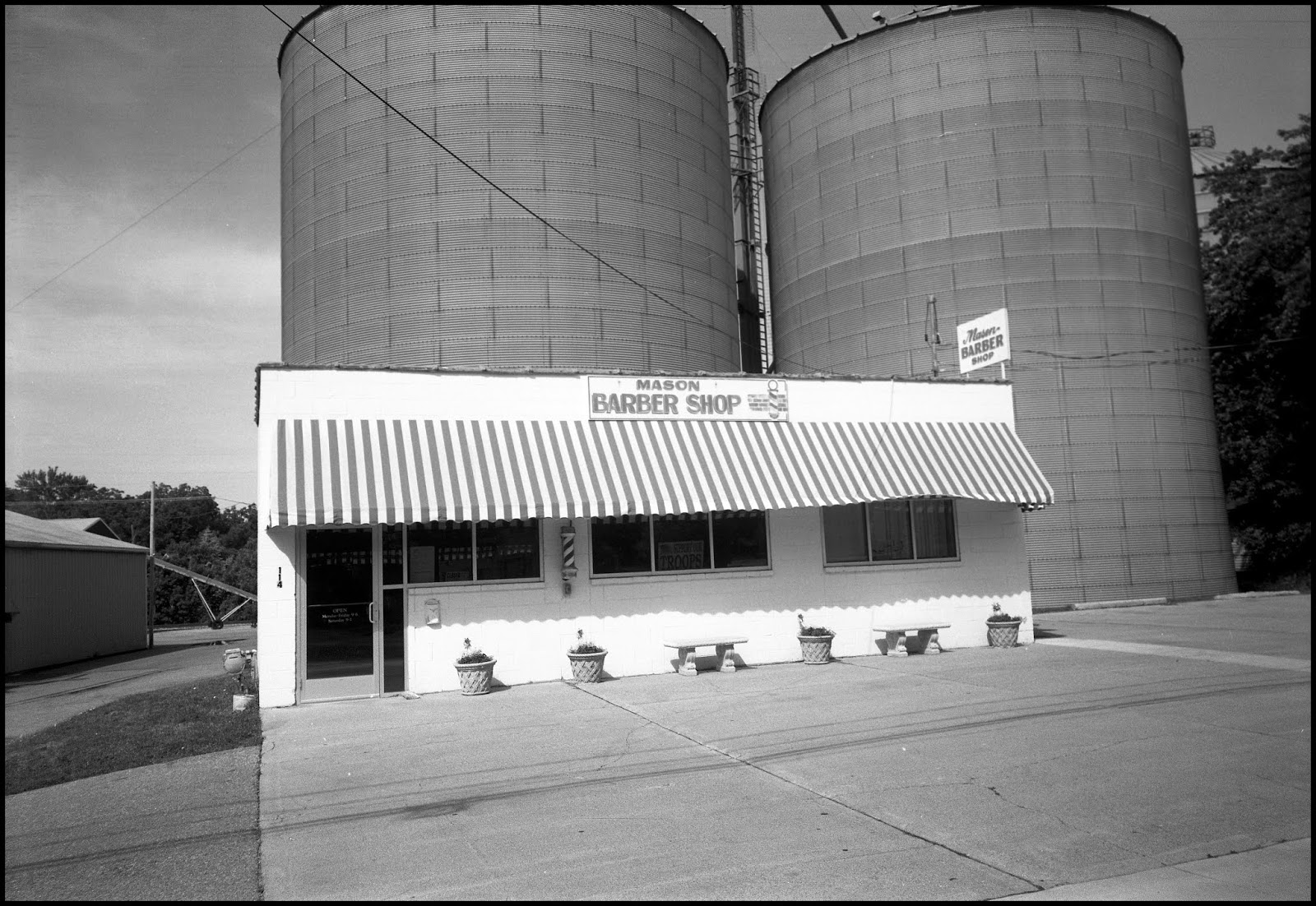
Mason, MI, Envoy Wide Angle


Another estate sale camera, I am not sure why I didn't keep this one from getting away.  It's basically an English 6x9 box camera with a flip-up sports finder, designed for wide-angle photographs. It came with Taylor-Hobson 64mm f/6.5 fixed-focus lens with rim-set shutter from B, T, 1/25-1/125s. I was testing it out, and the images were great.  Wide-angle, and so easy to use, I don't understand why I didn't snap it up!

I know that I have many more examples I could post here, but I think the above cameras are enough for now.  After handling many hundreds of cameras over the past 20 years, I think I have seen so many different cameras that there are not many I have yet to want to try out. There are certainly some "dogs" that I can tell you to avoid, but that's for a future post.  As far as cameras that I'd like to try out, the only ones that immediately come to mind are the Horizon, Widelux, Mamiya 7, and Fujifilm GL690 and GW690.

Johan, taking up the photo shoot space!


Well, what cameras do you regret selling?  What camera have you always wanted, but haven't been able to find or afford?  What cameras do you regret purchasing?  Do you have a "holy grail" camera?


Don't end up like this guy.... sell the stuff you are not using while you are alive!