Monday, July 11, 2022

The Takumar Trek Part 2

Homerville, OH Post Office, Svema FN-64

It's been a couple of weeks since I returned home, and I am finally caught up with developing and scanning of the film from my trip. I am pretty happy with the 18 rolls that I shot, and as I have been scanning them, it's given me time to evaluate where I shot and my results from the different films and lenses.  One of the constraints imposed on myself was of course, the use of fully manual cameras, and not my typical Nikons.  The three Spotmatics - two SP - one silver, one black, and the Spotmatic F, each worked well, and at any time where I felt that the metering wasn't quite right, I reverted to my own intuition/sunny-16 to override the camera's indication.  In all, almost all of my exposures were where they should have been, and the Takumar lenses performed beautifully.  
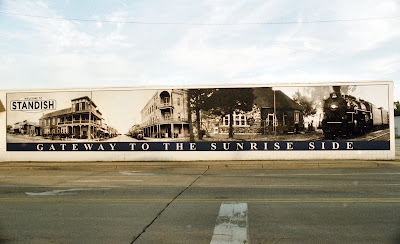
Standish, MI


My favorite combo was the black Spotmatic SP with the 35mm f/3.5 Takumar lens.  I rarely used a different lens with that body, and it's made a believer of me that 35mm is a great all-purpose travel focal length.  This trip was also the first time that I used a Spotmatic exclusively on a road trip since 1980.  My photographic skill set is much improved since then, as is my appreciation for the place that photography has in documenting the ephemeral.  In 1980, I was a 23-year old graduate student using a borrowed Spotmatic for my thesis work, and on a field trip to the SW US.  Now, I'm a 65 year old retiree that's looking backwards on these road trips, knowing what's been lost as I travel forward. The Spotmatics that I used are basic photographic tools - had I made such a trip in 1974, the Spotmatic F would have been the latest model, and the last, as Pentax moved to the K-mount series of SLRs.  Now, the Spotmatic F is considered to be an old classic, not on par with a Nikon FE, but more like a Nikon FM.  However, as I found on this trip, once you immerse yourself with a specific set of gear, you get comfortable with its operation and abilities, and it becomes effortless to use.  To me, that's the hallmark of good ergonomics and design.  The Spotmatics are not quirky to use, they work smoothly, and don't get in the way of making a photograph.  Also, it was a revelation to me at just how good that 35mm f/3.5 Takumar lens is at street/documentary images.  For the longest time, I have thought that the 50mm was "it." I still like 50mm for a lot of things, but as I found with my Leica M2 and the 35mm f/1.4 Summilux, that slightly wider view is better suited for travel and roadside adventures.
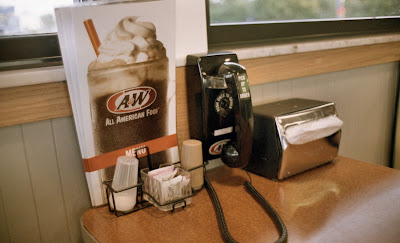
Standish, MI


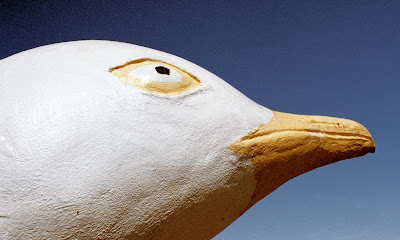
close-up of the gull slide, Tawas, MI


I didn't shoot too many different film stocks on this trip - Eastman 5231 (thanks, Bill P!), Kentmere 100, Kentmere 400, Ilford HP-5+, oh, and my last roll of Svema FN-64 that I had already loaded in my new-to-me black Spotmatic SP that I had purchased at Ball Photo not long before the trip.   It was C-41 only in the Spotmatic F, and the roll of Lomography Color 100 was a nice surprise in how it rendered colors.  Also, a probably expired roll of Rite-Aid 400 (shot at 200) was lovely - maybe it was Agfa?  My results from Fuji 200 and Kodak Gold 200 were as expected.  I think my favorite emulsion on this trip was Ilford HP-5, which I used a lot for the candids at Photostock, and they came out beautifully.  I know there are a lot of photographers that swear by Kodak Tri-X, and I have certainly shot it a great deal in the past -- but I love Ilford's HP-5+ and Kentmere 400 so much more. That's the beauty of film, though - you can find an emulsion that suits your style, regardless of the type of camera or system that you use.  Whether it's a 1950s Leica or a 2000s Canon EOS or Nikon FM3a, you can get the kind of image you want just by changing the film. These simple cameras like the Spotmatics do one thing really well - an uncomplicated view, a reasonable set of shutter speeds, and a variety of excellent lenses, to let a photographer really "see" and produce an image that is made as much in the mind as it is on the piece of film.   I never once worried about my battery life while traveling with the Spotmatics.  To me, that IS freedom.
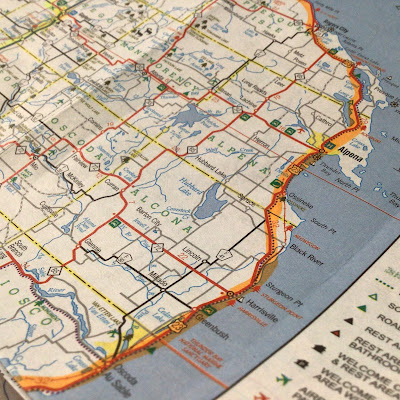
Part of US-23 in Michigan - the best part!


As I have been transferring what I wrote in my journal onto typed pages, I gathered together the maps that I used to trace my route, and it's far more illuminating than trying to see it on a computer screen.  I  love using Google Earth to see where I was, and also to check things out ahead of a trip, but you can't possibly see a trip like this in its entirety at a comprehendible level on a single screen.  Laying out the road maps, seeing the relationship of the route with other features and in context with a greater area, gives more understanding to the 2,241 miles that I traveled in 8 days.  This intersection of digital and analog involves not just photography, but also cartography and writing.  As I have often stated, a paper map doesn't tell you where you are, it shows you where you can go.  On that small screen of the Garmin GPS attached to my windshield, I can see where I am, but it's not showing me the possibilities that a paper map gives me. 
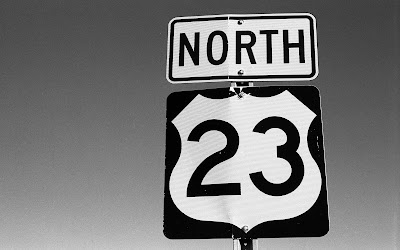
Not far from where 23 ends at I-75 in Mackinaw City

Oscoda, MI

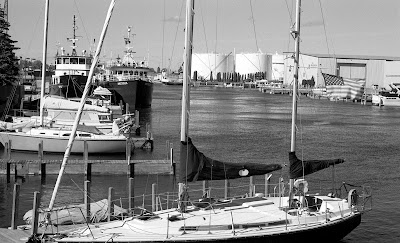
Port of Cheboygan, MI

Cross Village, MI

US-31, N of Petoskey, MI

That is part of the fun of doing these trips - encountering the unknown and the unexpected.  Part of my reason for taking US-23 was just that -- the unknown.  It took me through the coal regions of KY, WV, VA, and the Ohio river valley, the flat expanses of agriculture in Ohio, and up into the beauty of the lakeshore in Michigan.  If you truly want to see America, you need to drive it. US-23 is one of the original 1929 US routes, and whether you pick the Lincoln Highway, Route 1, Route 2, Route 11, the remnants of Route 66, or some other secondary road (not the Interstates), you'll see more of every day America and can make your own conclusions.   My next goal is to take US-23 all the way to Jacksonville, FL and document that trip.  Maybe it will be with Spotmatics  for Takumar Trek II!

I shot a lot - and some images are reserved for ongoing projects, some for an upcoming zine or book, and I'll show a few more here.  Check my Flickr account (mfophotos) for more.
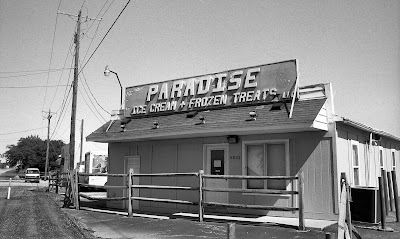
  

Paradise, US-23 and Lime City Rd, Ohio


Petoskey State Park, MI

Louisa, KY

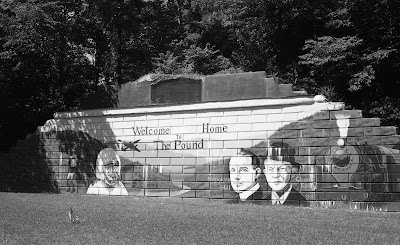
Pound, VA, US-23

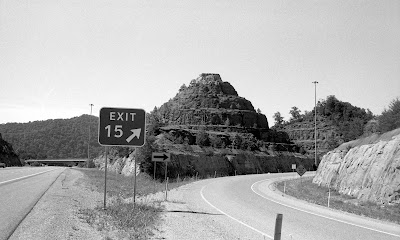
The Pikeville, KY  "Pyramid" on US-23

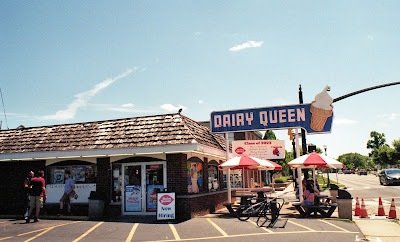
Worthington, OH DQ, US-23

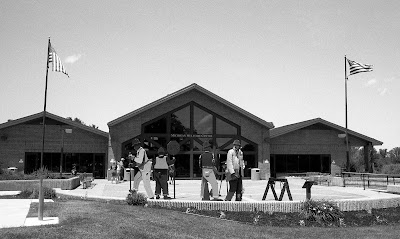
Clare, MI rest area


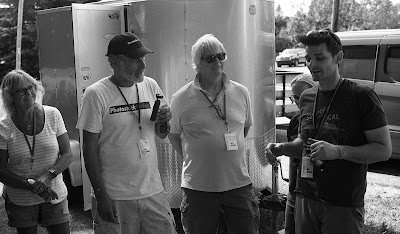
Some Photostock 2022 friends


Thursday, June 30, 2022

The Takumar Trek


I have returned from my latest road trip, that accounted for 2,241 miles over 9 days - which had several objectives. Primarily, it was a trip to Photostock 2022 in Cross Village, MI, but it also included a US 23 journey, a visit with my sister and her husband in Canton, Ohio, and photographing small post offices along the way, and almost all of it was photographed using several Pentax Spotmatics and a Pentax 6X7.  My new to me Canon EOS M5 camera also got used a bit, as well as the Horizon 202 and Ansco Pix Panorama.  However, it was the lovely black Pentax Spotmatic SP shown here that was used the most.  I picked it up at Ball Photo in Asheville a few weeks before my trip, which started on June 20 and ended June 28.    


The lens that I used the most is the Super Takumar 35mm f/3.5, as its coverage is perfect for travel photography, and it's also a relatively small lens, especially compared with my 35mm f/2 monster!   The Spotmatic SPs and Spotmatic F (which was almost always paired with the 28mm f/3.5) accounted for about 15 rolls of film during this trip, mostly in black and white.  The Spotmatic F always had a roll of color C-41 film.  

Film waiting to be developed!

My route US-23 is a long-term project, and all that remains is to do the route S of Weaverville. There's a lot that I have photographed along it in previous years in Michigan, but it was never really a "project" at the time.  The northern terminus of US-23 is at Mackinaw City, MI where it ends at I-75.  I only did part of US-23 going N, because I had to cut over to Canton, OH to visit my sister.  That gave me the opportunity to check ahead of time for routes that would take through small towns with post offices. 

Hartville, OH

In Ohio, it was route 224 that took me from Canton OH area to I-75 N to MI and US-23.   On the return trip it was US-23S all the way from Ann Arbor, MI to Weaverville, NC.  Going N on US-23 in Michigan, I started in Standish, where US-23N splits off from I-75. The rest of that route follows the coastline up to Mackinaw City.

The northern terminus of US-23N at I-75 in Mackinaw City, MI

Photostock was held in Cross Village, MI this year, and Bill Schwab, the organizer, did a wonderful job putting together a meeting and event that brought photographers together for a couple of days. It was fun sharing our work, seeing old friends and making new ones in a very laid-back atmosphere along the Lake Michigan coastline. It was a long trip for me, and I'm glad that I went, as it became part of the Takumar Trek. 


I have yet to process my film from this trip, but I will get started on it shortly.  I'll be sharing some of the images here, on Instagram, and of course, on my Flickr account (all mfophotos).

Waiting for the train to do its crossing at Standish. 

Paul Bunyan and Babe, in Ossineke, MI


I had some time to kill before Photostock, so I stayed two nights in Mackinaw City, and on June 23, I took a short trip into the Upper Peninsula to revisit some spots along US-2.  

Gould City, MI


Naubinway, MI


I returned to the lower Peninsula in the early afternoon, and drove down to Petoskey, in time to attend a lecture and exhibit by Henry Horenstein at the Crooked Tree Arts Center.  If you have heard Horenstein's name - it's probably because he has authored the best manuals for b&w photography.  His exhibit  - Honky Tonk, is a wonderful look at people, musicians, and bars from the 1970s.  I highly recommend it if you are going to be anywhere near Petoskey, MI.


The next couple of days were all at Photostock, and while I mostly shot film there, here are a few images from Cross Village.


It's pretty tough to beat a Lake Michigan sunset

After Photostock, it was back on the road - southward, and eventually on US-23 from Ann Arbor all the way home.  That's for another post!

Tuesday, June 14, 2022

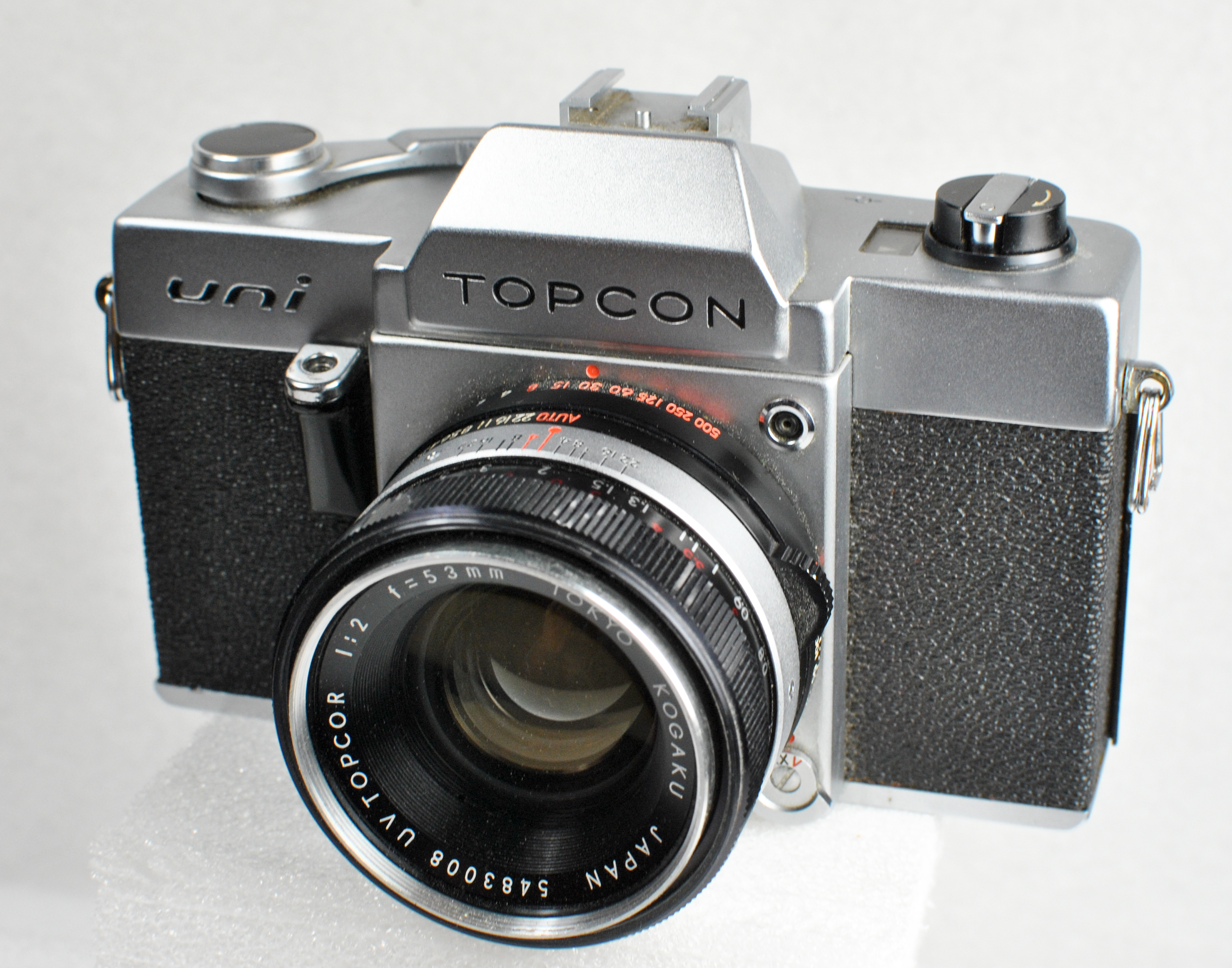
Some Fun with the Topcon Uni SLR


A little over a month ago, a Topcon Uni landed in my hands,  and I thought that I should at least give it a try.  About a decade ago, I owned one that had some exposure problems, and mentioned it in my
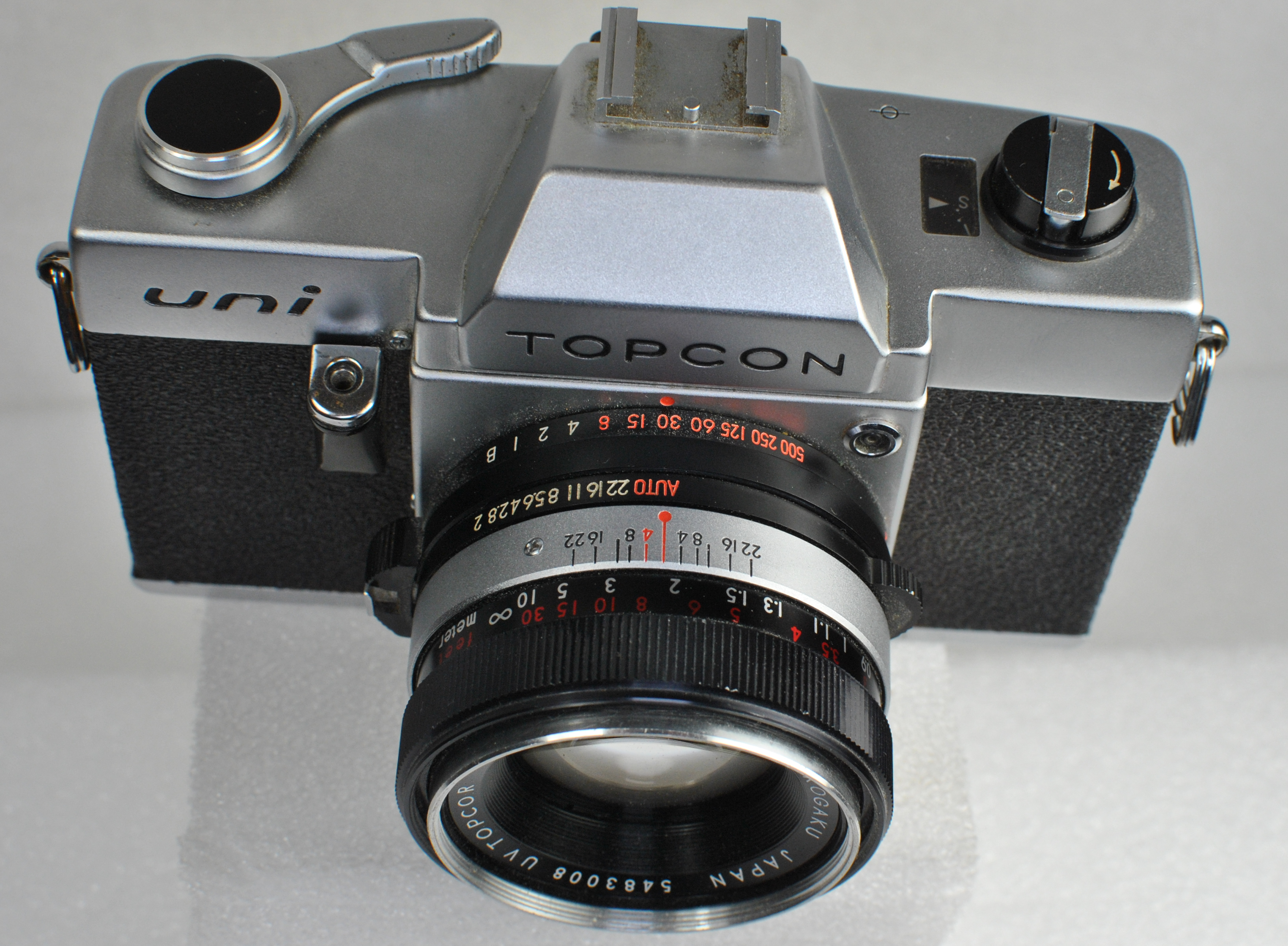
previous RCB post about leaf-shutter SLRs.  Generally, I am not a fan of leaf-shutter SLRs because just about every single one that I have tried has not aged well, due to the shutters not holding up over the last 50+ years.  Don't even get me started about the Zeiss Ikon Contaflex series of leaf-shutter SLRs.  So many bad vibes with those!  Topcon, the brand from Tokyo Kokagu, was generally considered to be a very good SLR, and despite the likes of Asahi Kokagu and Nippon Kokagu, the Topcon RE Super was the first TTL SLR in 1963, beating both Nikon and Pentax to that achievement.  The Topcon line of SLRS had excellent lenses, and to this day, a Topcon Super D is still a nice camera to use, and finding one cheaply on eBay is pretty difficult.  However, one knock against Topcon was the use of an Exakta lens mount that due to its small throat diameter, prevented faster lenses such as those made by Pentax, Nikon, Canon, and Minolta.  As the company reached the mid-70s, it could not compete with the other major camera companies, and stopped sales of 35mm cameras in 1980.  Cameras such as the Topcon Uni, Unirex and Unirex EE did not use the Exakta lens mount, but what has been termed the Topcon UV lens Mount.  These lenses for this mount do not contain an aperture control, which is instead dialed in on the body of the camera.  The cameras are lens-shutter cameras, with a Seikosha shutter behind the lens.


While the Topcon Uni is certainly not a top-of-the-line SLR, it was certainly good enough to suit the intended audience of the casual photographer back in the mid-late 1960s looking for an SLR with some automation (shutter priority) and ease of use.  

Features:

  • Seikosha Shutter with B, 1- 1/500 sec speeds
  • Shutter Priority and Manual exposure
  • PC flash socket, cold shoe on top of camera
  • self-timer
  • ASA (ISO) settings from 25-400
  • 1.35V PX-625 Mercury cell for meter
  • front-mounted shutter release
  • tripod socket

In use, the Topcon Uni may feel like a different experience from your normal focal-plane shutter SLR.  In a focal-plane shutter, the mirror flips up and the shutter curtain does its thing, and the mirror returns for the next exposure.  All the while, the aperture typically opens to the desired value as the press the shutter and the shutter curtain is opened.  With the Topcon Uni, it's a bit different. The aperture and shutter are wide open when the camera is not making an exposure, but the mirror prevents any light from reaching the film.  As you press the shutter button, the shutter closes, and as the mirror flips up, the aperture opens/closes to the desired value, the shutter opens and closes, and then the mirror flips back down, whereupon the shutter and aperture return to the open position.  A lot happens, making this complex dance between the shutter, aperture, and mirror prone to  problems down the road.  On top of that, the CdS TTL meter sets the aperture from the chosen shutter speed.  It's also just a bit noisy and not as smooth-sounding as a typical SLR, such as a Spotmatic.  

I took the Topcon Uni on a short drive and photographed with it in Burnsville, NC. It's the seat for Yancey Co., and at 2825 ft, is located in a valley surrounded by the Black Mountains to the E and the Blue Ridge to the S and W. The highest peak East of the Rockies is Mt. Mitchell, just a few miles away from Burnsville.  It's a nice town with cafes, restaurants, some wilderness outfitters, and a local brewery.  There is a closed theater, the Yancey, which deserves to be open once again, but I don't know if it will ever reopen.  The town is named for Otway Burns, a naval hero in the war of 1812, and a statue honoring him is at the town square.  The oldest building in town, the Nu-Wray Inn dates to the 1830s, The Inn is being refurbished and should open in the near future.  There are a number of shops in the center of town that are worth a visit if you are there.

The Yancey theater.  Image from Canon EOS M5

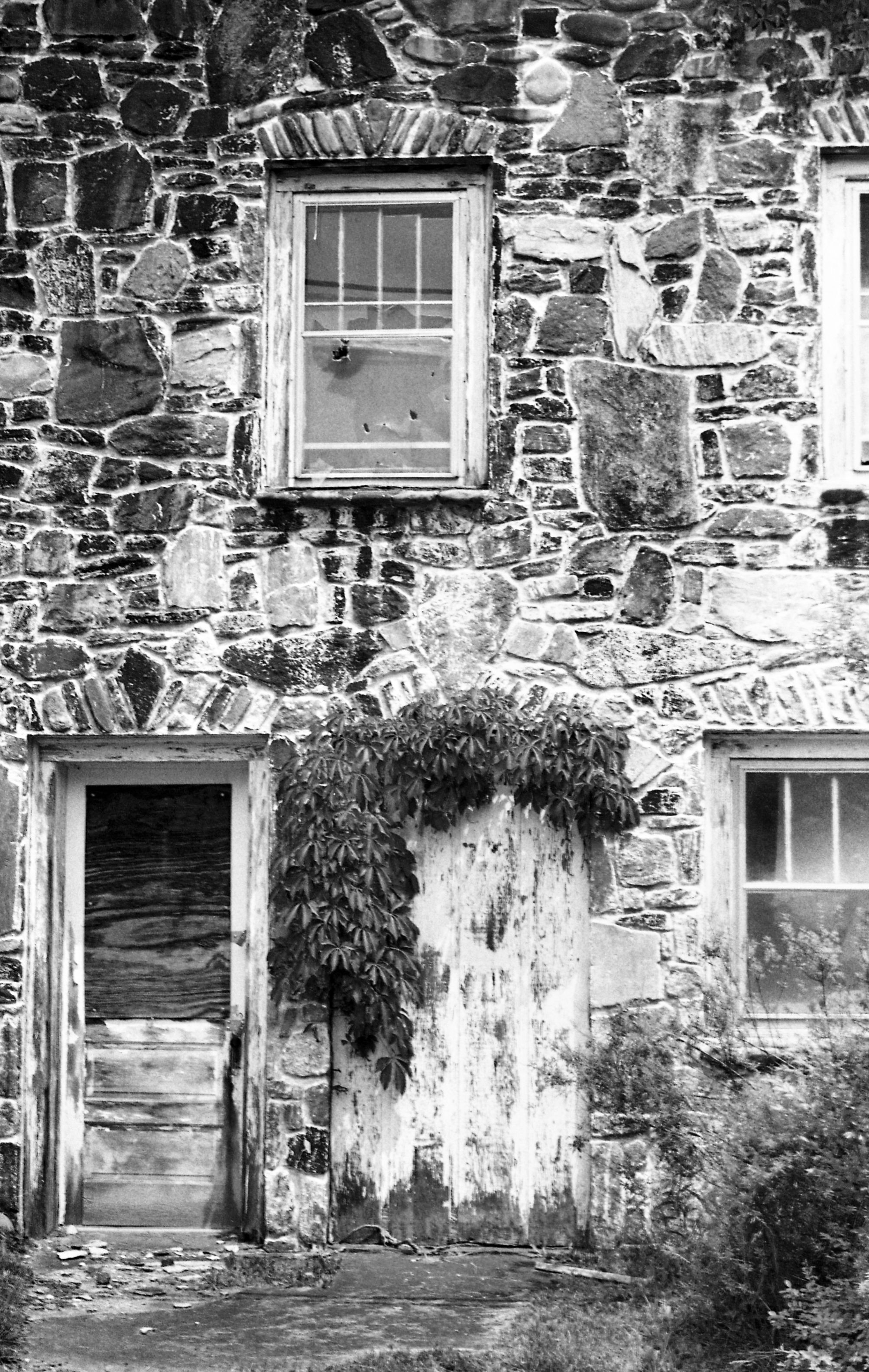
I loaded a roll of Eastman 5231 (a cinema version of Plus-X), which has become one of my favorite films.  Although I placed a PX-625A cell in the camera, I didn't trust the metering, and mostly shot in manual mode, using my intuition (informed sunny-16).  The 53mm f/2 UV Topcor lens prformed well, and overall, I was pretty happy with the photos that I took.  Development was in D-96 for 7 minutes.  Using the camera is pretty simple, and after I shot the roll of film, I realized that if I'd set the ASA to 1 stop lower than the actual film speed, the additional voltage in the P-625A would then give me a fairly accurate reading for the actual film speed.  I should have realized this upfront.  

There's a lot of information on Topcon cameras, and the Camera-wiki is a fantastic resource if you need to find more information in one place.  There's a wonderful post about Topcon on 678 Vintage Cameras. Getting a manual from the Butkus site is recommended, and so is making a donation for the manual.  It's a lot of work to maintain the site and scan the manuals.  And they are free.

Some results from my day in and around Burnsville, NC.

I shoot a info page on my computer screen.

Yancey Co. Building

Yancey County Public Library

the Nu-Wray Inn

Otway Burns at center

Rock and wood, of which there is a lot of in the Blue Ridge Mts.

Main Street tables

This old building always pulls me with a camera


Not sure about "Munch Box"

Chestnut Grove Baptist Church, near Little Switzerland

Hard to beat the views along the Blue Ridge Parkway!