
Nikon FE 10 with Series E 35mm f/2.5 lens
For the good part of almost 50 years, I have considered a 50mm lens to be my “normal lens” for a lot of my photography, no matter what 35mm system I used. For good reason, the 50mm lens was typically the “kit lens” and what was affordable at the time. My first SLR was an Exakta Exa 2a with a 50mm f/2.8 Meyer-Optik Domiplan. Cheap at the time (1974), and that's the ONLY lens I had for that camera for nearly a decade. My second SLR was a Pentax ME in 1983, and I bought it with a Takumar 50mm f/2, and a 135mm f/2.8 lens at Service Merchandise in Ann Arbor, MI. Again, that 50mm lens was my main lens until the year 2000, when I decided that I was going to get serious about photography. Since then, the many SLR cameras and systems that I have owned have always had the 50mm prime lens as my every-day lens. You name it – Pentax K-mount and M-42 bodies, Minolta SLRs, Olympus, Miranda, Zenit, Nikon, Canon, Yashica, Fujica, Topcon – all had a 50mm lens as the primary lens. Now, within that 50mm range, are lots of variations, and some amazing glass. While I most often liked using a 50mm f/1.4 because of low-light shooting as well as shallow depth of field, some of the lenses such as the Minolta 58mm f/1.4 really is a fantastic lens. However, I am a Nikon guy for the most part (aside from my Pentax Spotmatic love), and my typical lens has been anything from a 50mm f/2 (one of the sharpest lenses on the planet), to the pretty good 50mm f/1.8, to the every-day use 50mm f/1.4, and the 55mm f/1.2 Nikkor – which is a bit of a beast. Now I have a LOT of different lenses, and use them according to the situation. However, I'll bet that 70% of my images have been taken with a 50mm lens.
 |
| 35mm f/3.5 Super Takumar, Kentmere 400 film |
A 50mm lens typically has a field of view of 39°, whereas a 35mm lens has a field of view of 62° - certainly wider, but not as wide as 28mm, which has a field of view of 74°. A 16mm fisheye lens has a 180° field of view, in case you are interested. So, with that significantly wider view, the 35mm lens shines in being able to capture more in a scene, if that appeals to you. For one thing, you don't have to back off as much to get things in the frame, making it a great choice for street photography. I find that it's also great for natural scenes as well, and for landscapes, it gives a more normal view.
 |
| 35mm f/2 Super Takumar. Ultrafine Extreme 100 film |
 |
| 35mm f/2 Super Takumar, Ilford HP-5 |
Previously, the only camera that almost always was paired with a 35mm lens is my Leica M2 and the fantastic 35mm f/1.4 Summilux. A great travel combo, and that should have told me something, right? So, I am starting to change. This summer, I used a 35mm f/3.5 on my Pentax Spotmatic, and really came to appreciate the slightly wider view on my Takumar Trek (see previous posts). I started using my 35mm f/2 Nikkor on my Nikon bodies, and it's a fantastic lens. Again, I used it on a recent trip to Lexington for a lot of my photography, and that slightly wider view became my “normal” view. For street photography and landscapes, as well as architecture, 35mm is a great choice. It's hard to believe that it's taken me this many years to fully grasp how great a 35mm lens is for what I like to shoot.
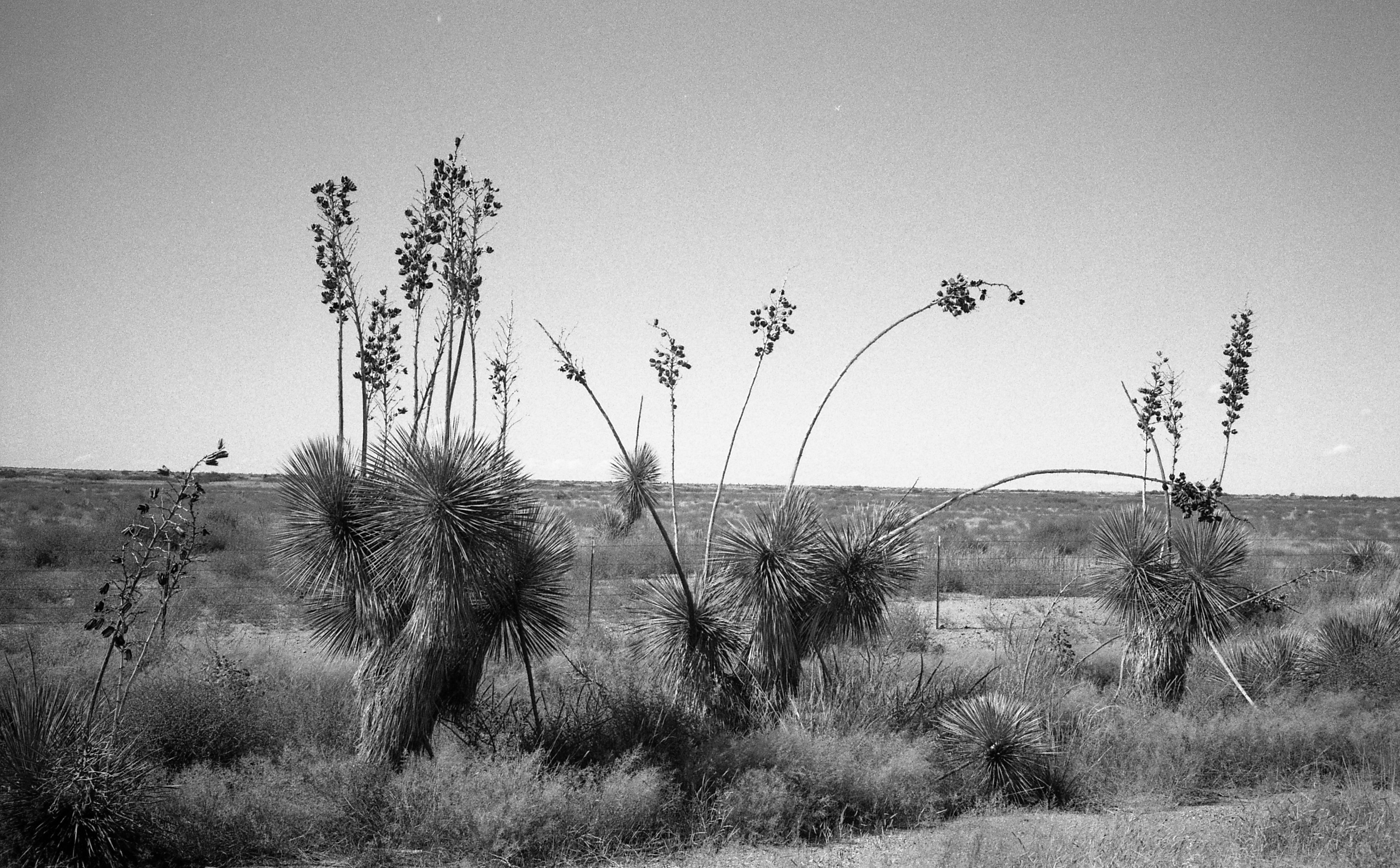 |
| Leica M2, 35mm f/1.4 Summilux, Fomapan 100. |
For a lot of things, the 50mm range is still very useful, and I'd never give them up. But for travel, street photography, and the types of subjects that I enjoy, I'll be using 35mm lenses a lot more. I am a prime lens enthusiast, but if you have a 35-70mm zoom, that'll work too. In the Nikon world, there are several different 35mm lenses – if one looks at old and new, and in many cases, the lenses have not changed appreciably from non-AI (non Auto Indexing – see my post on Nikkormats for a full explanation) to the AIS versions, except for coatings. In the auto-focus world, there are fewer choices, and I assume that there have been some changes made.
 |
| 35mm f/2 Nikkor, Ilford HP-5 |
NIKON 35s:
 |
| Nikon F with the 35mm f/2.8 and the 35mm f/2 non-AI lenses |
• 35 mm f/2.8 Nikkor - introduced in 1959, this lens was a non-AI lens. I have one that I keep on my plain prism Nikon F. By later standards, it's not the greatest 35, but it's okay.
• 35mm f/3.5 PC Nikkor – This is a perspective control lens, as the front elements are able to shift along one plane to keep the camera parallel to the subject, so it's a special lens for architecture, and could also be used on a bellows for product photography.
• 35mm f/2 Nikkor – This faster 35mm lens is optically superior to the f/2.8, and was hugely popular with photojournalists. It's that wider view that aids when closer to the subject, and the more modern AIS version is what I am using.
• 35mm f/1.4 – Introduced as a non-AI lens, this was also popular with professionals, and is sharp corner to corner. A highly regarded lens that remains popular in whatever version. Alas, I have never used one.
All these non-AI versions above were upgraded to AI mounts in 1977. Then again, in 1982, to AIS.
 |
| Nikon FM3A with the 35mm f/2 AI lens |
• 35mm f/2.5 Series E – actually, a nice lightweight and compact lens that works well with the compact bodies such as the FG, EM, and FE10.
• 35-70mm f/3.3-4.5 – if you want a short zoom – this is a good choice. Very sharp at all focal lengths.
• 36-72mm f/3.5 Series E lens – a short, lightweight constant aperture zoom. I consider it to be underrated.
Nikon AF lenses
• 35-70mm f/3.3-4.5 AF and AF-D– A good choice for a carry-all short zoom.
• 35mm f/2 AF and AF-D - Excellent, like the manual version, but also focuses closer.
• 35-70mm f/2.8 AF and AF-D – a big lens with a 62mm front filter ring, this push-pull zoom is very sharp, and at the 35mm end, it is cable of 1:4 closeups. Add a diopter on the front for even more magnification. This is a great lens, though I consider it to be very beefy as short zooms go.
• 35-80mm f/4.5-5.6 AF-D – A kit lens that Nikon sold with The N50 ad N70 cameras, it's not fast nor great, but like any kit lens, it will do well enough for the users it was intended for.
PENTAX
 |
| My favorite SP body with the diminutive 35mm f/3.5 |
Spotmatic (M-42)
• 35mm f/3.5 Super-Takumar – compact, and while not fast, it's great!
• 35mm f/2 Super Takumar – with a 67mm filter ring, this is not a tiny lens, but it is fast. I highly recommend it if you can find one.
 |
| The two 35s from Asahi Pentax in M-42 mount |
M-42 non-Pentax
Due to the longevity and sheer numbers of cameras that used the M-42 mount, you'll find a variety of 35mm f/2.8 lenses available. They may have the names Albinar, Chinon, Vivitar, Makinon, Soligor, as well as Carl Zeiss Jena Flektogon, Meyer Optik Primagon, etc. There is a fast 35mm f/1.9 old Vivitar lens that is supposedly very good. If the thrill is in the hunt, you'll have fun looking for 35mm screw-mount lenses.
 |
| Soligor 35mm f/3.5 M-42 mount lens |
K-mount
Pentax released a number of lenses in K-M, K-A (to be able to operate in P mode), as well as AF and Digital versions. I am only listing the manual lenses.
• 35mm f/2
• 35mm f/2.8
• M-35mm f/1.4 (58mm filter ring)
• M-35mm f/2.8, M-35mm f/2 – both have 49mm filter rings
• M-zoom 35-70 f/2.8-3.5
• A-zoom 35-70mm f/4
• A-zoom 35-70mm f/3.5-4.5
non-Pentax K-mount
• Tokina SL 35mm f/2.8
• Chinon 35-70mm f/3.5-4.5 MC Macro zoom
• Rikenon P Zoom 35-70mm f/3.5-4.5 Macro (maybe the same lens as the Chinon?)
MINOLTA
• 35mm f/1.8 MD
• 35mm f/2.8 MD – I have used one of these, but it's been a while. Like many MD lenses, it was also made earlier with an MC desgnation.
• 35mm f/1.4 and 35mm f/2 Maxxum (now Sony Alpha)
CANON
• FL-mount (can be used with FD cameras, too)
• FL 35mm f/2.5 – 58mm filter
• FL-35mm f/3.5 – 48mm filter
• FL-35mm f/2.8 “pancake” lens, 48mm filter
FD-mount
• FD- 35mm f/2 S.S.C. 55mm filter
• FD- 35mm f/3.5 S.S.C. 55Mm filter
• FD- 35mm f/28 TILT-SHIFT S.S.C. - tilts and shifts – fantastic choice for architecture.
• FD -35mm f/2.8 S.S.C. 52mm filter
• FD- 35-70mm f/3.5 zoom – with its “macro” setting, it can provide some very good close-ups.
EOS-mount
• EF- 35mm f/2
• EF -35mm f/1.4 USM L – expensive!
OLYMPUS
• OM Zuiko 35mm f/2
• OM Zuiko 35mm f/2.8
• OM Zuiko Shift 35mm f/2.8 - a perspective control lens
While I haven't listed every single 35mm lens out there, this list is at least be a starting point. There are lots of 35-70mm zoom lenses that I have not listed, and that may be a good choice for you, but remember, those zooms won't usually have as large an aperture as a prime lens.
 |
| Last, but not least, Leica R4 with a 35-70mm f/3.5 Vario-Elmar |
No matter what 35mm SLR system you use, or rangefinders with the M-39 Leica thread mount or Leica M mount, there exists a 35mm lens to get you a bit wider view.


