
Like a lot of people, I’ve been curious about Harman’s release of an experimental color film, and like a lot of people, I really had no advance information about it. No, I’m not a YouTube influencer, getting a preview at the Harman factory, nor did they send me an advance info packet. Mike Raso of the FPP sent me a package with two rolls of the Phoenix film, along with the promotional info packet from Harman just a day after it was officially released. I’ve been reviewing various film stocks on RCB for many years, and I’d like to think that my thoughts on various films have been helpful. Most of the time, I have purchased the films that I review.
Initial thoughts
First and foremost, I am thrilled that another manufacturer is taking a stab at doing color emulsions. Yes, there are a bunch of different C-41 and ECN-2 films available, and some films supposedly from Europe are almost likely to be old stock, or repackaged Kodak Aerocolor film. So, the idea that Harman would even attempt to produce a C-41 color film is pretty amazing. Yes, it’s touted as “experimental” even on the film box, but it’s a start.
Second, this experimental film has already been YouTubed to death. I wasn’t even sure that I was going to review it, but getting two rolls from the FPP definitely encouraged me to test it. I live in Western North Carolina, so December might not be the optimum time for a film test, but I am giving it a go anyways.
Third, I’m a sucker for oddball films. Since I don’t usually have high expectations, I like it when a film favorably surprises me. It’s not always about color fidelity, either. That’s the beauty of film vs digital. If I want real color fidelity, I can always shoot with one of my DSLRs. Odd color shifts like we see in some of the Lomography films are something that digital just can’t do without a LOT of post-processing. The serendipitous nature of these oddball films means I’ll probably get at least a few shots that convince me to keep using them for special projects.
Phoenix 200
Harman had been sending out teasers on social media for several weeks before Phoenix 200 was actually released. Yes, I think almost everyone thought it was going to be a color film, but that’s all most of us knew. Coming from a factory that does b&w, it seemed quite the challenge.
My way of working with any film for the first time is to shoot it at the box speed listed by the manufacturer. So, I knew that I was going to shoot roll number 1 at ISO 200 before I even put it in my camera. I used my Nikon FM3A and my 50mm f/2 Nikkor-H that I have already raved about in this blog.
Over the course of two days, I shot it in later afternoon sun, and midday sun/slight overcast. After shooting the roll, I dropped it off at Ball Photo in Asheville to get it developed only. No prints or scans. I picked it up today, and the staff was very curious about this film. No orange mask! I figured that since Harman/Ilford has a C-41 chromogenic XP-2, the film base may be the same as the XP-2. However, that’s just my opinion. No orange mask is not a big deal, as the Kodak Aerocolor and all the rebrands of it, also do not have an orange mask.
I like that the film has “Experimental” as a descriptor. It’s certainly a step in the direction of making a good color film, but as you will see, it has a ways to go.
 |
| The negatives on my light table, taken with iphone |
 |
| Inverted, just as they are - not too bad. |
I scanned the film on my Epson V700, and after previewing the thumbnails, I went and adjusted the curves for every exposure, except for a few. Then, I worked with the files in Corel Paint Shop Pro (no damn Adobe subscription for me), which I have used since 2008. In most cases, I corrected for faded colors to get what I thought was a better image than straight out of the scanner. As others have noted, the film has noticeable grain. The shadow detail is like shooting underexposed slide film on a sunny day. Very contrasty. This is all at the box speed, of course. Now that I have shot that initial roll, I’ll probably shoot the film at ISO 80 or 100 on the next one.
 |
| In Epson Scan, I had to adjust the levels for every image. |
 |
| However, it definitely improved the result |
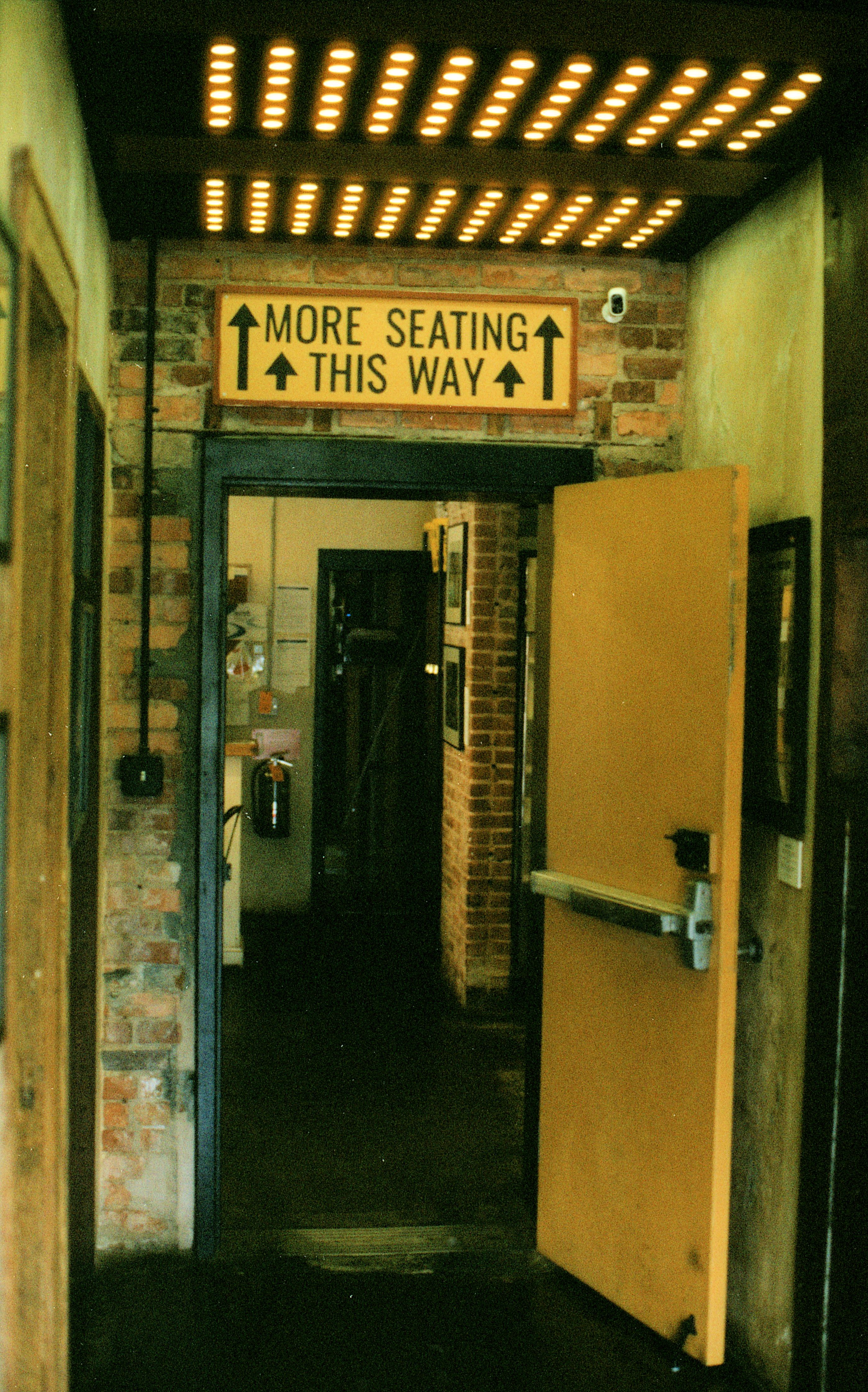
Anyhow, here are some examples from this first roll. I chose colorful subjects to test out the color rendition of Phoenix 200.


 |
| Surprisingly, this last shot on the roll was fine the way it was! |